Mini Split Installation in Bluefield, WV
A new system here will heat from October through May and cool from June through August every year. Tell us about the house, and a licensed contractor who covers Mercer County will get in touch.
Tell us about the job
It takes about a minute.
Bluefield asks a mini-split to work eleven months a year
Winter nights here average 25°F from December through February. A mini-split has to hold that line, then keep working right through May before the season turns around again in October. That is eight months of heat and three more of cooling. Eleven months out of the year, the system is doing something.
A new unit installed today has to meet 14.3 SEER2 for cooling and 7.5 HSPF2 for heating. That is the federal minimum for split-system heat pumps built since January 2023, and it applies to ductless units the same as any other. Summer afternoons here average 80°F. Winter lows average 25°F. The rating is what tells you how the unit will answer both.
- 8 months
- October through May, your system heats
- 3 months
- June through August, it cools
- 25°F
- the average winter night it heats against
- 80°F
- the average summer afternoon it cools against
NOAA nClimDiv, 1991–2020 normals
West Virginia requires HVAC contractors to hold a state license.
West Virginia's license is issued by the Commissioner of Labor and tied to the contractor, not to any single job. The state has tested this contractor and keeps a record of them, but the license itself does not cover the mini-split going into your home.
That is where the local building office comes in. Installing a mini-split in most cities and counties in West Virginia needs a permit, and the completed work gets an inspection. The license is what qualifies the contractor to do this work. The permit and inspection are what cover this particular installation.
Source: West Virginia Legislature
- Is a mini split worth it?
- For a lot of homes here, yes. A mini split gives you heat down to real cold and cooling through the summer without ductwork, and it runs on electricity, which is how most homes in this area already heat. If your winters weren't this cold it might be a harder call, but at 25°F average lows through December through February, a mini split rated for cold climates keeps working when a lot of other options struggle.
- How many rooms can a mini split cover?
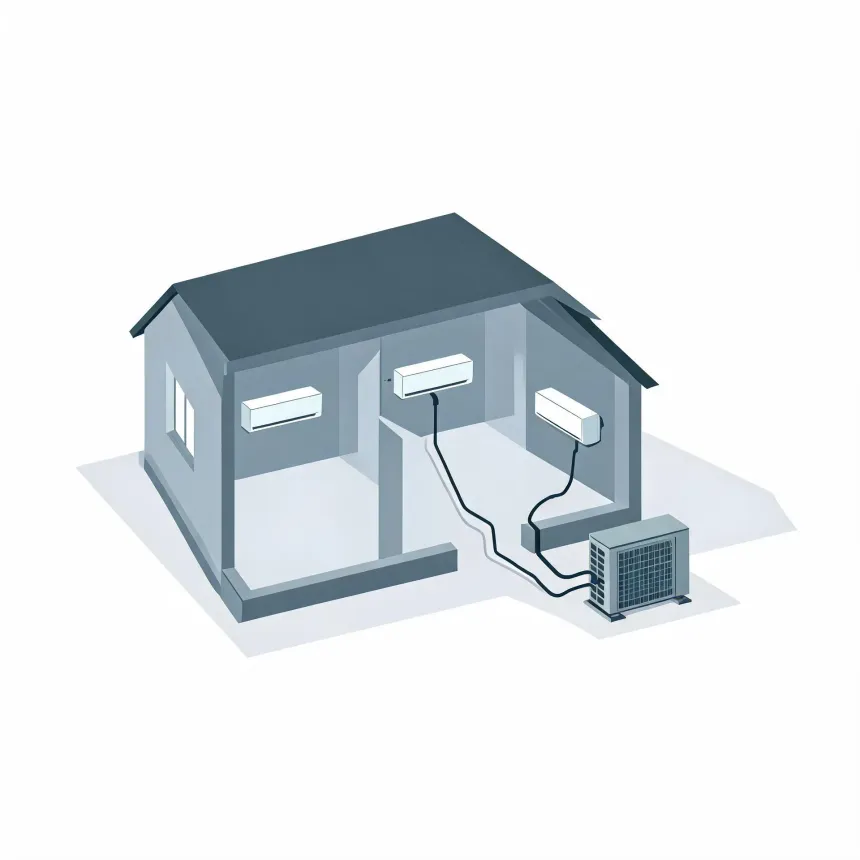
- A single outdoor unit can run anywhere from one indoor head to as many as eight, so it depends on the system. One indoor head heats and cools the room it's mounted in. If you need several rooms covered, a contractor sizes a multi-zone system to match the space, since going too big or too small for the rooms hurts comfort and efficiency either way.
- Can a mini split heat a whole house?
- It can, if it's sized and placed for that from the start. A multi-zone system with an indoor head in each main area can carry a whole house through the winter, including down to the 25°F lows this area sees from December through February. The number of zones and the size of each unit depend on the house itself, so a contractor works that out room by room rather than guessing at one number for every home.