Mini Split Installation in Kenova, WV
A new system here will heat from October through April and cool from June through September every year. Tell us about the house, and a licensed contractor who covers Wayne County will get in touch.
Tell us about the job
It takes about a minute.
What Kenova winters and summers ask of a mini-split
Kenova needs heat or cooling 11 months of the year. Winter nights average 27°F from December through February, and a mini-split has to hold its heat output through that stretch, October to April, seven months running. Summers bring afternoons averaging 86°F, so the same unit switches over and covers June through September on the cooling side.
A new mini-split installed today has to clear the federal minimums for a split-system heat pump. That means 14.3 SEER2 for cooling and 7.5 HSPF2 for heating. That is the baseline any properly installed system in Kenova starts from.
- 7 months
- October through April, your system heats
- 4 months
- June through September, it cools
- 27°F
- the average winter night it heats against
- 86°F
- the average summer afternoon it cools against
NOAA nClimDiv, 1991–2020 normals
West Virginia requires HVAC contractors to hold a state license.
West Virginia's Commissioner of Labor tests and licenses HVAC contractors before they can take this kind of job. The license is tied to the contractor, not to any one installation, so it tells you the person or business has met the state's standard, not that this particular mini-split job was signed off on its own.
For the install itself, the mini-split still needs to be installed by someone anyone can check against that license, and in most cities and counties the work also needs a permit from the local building office, with an inspection once it's done. That inspection is separate from the license. It is the local check that the unit went in correctly.
Source: West Virginia Legislature
- Is a mini split worth it?
- For the right house, yes. A mini split heats and cools without ducts, and it can be set up as one outdoor unit with several indoor heads, each controlling its own room. Winters here average 27°F and summers average 86°F, so the system needs to be rated for both ends of that range. Whether it fits your house depends on the layout and what you are heating or cooling now, so a contractor should look at the specific rooms before you decide.
- How many rooms can a mini split cover?
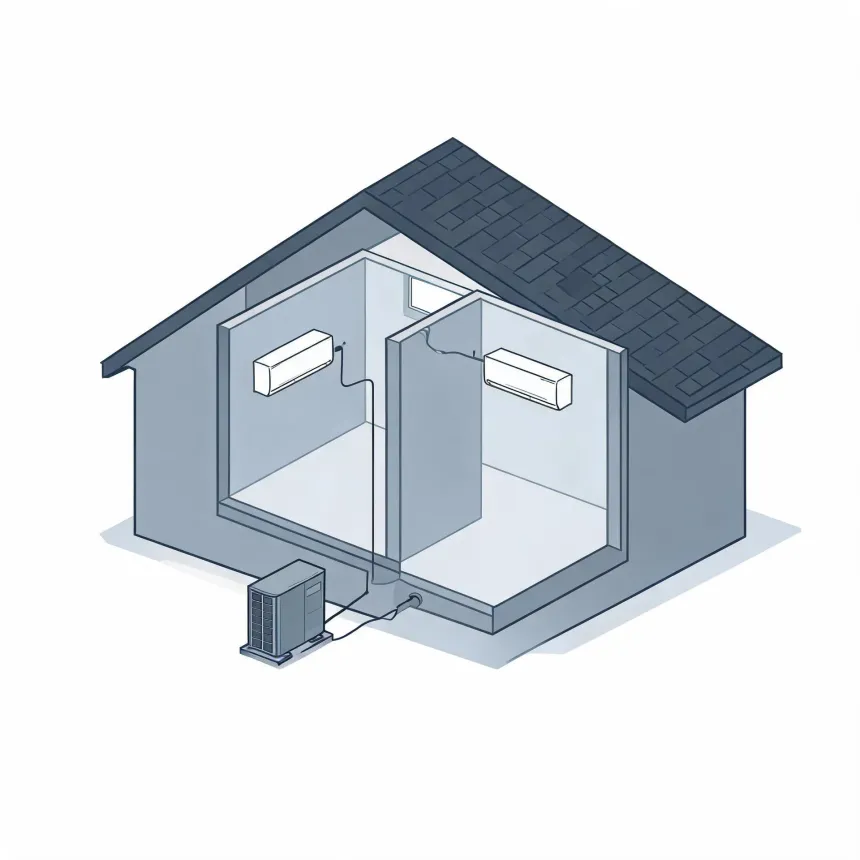
- A single outdoor unit can run one indoor head or several, depending on the system. Multi-zone systems connect more than one indoor head to a single outdoor compressor, with each head controlling its own room. The tradeoff is that more heads on one compressor means less capacity to split between rooms, so a contractor sizes the system around how many rooms you need covered and how big they are.
- Can a mini split heat a whole house?
- It can, if the system is sized and placed for the whole house rather than one or two rooms. Homes here need heat from October through April, seven months of the year, with winter nights averaging 27°F, so the heat pump has to be rated to keep up at those temperatures. An open layout with a few well-placed heads can cover a whole house, while a home with more closed-off rooms usually needs a head in each one to heat evenly. A contractor can tell you which approach your home needs.