Mini Split Installation in Logan, WV
A new system here will heat from October through April and cool from June through September every year. Tell us about the house, and a licensed contractor who covers Logan County will get in touch.
Tell us about the job
It takes about a minute.
Logan asks a mini-split to run almost year round
Homes here need heat from October through April and cooling from June through September, eleven months of the year with barely a break between them. Winter nights average 28°F, summer afternoons average 84°F, and a new mini-split has to handle both ends of that swing, not just a few weeks of extreme weather.
More than two thirds of homes here heat with electricity, so when the power goes out, so does the heat. West Virginia saw 35% of households lose power for at least 24 hours in 2024, and this area has logged 13 winter storms and 44 damaging wind events over the past ten years. A mini-split installed now also has to meet the federal minimum for split-system heat pumps, 14.3 SEER2 for cooling and 7.5 HSPF2 for heating.
- 7 months
- October through April, your system heats
- 4 months
- June through September, it cools
- 28°F
- the average winter night it heats against
- 84°F
- the average summer afternoon it cools against
NOAA nClimDiv, 1991–2020 normals
West Virginia requires HVAC contractors to hold a state license.
The license comes from the Commissioner of Labor, and it belongs to the contractor, not to any single job. That office tested the person before putting a license to their name, and the license stays tied to them across every job they take on, not just this one.
For a mini-split installation in Logan County, that license is what stands behind the work. On top of it, most cities and counties in the state require a permit from the local building office for this kind of installation, with an inspection once the work is finished, so someone outside the contractor also looks at what was done.
Source: West Virginia Legislature
- Is a mini split worth it?
- For most homes, yes, especially if you're heating or cooling a room that ductwork doesn't reach well. You get heat and air conditioning from one system, and since most homes here run electric heat, a mini split's efficiency works in your favor over 7 months of heating and 4 months of cooling. Winter lows around here average 28°F, and a mini-split heat pump built to current standards is rated to handle that kind of cold. A contractor can tell you whether it makes sense for your specific rooms.
- How many rooms can a mini split cover?
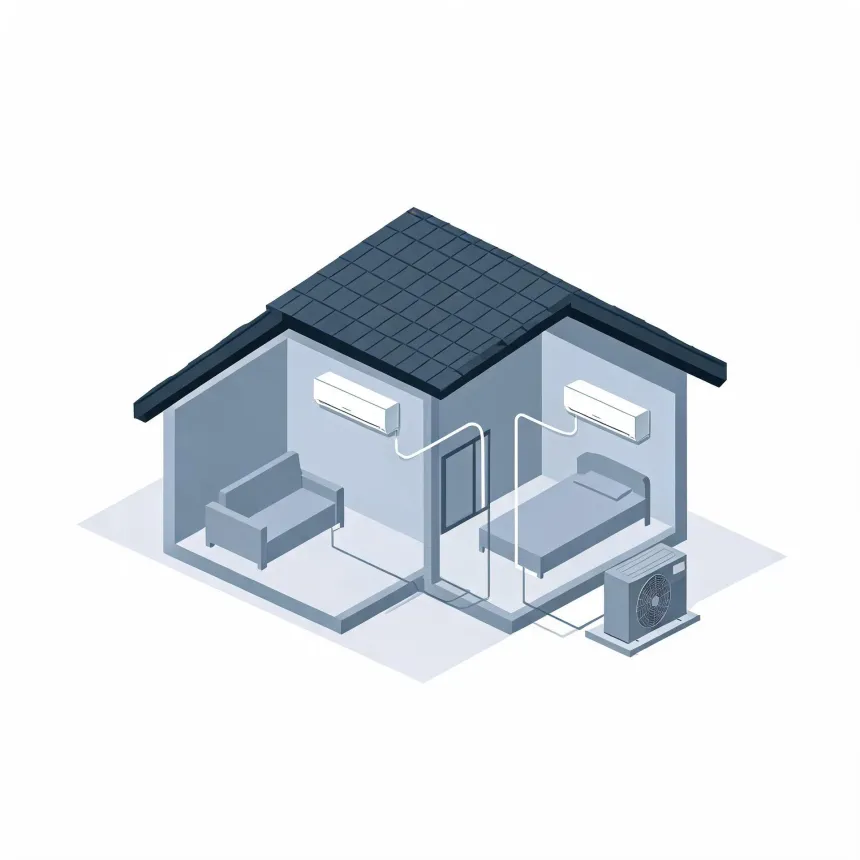
- A single outdoor unit can run one indoor head or several, depending on the system. Single-zone systems cover one room or open area. Multi-zone systems split the output across several indoor units, each with its own thermostat, so you can heat or cool different rooms differently. How many zones make sense depends on the size and layout of the space, which is something a contractor will work out on site.
- Can a mini split heat a whole house?
- It can, but it takes the right number of indoor units placed where the house actually loses heat. One or two heads might handle an open layout, while a house with several closed-off rooms needs a zone in each one to stay even. Given that homes here need heat from October through April, sizing this correctly matters more than it would somewhere with a shorter winter. A contractor can size the system room by room rather than guess at the whole house.