Mini Split Installation in Wheeling, WV
A new system here will heat from October through May and cool from June through August every year. Tell us about the house, and a licensed contractor who covers Ohio County will get in touch.
Tell us about the job
It takes about a minute.
What a mini-split in Wheeling has to handle
Winter nights here average 24°F from December through February, and the unit you install has to hold heat on those nights, not just on the mild ones. Summer afternoons average 82°F, so it also has to pull its weight in the cooling months, though there are only three of those, June through August. Most of the year, eight months of it, this house needs heat, so the heat pump side of a mini-split does more work here than the cooling side ever will.
A mini-split manufactured now has to meet 14.3 SEER2 for cooling and 7.5 HSPF2 for heating, the same federal minimum as any split-system heat pump. Ohio County also sees its share of winter storms and wind, and a third of West Virginia households lost power for a day or more at some point in 2024. A mini-split needs electricity to run, so what happens to the house when the power goes out is worth asking about before one goes in.
- 8 months
- October through May, your system heats
- 3 months
- June through August, it cools
- 24°F
- the average winter night it heats against
- 82°F
- the average summer afternoon it cools against
NOAA nClimDiv, 1991–2020 normals
West Virginia requires HVAC contractors to hold a state license.
The license is held by the contractor, not issued job by job, so it is the company's standing with the state that carries over from one installation to the next, not a fresh check for this particular mini-split.
For a mini-split installation, whoever does the work also needs to pull a permit from the local building office in most cities and counties, with an inspection once the job is done. That inspection is separate from the state license. It is the local check that the line set, the electrical hookup, and the mounting were done right, on top of the state's record that the contractor is licensed to do the work at all.
Source: West Virginia Legislature
- Is a mini split worth it?
- For most homes, yes, especially if you're heating a room that gas ducts don't reach or adding cooling where there's none now. A mini split gives you both heat and air conditioning from one unit, with no ductwork needed. Down to 24°F on a winter night, a modern cold-climate heat pump still produces heat, though it works harder as the temperature drops. A contractor can size the unit to the room and tell you what it can carry in this climate.
- How many rooms can a mini split cover?
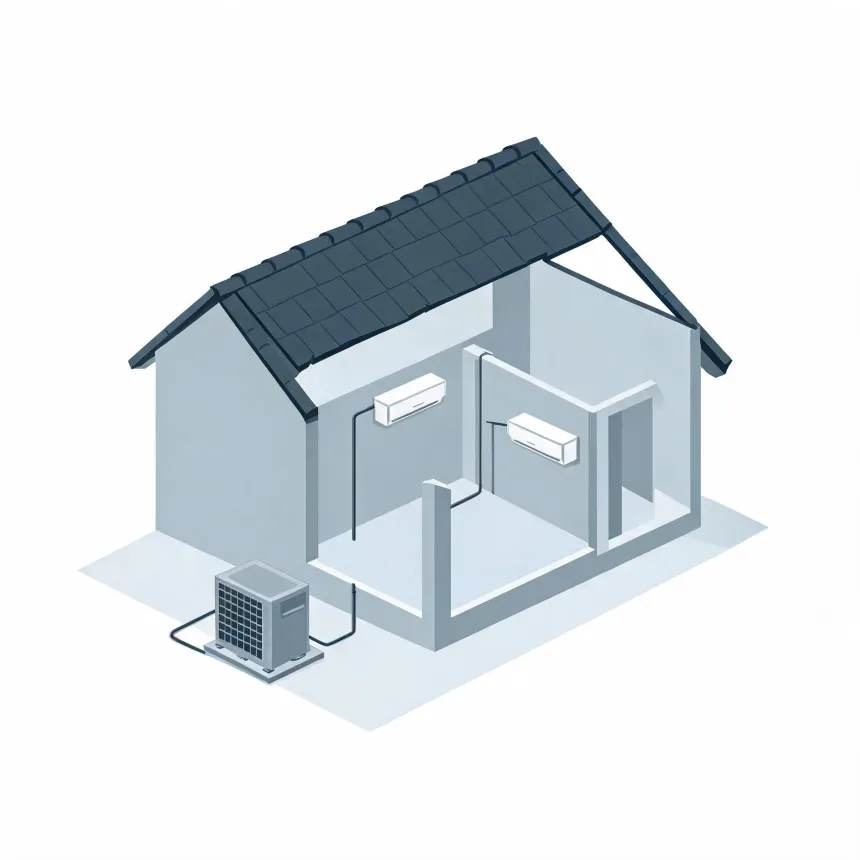
- A single-zone mini split covers one room or open area. If you need more than that, a multi-zone system runs several indoor units, one per room, off a single outdoor unit, and each room gets its own thermostat control. How many zones one outdoor unit can run depends on its capacity, so a contractor sizes that to the rooms you want covered.
- Can a mini split heat a whole house?
- It can, but it takes the right setup, either enough zones to cover every room or a ducted mini-split system tied into the house. A single indoor unit only heats the space it's mounted in and whatever rooms are open to it. Homes here need heat from October through May, so whatever system you land on has to hold up through a full winter down to 24°F. A contractor can walk the house and tell you what it would take to cover it.