
Duct Cleaning in Oak Hill, WV
Tell us about your home, and a licensed contractor who covers Fayette County will get in touch.
Tell us about the job
It takes about a minute.

Eight months of heating pushes a lot of air through your ducts
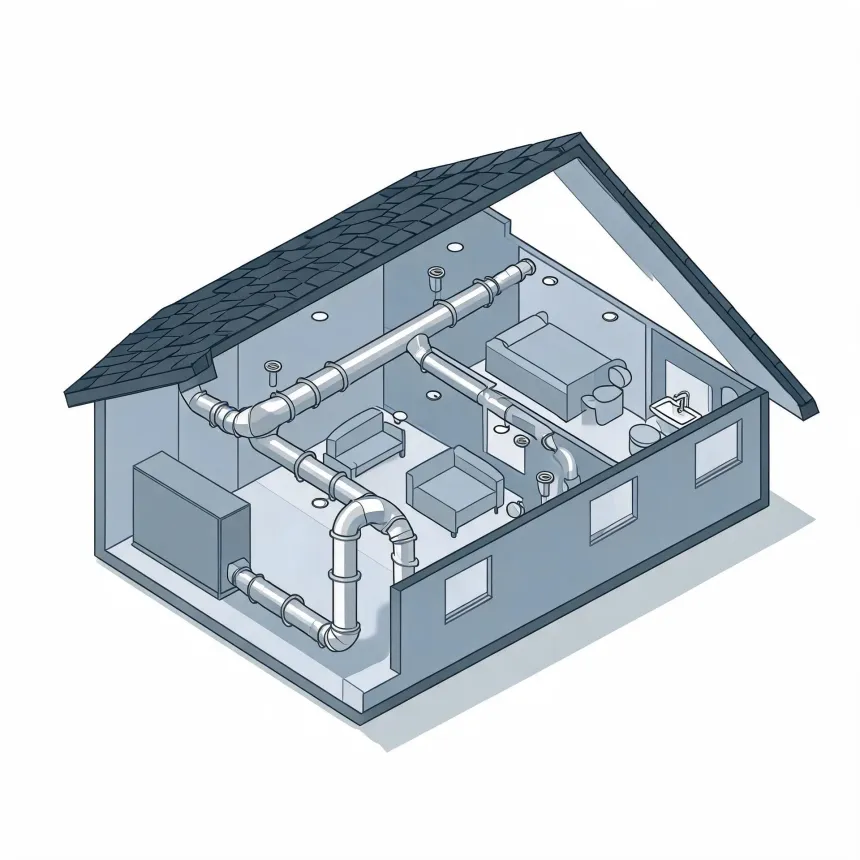
Your furnace runs October through May here, eight months of the year. Every one of those months it is pulling air through the return, warming it, and pushing it back out through the same ductwork. That is a lot of air moving through the same paths, and whatever is riding in that air, dust, pet hair, skin cells, settles out along the way.
Most homes in Fayette County are single-family houses people have owned for years, and ductwork that has been in place a long time has had a long time to collect that buildup. Winter storms and wind events are common here too, and when the power drops the system stops moving air but the dust already in the ducts stays put, waiting for the blower to kick back on and stir it into the house again.
- 8 months
- October through May, your furnace pushes air through your ducts
- 3 months
- June through August, your air conditioner does the same
NOAA nClimDiv, 1991–2020 normals
- How often should air ducts be cleaned?
- There's no fixed schedule that fits every home, so go by what you see and who lives there. If dust settles again just days after cleaning, or you can see it blowing out of the vents, that's a sign to have it done. Homes with pets or anyone with allergies usually need it more often, since fur and dander build up in the ductwork faster than plain dust.
- Is air duct cleaning worth it?
- It depends on what's actually happening in your ducts. If dust resettles soon after you clean the house, or someone's allergy symptoms ease up when they're away from home, cleaning is worth doing. If the ducts look fine and nobody's having breathing trouble, you likely don't need it just for the sake of doing it.
- What does air duct cleaning involve?
- A contractor uses brushes and a high-powered vacuum to loosen and pull dust and debris out of the ductwork. This covers the supply and return ducts along with the grilles and registers, and sometimes the coil and blower housing if they're accessible. The system is put under negative pressure during the work so the loosened debris gets pulled out instead of pushed further down the ducts.