Mini Split Installation in Oak Hill, WV
A new system here will heat from October through May and cool from June through August every year. Tell us about the house, and a licensed contractor who covers Fayette County will get in touch.
Tell us about the job
It takes about a minute.
What Oak Hill asks of a mini-split
Oak Hill needs heat or cooling 11 months of the year. Winter nights average 25°F from December through February, and summer afternoons average 80°F, so the same unit is working in both directions most of the year, not just taking the edge off a few weeks of mild weather.
A mini-split installed now has to meet 14.3 SEER2 for cooling and 7.5 HSPF2 for heating, the federal minimum for split-system heat pumps since January 2023. That rating carries more weight here than somewhere with a short winter, since heat is needed October through May. Fayette County has logged 19 winter storms and 73 damaging wind events over the past ten years, and 35% of West Virginia households went at least 24 hours without power in 2024. Worth asking your contractor how the unit restarts on its own once power comes back.
- 8 months
- October through May, your system heats
- 3 months
- June through August, it cools
- 25°F
- the average winter night it heats against
- 80°F
- the average summer afternoon it cools against
NOAA nClimDiv, 1991–2020 normals
West Virginia requires HVAC contractors to hold a state license.
The state license is issued to the contractor as a business, tested and recorded by the Commissioner of Labor. It is not issued per job, so the license does not mean the state signed off on your specific installation, only that the contractor holds a current license to do this kind of work in West Virginia.
For a mini-split installation, the license tells you the contractor is credentialed. The permit is what puts a second set of eyes on the actual job. In most cities and counties here, installing a mini-split needs a permit from the local building office, and the work gets inspected once it is done. That inspection covers the parts of the job a license alone does not, how the unit is mounted, how the lines are run, and whether the electrical work behind it was done correctly.
Source: West Virginia Legislature
- Is a mini split worth it?
- For most homes, yes, especially if a room or two runs hot in summer or cold in winter no matter what the rest of the house is doing. A mini split heats and cools that space directly, without ductwork, so a room over a garage or an added-on space stops fighting the rest of the system. Winter nights here drop to 25°F on average, so check that the unit you're looking at is rated to perform at that temperature before you count on it as your only heat source.
- How many rooms can a mini split cover?
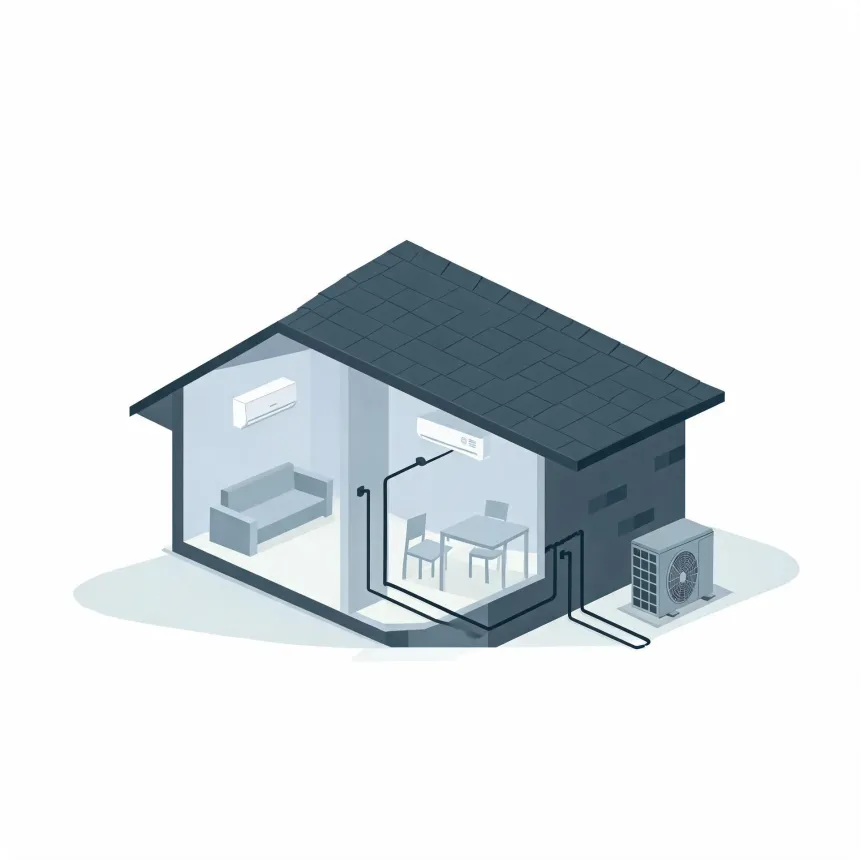
- A single outdoor unit can run one indoor head or several, depending on the system. A single-zone system covers one room or open area. A multi-zone system can run up to eight indoor heads off one outdoor unit, each with its own thermostat, so a bedroom and a living room can sit at different temperatures at the same time. A contractor will look at the layout of the house to size the outdoor unit correctly for however many zones are needed.
- Can a mini split heat a whole house?
- It can, if there are enough indoor heads placed to cover every room, but that takes planning around how the house is laid out. Homes here need heat from October through May, eight months a year, with winter nights averaging 25°F, so the system has to be sized and rated to keep up on the coldest nights, not just the mild ones. A contractor can work out whether a whole-house mini split setup makes sense for a given house or whether some rooms are better served another way.