Mini Split Installation in Lewisburg, WV
A new system here will heat from October through May and cool from July through August every year. Tell us about the house, and a licensed contractor who covers Greenbrier County will get in touch.
Tell us about the job
It takes about a minute.
What your mini-split has to handle here in Lewisburg
Winter nights in Greenbrier County average 23°F from December through February, and your mini-split needs to hold heat against that for eight months, October through May. Summer only asks two months of cooling, with afternoons averaging 79°F, so the heating side of the unit carries most of the year's work.
A new mini-split installed today has to meet the federal minimum for split-system heat pumps, 14.3 SEER2 for cooling and 7.5 HSPF2 for heating. That heating rating matters here, where 55.3% of households heat with electricity. The county has also logged 44 winter storms and 104 damaging wind events over the past ten years, and statewide, 35% of households lost power for at least a day in 2024. A mini-split with a standard outdoor unit will not run without power, so a storm that knocks out the grid knocks out the heat too.
- 8 months
- October through May, your system heats
- 2 months
- July through August, it cools
- 23°F
- the average winter night it heats against
- 79°F
- the average summer afternoon it cools against
NOAA nClimDiv, 1991–2020 normals
West Virginia requires HVAC contractors to hold a state license.
West Virginia's license is issued to the contractor, not to each job, so it does not have to be applied for again every time a mini-split goes in. It means the state tested this contractor before they were allowed to take on work like this, and keeps a record of who they are.
Most cities and counties in West Virginia also require a permit for this kind of installation, with an inspection from the local building office once the work is finished. The license is what lets the contractor take on the work. The permit and inspection are what check it once it is done.
Source: West Virginia Legislature
- Is a mini split worth it?
- For most homes here, yes, especially if you're heating with electric resistance now. A mini split moves heat instead of generating it with resistance coils, so it gets more heat into the house for the electricity it uses than baseboard or wall heaters do. With winter lows here averaging 23°F, look for a unit rated for cold climates, since output drops as the temperature outside drops. A contractor can tell you what size and model fits your house and your current heating setup.
- How many rooms can a mini split cover?
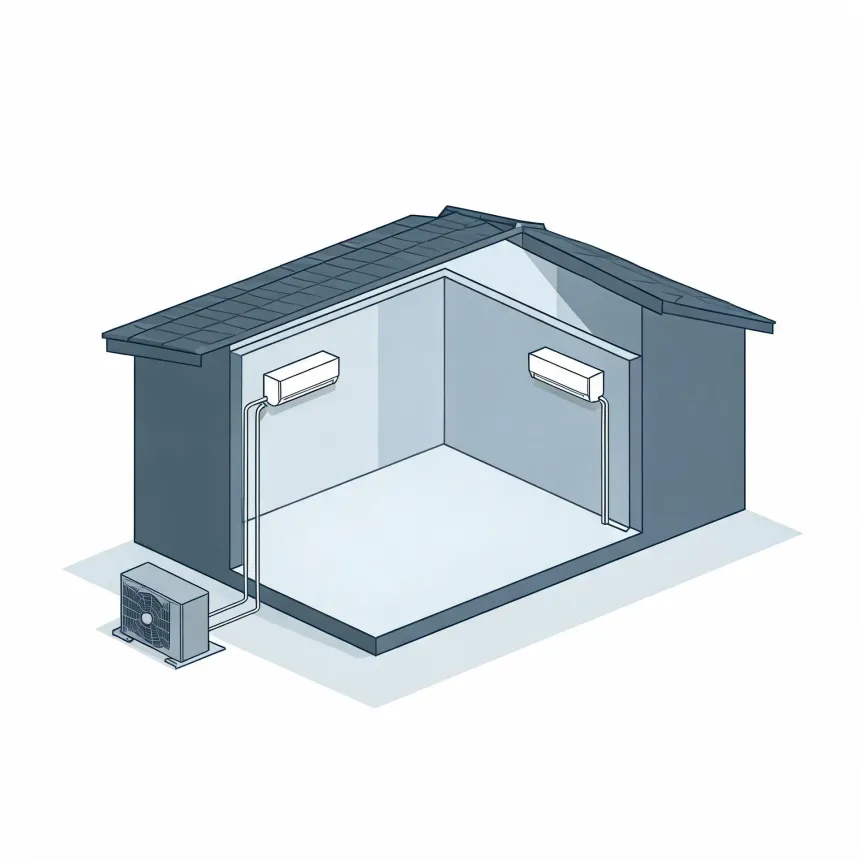
- A single outdoor unit can run up to eight indoor heads, depending on the manufacturer and the size of each unit. Each indoor head heats and cools the room it's mounted in, not the rooms around it. If you want even temperatures across several rooms, that usually means one head per room rather than one head trying to cover an open floor plan. A contractor can walk through your house and work out how many heads you need and where they should go.
- Can a mini split heat a whole house?
- It can, if it's sized and placed for that. Homes here need heat eight months a year, October through May, with winter nights averaging 23°F, so whole-house coverage means enough indoor heads in the right rooms and an outdoor unit rated to keep working at those temperatures. A house with an open layout is easier to cover with fewer heads than one with many closed-off rooms. A contractor can look at your floor plan and tell you what it would take to heat the whole house rather than just part of it.