Mini Split Installation in Point Pleasant, WV
A new system here will heat from October through April and cool from June through September every year. Tell us about the house, and a licensed contractor who covers Mason County will get in touch.
Tell us about the job
It takes about a minute.
What Point Pleasant winters and summers ask of a mini-split
Point Pleasant homes need heat or cooling 11 months of the year. Winter nights average 26°F from December through February, and a mini-split has to hold its own on those nights, not just on the mild ones. Summer afternoons average 85°F, so the same unit is working the other side of the year too, from June through September.
Any new mini-split installed now has to meet 14.3 SEER2 for cooling and 7.5 HSPF2 for heating, the federal minimum for split-system heat pumps since January 1, 2023. With most homes here heating on electricity, that heating rating matters as much as the cooling one. Mason County also sees its share of winter storms and wind, and a mini-split brings heat back fast once power is restored.
- 7 months
- October through April, your system heats
- 4 months
- June through September, it cools
- 26°F
- the average winter night it heats against
- 85°F
- the average summer afternoon it cools against
NOAA nClimDiv, 1991–2020 normals
West Virginia requires HVAC contractors to hold a state license.
West Virginia's Commissioner of Labor issues that license, and it covers the contractor, not each individual job. The same license that lets a contractor work on a furnace anywhere in the state is what covers them installing your mini-split.
Because West Virginia licenses the contractor, that license is what stands behind the person doing this work. A mini-split installation like this also needs a permit from the local building office in most cities and counties, with an inspection once the work is done. That inspection checks the job itself, separate from the contractor's license.
Source: West Virginia Legislature
- Is a mini split worth it?
- For most homes, yes, especially if you're heating with electric resistance or an older system that struggles once it gets near freezing. A mini split is a heat pump, so it heats and cools from the same outdoor unit instead of needing separate equipment for each. With winter lows here averaging 26°F, having a system that keeps working in real cold matters more than it would somewhere milder. It also gives you room-by-room control, which helps if some rooms run hotter or colder than others.
- How many rooms can a mini split cover?
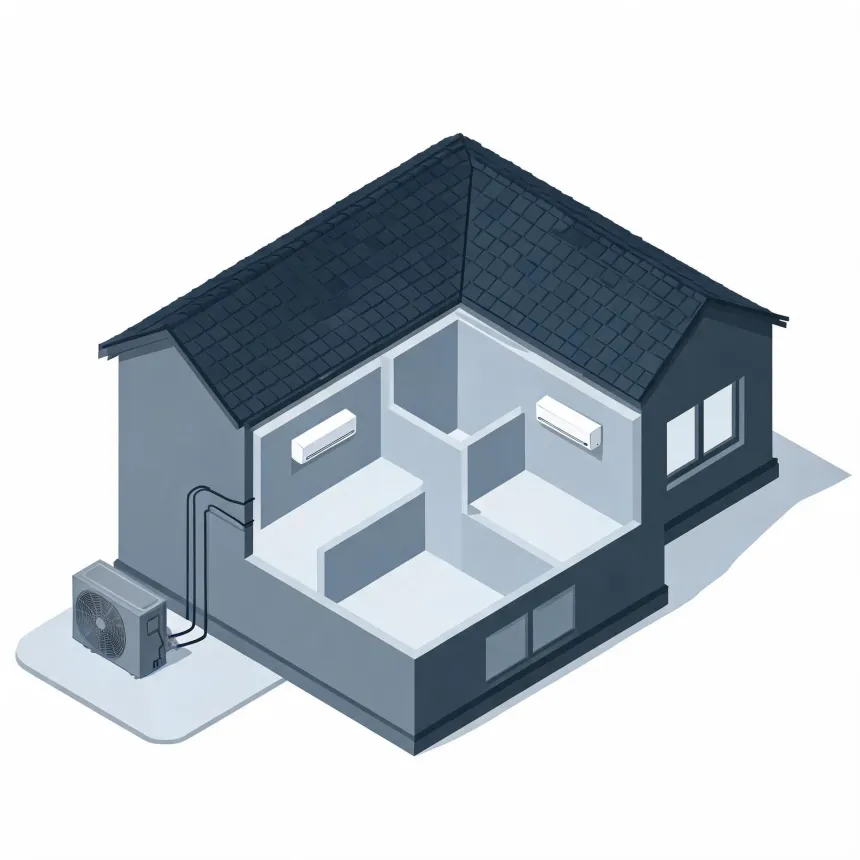
- That depends on the system, since one outdoor unit can run more than one indoor head at a time. Each indoor head handles one room or open area on its own thermostat. A contractor sizes the number of heads and their output to match the square footage and layout of the rooms you want covered, since a head that's too small won't keep up and one that's too large will cycle on and off more than it should.
- Can a mini split heat a whole house?
- It can, if it's sized and laid out for that from the start. A whole-house setup uses one outdoor unit feeding several indoor heads, one for each room or zone, sized to cover the home's heat loss on the coldest night, not just an average day. With this area needing heat from October through April and winter nights averaging 26°F, that sizing has to account for real cold, not a mild-week estimate. A contractor can work out whether your home's layout suits a multi-zone system or whether ductwork changes that math.