
Dryer Vent Cleaning in Clarksburg, WV
Tell us about your home, and a licensed contractor who covers Harrison County will get in touch.
Tell us about the job
It takes about a minute.
Step 1 of 3: Equipment

Cold vents make lint stick
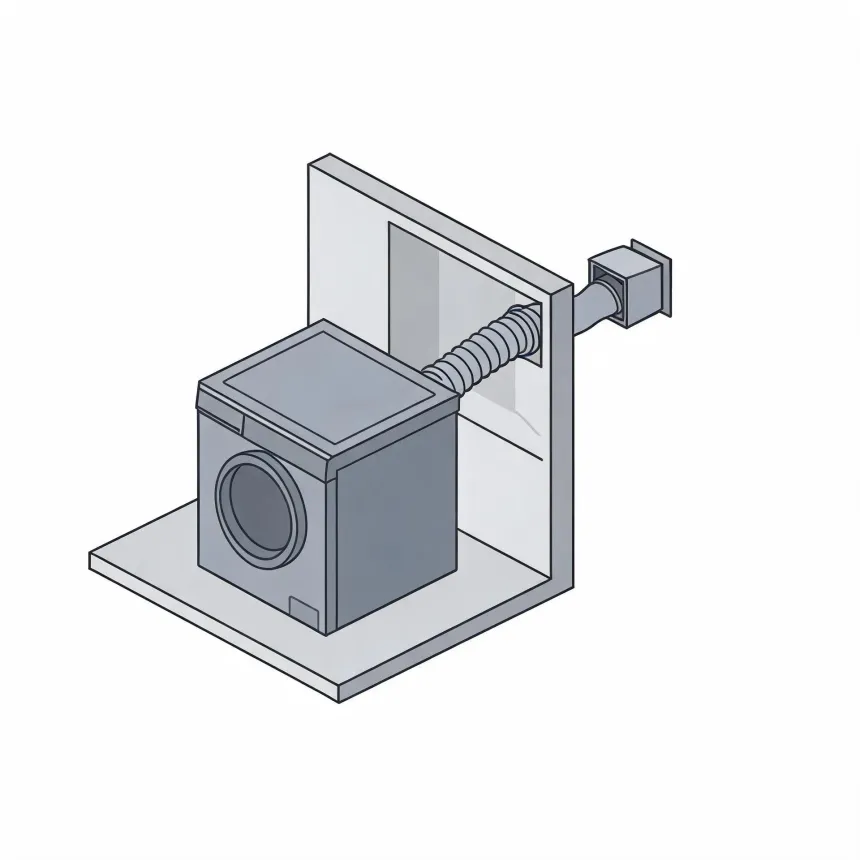
Your dryer pushes out warm, damp air every load. From December through February, when nights here average 25°F, that air hits a cold vent run and cools fast. The moisture in it beads up on the vent walls, and lint sticks to the damp metal instead of blowing outside.
Over a winter that layer thickens. A vent that is choked with lint forces your dryer to push harder to get air out, and it gives any spark inside the vent more to catch on.
- 25°F
- the average winter night, and cold vents catch damp lint
- 8 months
- October through May, the vent stays cold
Jan
Feb
Mar
Apr
May
Jun
Jul
Aug
Sep
Oct
Nov
Dec
NOAA nClimDiv, 1991–2020 normals
- How often should a dryer vent be cleaned?
- Once a year for most households. If you dry more loads a week than average, or you're drying bedding and towels for a large household, have it checked more often than that. Lint builds up whether the vent gets used a little or a lot, so the once-a-year mark is the safe baseline.
- Can I clean my dryer vent myself?
- You can clear lint from the first few feet on either end, but you can't clean the full run yourself unless the vent is short and straight. Most vents bend through a wall or floor cavity before reaching outside, and a vacuum or brush from either end won't reach the middle of that path. A contractor uses a rod system or a vent-rated vacuum that travels the whole length and pulls the lint out instead of packing it in further.
- What are the signs of a clogged dryer vent?
- Clothes that come out hot but still damp after a full cycle, a dryer that runs noticeably hotter than usual, and a burning smell are the main ones. You might also notice the vent hood outside barely moves air when the dryer runs, or lint collecting around the hood itself. Any of these on their own is worth a look, since a blocked vent forces the dryer to work harder every load.