One job, not a routine
Duct cleaning works on contamination already in the system. It doesn't prevent dust from building up again, so the same triggers (renovation dust, a dead rodent, visible buildup) are what call for it next time too.
A pro who works on ducts
You want to know if duct cleaning actually does anything, or if it's a service that just sounds like good maintenance. With humid summers here in West Virginia, dust and moisture can build up in ductwork over time. This page gets into when cleaning matters and when it doesn't, so you can find a contractor who'll look at your actual system instead of guessing.
Match me with a proFor most homes in West Virginia, duct cleaning is worth doing when there's a real reason, not on a fixed schedule. If you can see dust kicking out of the vents, if someone in the house has allergies that flare up indoors, or if the system sat open during work on the house, cleaning solves a real problem. Humid summers here mean ducts can hold moisture longer than they would somewhere drier, and that moisture is what turns ordinary dust into something that smells musty or grows mold. If your ducts look fine and nobody's symptoms point to the air, cleaning them won't lower your power bill or make the system run better. It's not a service to do just because it's been a few years. It's one to do when the ducts themselves are telling you something is wrong.
Most homes here heat with electricity, so dust clogging a coil or blocking a vent costs you more at 15.39 cents a kilowatt-hour than it would somewhere cheaper to run. Clean ducts don't lower that rate, but they keep your system from working harder than it has to.
EIA-861 2025 statewide residential average
Skip it if the ducts are just old. Age alone doesn't dirty a duct system or hurt the air coming out of it, and cleaning a system that has no actual problem won't make your electric bill drop or your air feel different.
Get it done if something fed dust or debris into the system directly, like an open duct during a remodel or visible buildup at the vents. That's a specific problem a cleaning actually solves, not a guess at general upkeep.




Duct cleaning works on contamination already in the system. It doesn't prevent dust from building up again, so the same triggers (renovation dust, a dead rodent, visible buildup) are what call for it next time too.
With electric heat and summers that push the AC hard, a blocked vent or dusty coil makes the system run longer to hit the same temperature. Clearing the blockage is what brings that runtime back down.
You want to know what the appointment actually involves before someone shows up at your house. Is it a guy with a shop vac, or is there more to it? Since you're paying for a service, it helps to know what's supposed to happen so you can tell if the job was done right.
A contractor hooks a powerful vacuum to the ductwork, usually at the main trunk line, and that creates negative pressure through the whole system. Then they go vent by vent with a brush or an air whip, knocking dust and debris loose so the vacuum can pull it out rather than blow it further into the ducts. The supply side and the return side both get done, and the coil and blower housing often get a look too, since dust collects there the same way it does in the ducts. If the job only involves a vacuum running at one vent with no agitation tool reaching into the lines, it is not pulling out what is actually stuck to the walls of the ductwork.

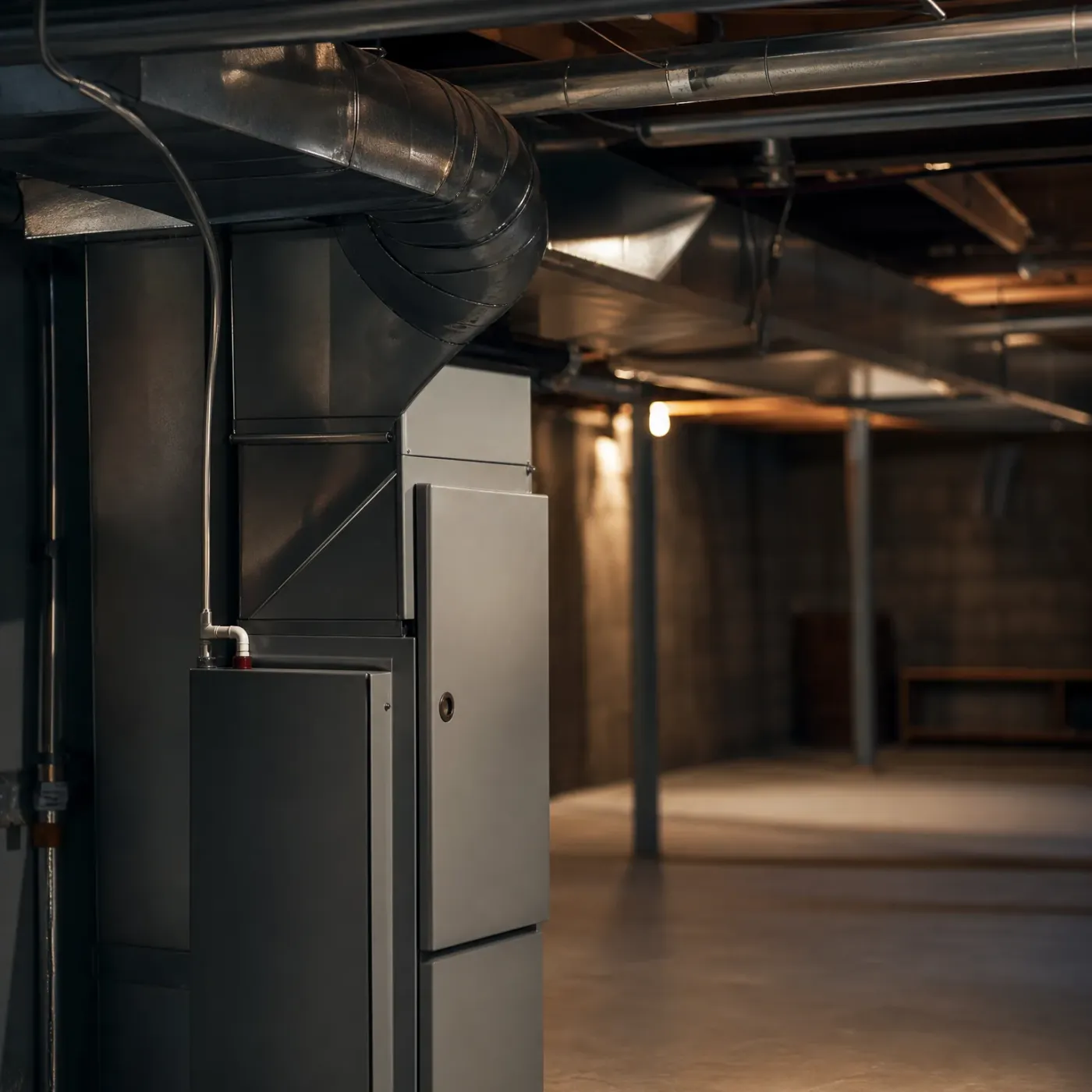
This is what a duct system looks like when there's nothing to find. Metal trunk lines and flex duct carry air to the furnace without any visible dust, debris, or buildup at the joints. Nothing here calls for a cleaning.

Here the branch ducts and plenum boxes have a reason to be checked. Visible dust at the seams, or ductwork that ran open during work on the joists above it, is what turns cleaning from optional into worth doing.


You've read this far because something in your house made you ask the question, not idle curiosity. Maybe it's the dust by the vents, maybe it's a renovation that filled the ducts with drywall grit, maybe it's someone in the house who can't stop sneezing indoors. That's a real reason, and it's worth acting on rather than sitting with it through another muggy West Virginia summer while the system works harder than it should. Figuring out which contractor actually does a full job, with the right tools and a real inspection, takes time you may not have, and calling around to compare isn't free even when the calls are. Send the request and that search is off your plate. One contractor who covers your area gets it and follows up, so you're not stuck vetting a list or waiting on quotes. The dust in your ducts isn't going anywhere on its own. Handing off the search for who clears it out is the part you can do right now.
Duct cleaning in West Virginia comes down to what's actually in the ducts, not how old they are or how sticky the summer was. A system with visible dust at the vents, a recent renovation that filled the lines with drywall grit, or something dead caught in the ductwork has a real reason to get cleaned. A system without any of that has nothing for a cleaning to fix, no matter how long it's been since anyone looked at it.
Electric heat doesn't change what the job does. It just means a clogged coil or a blocked vent costs more to push through at West Virginia's electric rates than it would somewhere cheaper to run. Cleaning the ducts doesn't touch that rate. It just stops the system from fighting buildup that shouldn't be there in the first place.
Once it's done, it's done. Nothing about a clean duct system keeps it clean on its own. The same things that caused the problem the first time, construction dust, a pest that got in, a filter that failed, are what would call for it again later. There's no schedule to keep and no maintenance clock running in the background.
If you've read this far because something specific made you wonder, sending the form is the last step that's yours to handle. From there, someone who does this work gets matched to your house and reaches out. Finding them stops being your problem the moment you send it.

Matched to your ductwork job



