







Signs your air ducts need cleaning in West Virginia

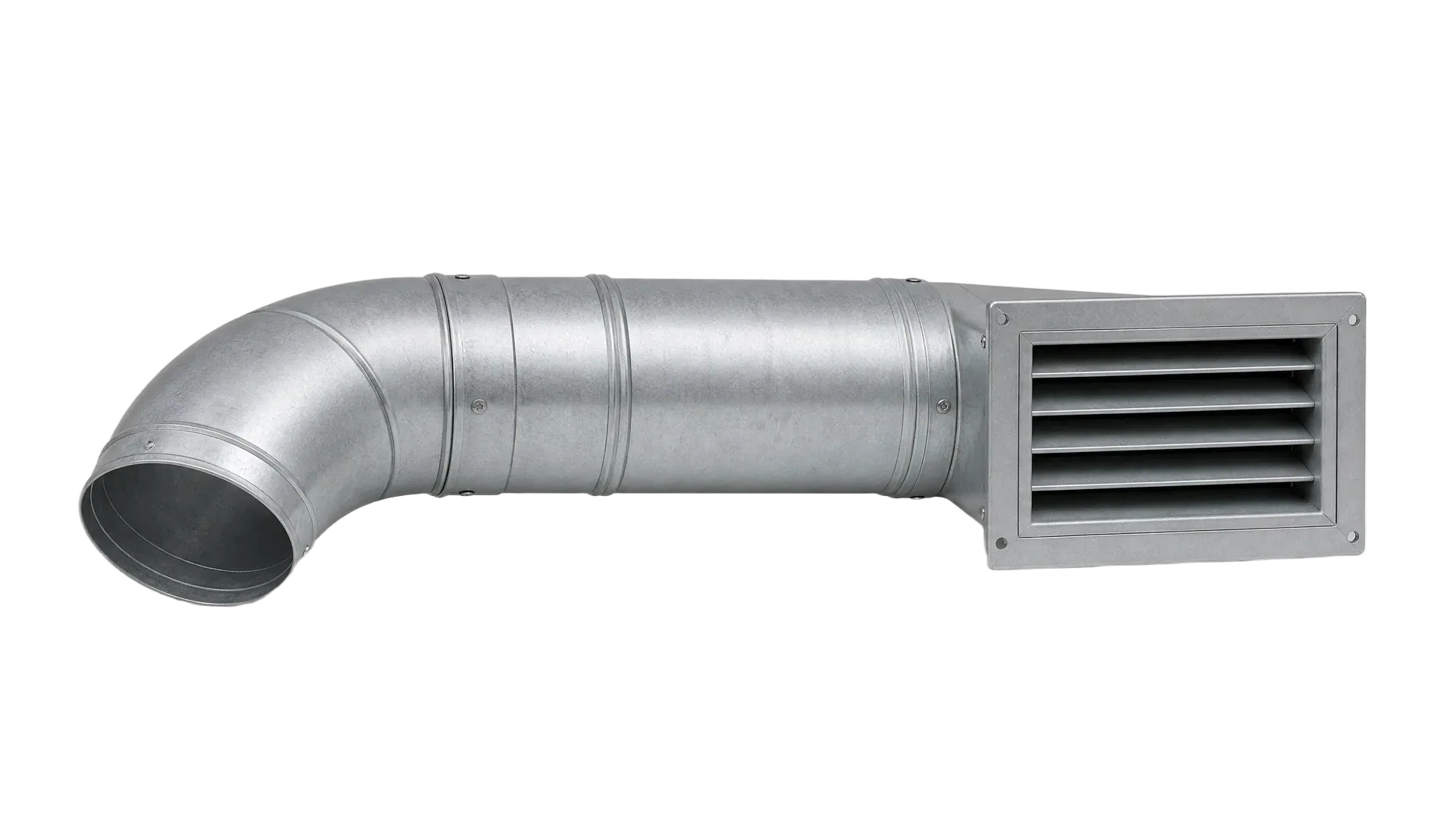
A galvanized metal round duct with a 90-degree elbow connected to a rectangular louvered vent grille, shown against a plain gray background.
Let a pro reach out

Dust coming back within a day or two of cleaning, visible dust around your vent covers, and a musty smell when the air kicks on are the clearest signs your ducts need attention. In West Virginia, summer humidity gives mold something to grow on inside ductwork, especially where moist air sits in a system that runs for months at a stretch. Weak airflow from some rooms while others feel fine often means buildup is blocking the duct rather than a problem with the equipment itself. If anyone in the house has started sneezing more indoors than outdoors, or you can see debris when you pull a vent cover off, that's buildup, not just normal household dust. Most homes here heat with electric systems that push the same air through those same ducts all winter, so whatever collects in summer gets recirculated through the cold months too. Catching it now, before it affects airflow or air quality further, is a smaller job than catching it later.

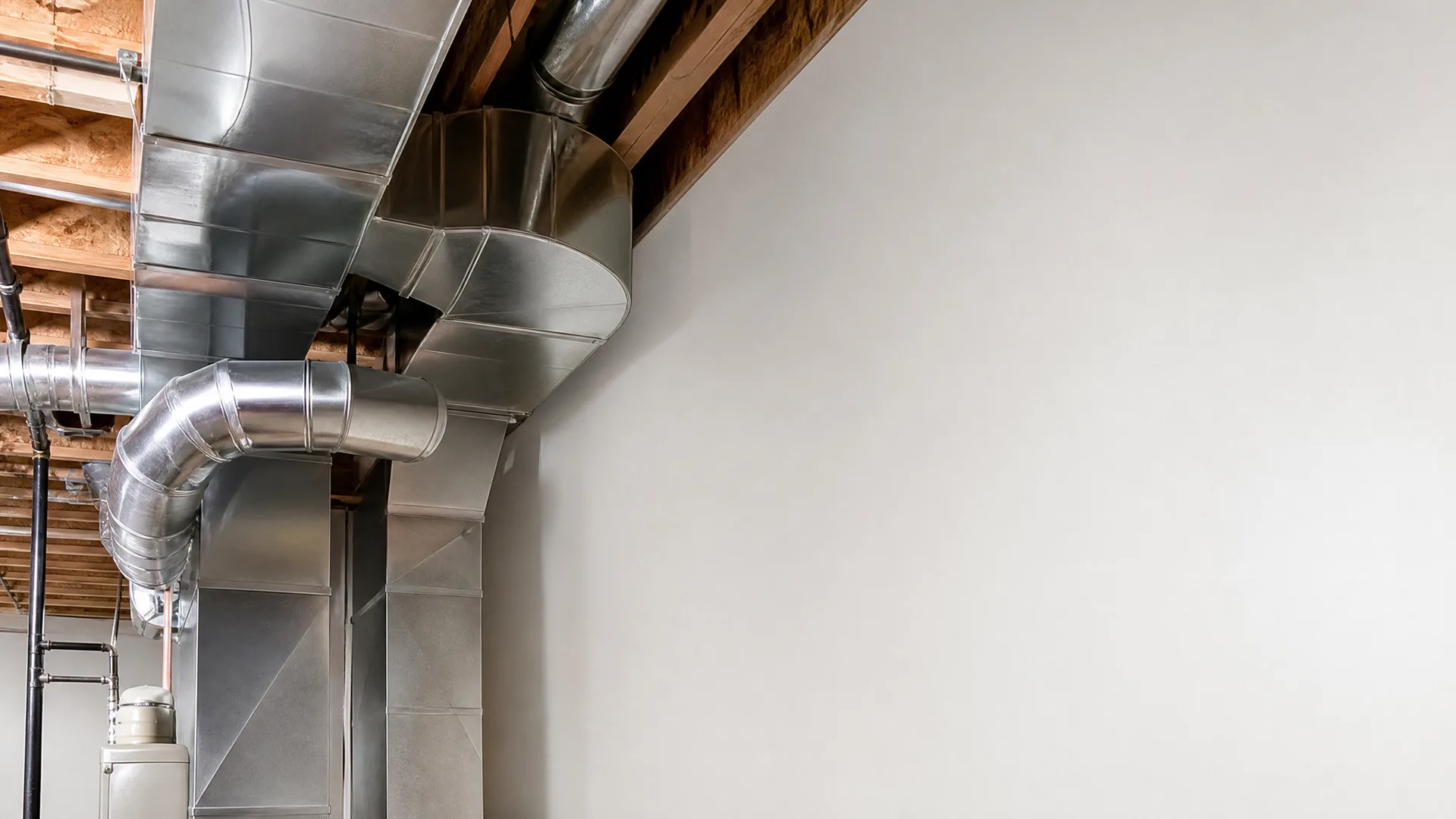
Unfinished basement with bare concrete walls and floor, showing exposed wood floor joists overhead with sheet-metal rectangular ductwork, insulated flexible ducts, and pipes.
Metal trunk lines and flex runs sit clean against the joists, with no dust rimming the seams or sagging insulation to catch it.
Basement ceiling with galvanized sheet metal rectangular ducts and round pipes running between wooden joists above a bare concrete wall and floor.
Dust cakes the trunk seams and the flex duct insulation sags, a sign of a system pushing more than just air.

A contractor starts at the trunk line, where the most debris collects, then moves out through each branch to the vents in your rooms. The return side gets the same attention as the supply side, since dust builds up along the path air takes back to the furnace just as much as where it blows out. To actually remove what's loosened, a contractor hooks up a negative air machine that pulls dust out of the system rather than just pushing it from one duct to the next. Getting it off the duct walls takes some agitation first, usually a brush on a flexible whip or a line of compressed air, run along the inside of the metal trunk. Flex duct can't take the same treatment since its inner liner tears easily, so it gets handled with a lighter touch. The job isn't finished at the vents either. Dust settles on the furnace or air handler coil and in the blower housing, and if it's left there, it recirculates through your home every time the system kicks on.

How a duct cleaning actually works

  • A duct cleaning job loosens debris from the trunk line first, then works outward through each branch run to the vents.
  • The supply side and the return side both get cleaned, since dust collects on the return path just as much as it does near the vents you can see.
  • A contractor uses a negative air machine to pull loosened dust out of the system instead of just stirring it toward the nearest vent.
  • Agitation tools, often a brush on a whip or a compressed air line, knock dust loose from the inside of metal duct walls.
  • Flex duct gets handled differently than metal trunk line, since the inner liner can tear if it's scrubbed the same way.
  • The furnace or air handler coil and blower housing get checked too, since dust that settles there recirculates every time the system runs.
A smiling man in a dark green shirt over a white t-shirt sits at a kitchen counter with a dark mug, looking off to the side, with shelves, plants and a bright living area behind him.
A man in a gray long-sleeve waffle-knit shirt smiles and looks off to the side in a kitchen with open shelving, a refrigerator, a wooden sideboard with a potted plant, and a glass door to the right.
A man in a dark green ribbed sweater stands smiling and looking off to the side beside a stone kitchen counter with a ceramic mug, with a dining table, pendant lights, and large windows in the background.
A bearded man in a gray long-sleeve shirt stands smiling and looking off-camera beside a kitchen counter with a white mug, with a living room, fireplace and wall-mounted television behind him.

Let someone else find the pro

If you're seeing those signs, a visual check only tells you so much. A contractor can get a camera into the trunk line and branch runs and show you what's actually built up in there, not just guess from what's settling on the registers. That matters more in West Virginia summers, when the humidity gives mold a place to take hold inside the system and the air handler is running long hours to keep up. Finding someone to do that work usually means looking up duct cleaning companies, calling a few, explaining what you're seeing in the house, then waiting on quotes to compare before you pick one. Send the request here and that part is done. One contractor gets it, not five, and getting your ducts looked at stops being something you have to chase down yourself.

Galvanized sheet metal HVAC ductwork and round pipes running along an exposed wood-joist basement ceiling beside a plain white wall.

Why return vents clog faster

The return side pulls air from inside the house and drags whatever is in that air back through the ducts toward the furnace or air handler. Pet hair, lint, and plain household dust all get pulled in before the filter ever sees it. On a system that runs most of the day through a West Virginia summer, that return run is moving air almost constantly, so buildup there tends to show up sooner than it does on the supply side.

Galvanized sheet metal HVAC ducts and round pipes installed among wooden joists on a ceiling, beside a large blank white wall.

What the registers can tell you

Pull a supply register off the wall or floor and look a few inches into the boot. A thin, even layer of dust is normal. A thick coat, or dust that looks wet or matted, points to moisture getting into the duct somewhere along the run. In a humid summer that moisture doesn't dry out fast, and it gives whatever landed in the duct a reason to stay put instead of blowing back out through the vent.

Power costs 15.39 cents per kilowatt-hour statewide

Most homes here heat with electric furnaces or heat pumps, and at 15.39 cents per kilowatt-hour, that's what you're paying to push air through ducts clogged with dust. A system working harder to move air through blocked runs pulls more power doing it, and you're the one covering that cost every month.

EIA-861 2025 statewide residential average

Unfinished basement with galvanized sheet-metal ductwork and pipes beneath wood joists, a gray furnace unit at left, insulated plastic-covered walls over a concrete foundation, and a bare concrete floor.

Ducts running clean

Metal trunk lines sit tight against the joists, insulation wrapped snug around the runs. No dust rimming the seams, no debris sitting on top of the ductwork where it's exposed in the basement. Air moves through without picking up anything extra along the way.


Empty concrete-walled basement room with galvanized rectangular and round HVAC ducts and pipes running along the exposed wood-joist ceiling.

Ducts overdue for cleaning

Bare concrete walls and floor show every bit of dust that's settled out of the air, and the ductwork above is carrying that same load inside it. The joists are crowded with metal runs you can't inspect yourself, which is exactly where buildup hides longest.

A closed silver laptop and a glazed ceramic mug on a wooden table, with a blurred kitchen counter, potted plant, cutting board and window in the background.

Signs point to a system, not a guess

Dust that's back in a day, a musty smell when the air kicks on, grime rimming the vent covers. Those are the signs, and in a West Virginia summer they add up faster than you'd expect. The ducts are either clean or they aren't, and by now you have a good idea which one is true in your house.

What's left is finding someone who'll actually get in there, camera the trunk line, and clean both sides of the system instead of just the parts you can see. That's the part that eats time, calling around, explaining the same thing twice, sorting through quotes that don't match up. Send the form and that part is off your plate. The ducts still need the work. You just won't be the one tracking down who does it.

A large weathered ceramic vase and a shallow wooden bowl sit on a rustic wooden table beside a window with linen curtains, with a blurred sofa with cushions and a hanging fabric panel in the background.
A smiling man in a dark blue T-shirt sits on a light gray sofa in a living room with a wooden shelf and window behind him, with a laptop edge visible in the foreground.
A bearded man in a plaid flannel shirt sits indoors looking out a window at snow-covered trees, with a steaming mug on the sill and wooden kitchen shelves behind him.

Ductwork Cleaning

One request and it's handed off

Fill out one short form instead of calling around.

A black smartphone standing upright against a plain light gray background, its screen filled with solid green.
Duct and vent cleaningDucts or ventsWest Virginia
Step 1 of 2

What ZIP code is the job in?



