

Does duct cleaning help allergies in West Virginia

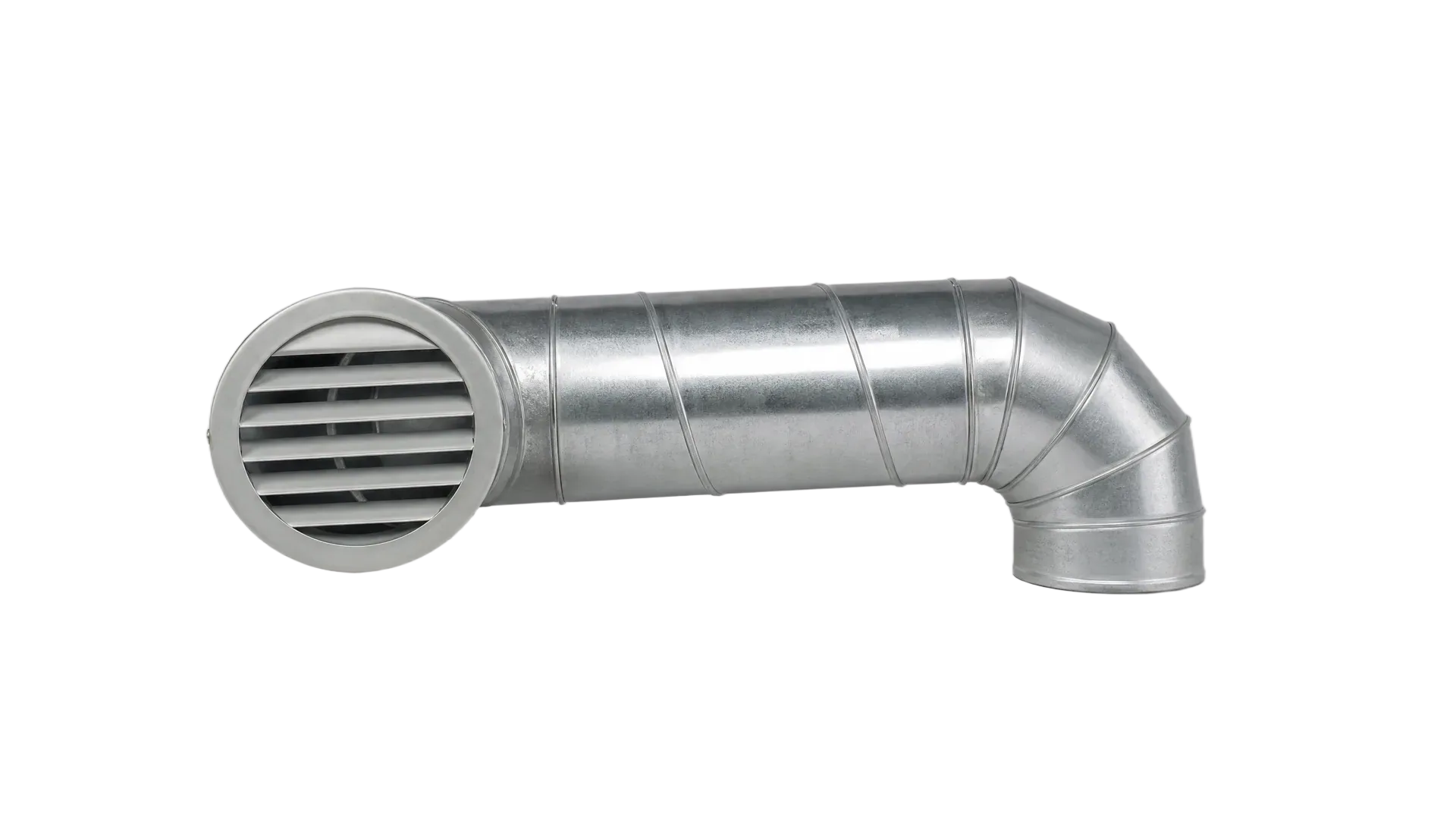
A galvanized steel round duct section with a 90-degree elbow at one end and a louvered vent grille at the other, photographed against a plain gray background.
Fill out one form

Does duct cleaning help with allergies in West Virginia?

You keep sneezing or waking up stuffed up and you're wondering if what's sitting in your ducts has something to do with it. Summers here get sticky enough that the AC runs for months, pulling air through the same ductwork over and over, and if nobody's looked at it in a while, you're left guessing whether cleaning it would actually settle things down or just cost money without changing how you feel.

For some people, yes. For most, not much on its own.

Duct cleaning removes the dust, pet hair and debris sitting in the ductwork, and if your system has heavy buildup, clearing it out can mean less of that gets stirred into the air you breathe. But most allergy triggers, like pollen and dust that settle fresh on surfaces every day, come back faster than ducts refill. In a West Virginia summer, with the AC running for months straight, a dirty system does push more air through dusty ducts than a clean one, so cleaning can help if buildup is the real problem. It won't do much if the trigger is pollen coming in through open windows or a pet shedding in the house. A contractor who looks inside the ducts first can tell you which one you're dealing with.

A dim room interior with a beige wall, a ceiling vent, a curtained window showing green trees outside, a beige sofa with a dark cushion, and a dark side table at left.

You're dusting the living room on a Saturday in April, windows cracked for the first time in months, and you finally look up at the ceiling vent grille. It's gray around the edges, a soft ring of dust that's built up slower than you'd notice day to day. The side table under it has a fine film on it already, the kind you wiped off a week ago. You run a finger along the grille slats and it comes away dark. The air handler clicks on while you're standing there, and you swear you can feel it push a little more of that dust loose into the room before it settles again.

Why do you keep sneezing more at home than anywhere else

You notice it most in your own living room, not at work or at a friend's place. A film settles on the TV stand a day or two after you wipe it down. The vent covers show a dark ring that wasn't there last spring. Your AC pulls the same air through those ducts for months at a stretch once the heat and humidity settle in, and whatever's built up inside gets pushed right back into the rooms you sit in every evening. If anyone in the house already deals with allergies or asthma, that's the air they're breathing while they sleep. It's worth knowing what's actually sitting behind those grilles before another summer of running the system nonstop.

Unfinished basement with bare concrete walls and floor, exposed wood joists, and galvanized sheet-metal HVAC ductwork and pipes running across the ceiling.

Ducts running clean

This is what moves air through your house without adding to what you're breathing. Metal trunk lines carry conditioned air to each room, and nothing inside them is shedding into that airstream. Dust still settles on shelves the normal way. Your filter is doing the catching, not the duct walls.


Basement ceiling with galvanized sheet-metal ductwork, wooden joists and subfloor, black and white pipes, above a concrete wall and floor.

Ducts holding buildup

Here the branch lines have years of dust packed along the seams and corners, the kind that doesn't rinse out with a vent cover wipe-down. Every time the blower kicks on, some of it stirs loose and rides the air into your bedroom and living room. That's what a cleaning crew is pulling out when they open this system up.

A smiling woman with long dark hair in a gray sweater sits behind a white countertop holding a glass of red wine, with a dimly lit living room and dark kitchen island in the background.
A woman in a beige knit sweater with her hair up laughs while looking to the side, seated in a dimly lit living area with a sofa, windows and a kitchen counter behind her, a glass of red wine in the lower right foreground.
A woman in a black sweater laughs while seated at a light stone counter with a glass of red wine, in a dimly lit living and dining room with bookshelves, a table lamp and framed artwork behind her.
A smiling woman with long dark hair in a beige sweater sits at a granite counter with a glass of red wine, with a living room, fireplace and dining area behind her.

Skip the search

Your duct cleaning request goes to one local pro.

No fee to send it, and nothing to sign.

What a cleaning actually removes

A duct system that's never been cleaned holds years of settled dust, pet hair, and whatever's gotten past the filter over that time. A contractor doing the work runs a brush and a vacuum through the trunk lines and the branches running to each room, pulling out what's built up on the walls of the duct itself. That's different from what your filter catches, since the filter only screens the air passing through it right now. What's already stuck to the inside of the metal stays there until something physically removes it, run after run, summer after summer.

Where the dust in your ducts came from

Return vents pull in air from inside your house, and that air carries whatever's loose in the room: skin flakes, pet dander, fibers from carpet and bedding. Most of it gets caught by the filter, but some settles in the ductwork itself, especially in the long humid stretch when your AC is running and moving air for hours at a time. Over a few summers that adds up to a coating on the duct walls. It's not coming from outside. It's the same dust already circulating through your rooms, just collected somewhere you can't see.

Empty basement room with bare concrete walls and floor, exposed wooden floor joists overhead, large galvanized sheet-metal ducts with a vent grille, colored pipes, and a single lit bulb.
Before you get your ductwork cleaning
Empty unfinished basement with bare concrete floor, insulated walls with vapor barrier between wood studs, exposed wood joists, galvanized sheet-metal ductwork, a recessed light, and a steel support column.
After you get your ductwork cleaning

You keep the filter changed and your allergies are still bad every summer when the AC runs nonstop. A dirty filter or dusty ducts aren't always the reason. Pollen and humidity get in through every door opening, and no amount of duct cleaning changes that.

You've never had the ducts cleaned since you moved in and you can see it in the vent covers. A contractor local to West Virginia who services this kind of system every summer can tell you in one visit whether what's built up in there is actually part of the problem.

A smiling bearded man in a dark crewneck sweater sits at a dinner table with a lit candle, glasses of wine and water, and plates of food in the foreground, with a lamp, framed art and a potted plant behind him.
A woman with dark hair in a bun reclines on a gray sofa with her eyes closed and a slight smile, wrapped in a cream knit sweater and blanket, with an open book resting in the foreground and a lit lamp in the dim room behind.
Unfinished basement with bare concrete floor and walls, exposed wood joists, large galvanized sheet-metal ductwork, PVC and copper piping, and a gray furnace unit beside wood stud framing.
Ductwork like this is just moving air, not adding to what you're breathing in your basement.
Basement ceiling with large galvanized sheet-metal ductwork, round metal pipes and plumbing lines running beneath wood joists, above a bare concrete wall and floor.
Water staining on the foundation wall means moisture's gotten in, and damp ducts can grow what a filter can't stop.

Power costs 15.39 cents per kilowatt-hour statewide

Most homes here heat with electricity, and at 15.39 cents a kilowatt-hour, that system runs more hours to keep the house warm than the AC does in summer. Air pulled through dusty ducts all winter is part of what you're breathing those months, not just what the AC stirs up in July.

EIA-861 2025 statewide residential average

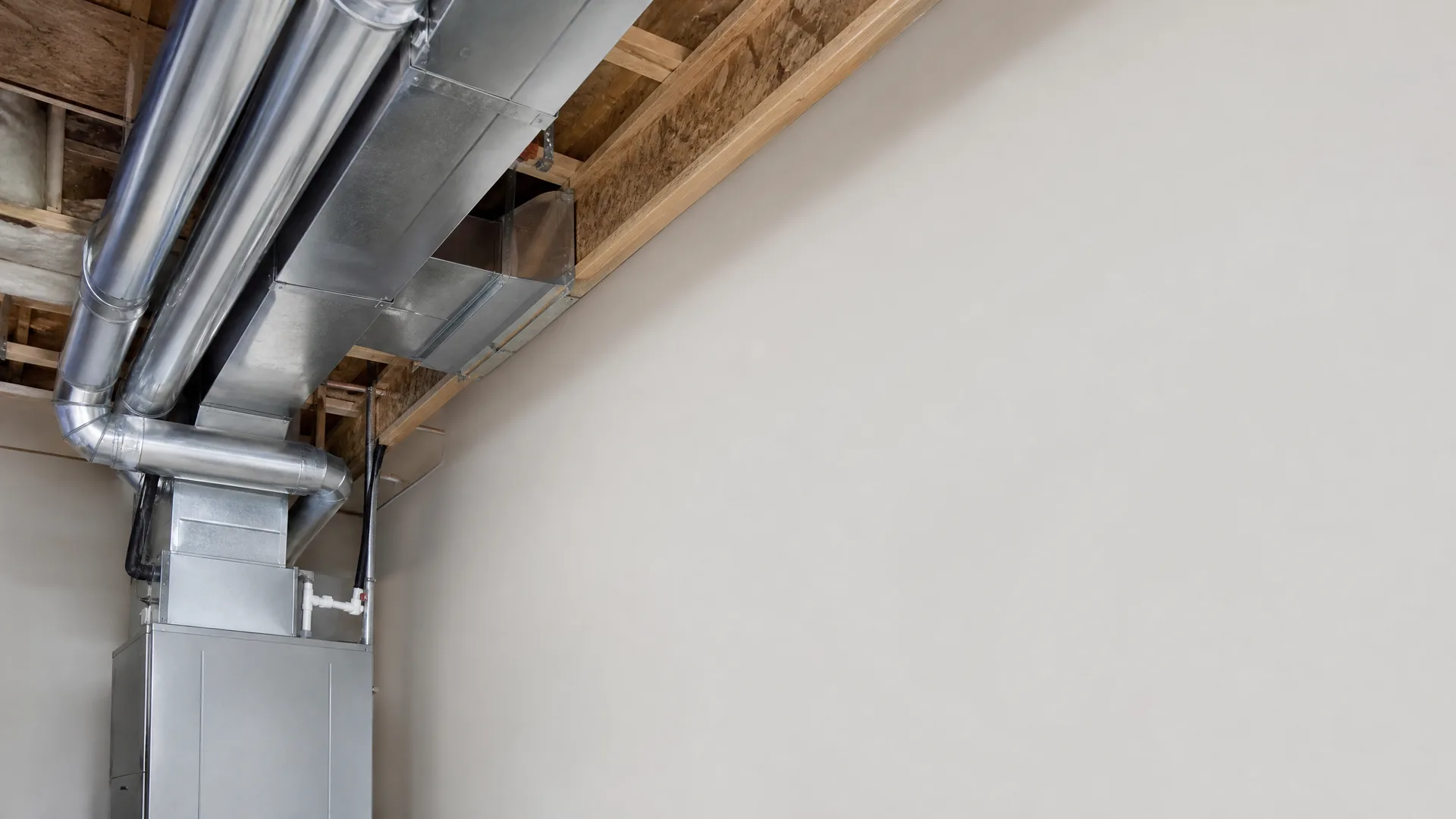
Galvanized sheet-metal ductwork and round pipes running along an exposed wood-joist ceiling with insulation, above a furnace unit beside a blank painted wall.

Calling around for estimates

Finding someone who cleans ducts usually means a search, a handful of calls, and explaining the same vent grille and the same sneezing to each one. Then you wait for quotes to come back and try to compare them against each other with no real way to judge who's actually good at this. A request here goes to one licensed contractor working in West Virginia, someone who deals with this equipment all year and knows what a duct system here usually looks like after a few summers of hard AC use.

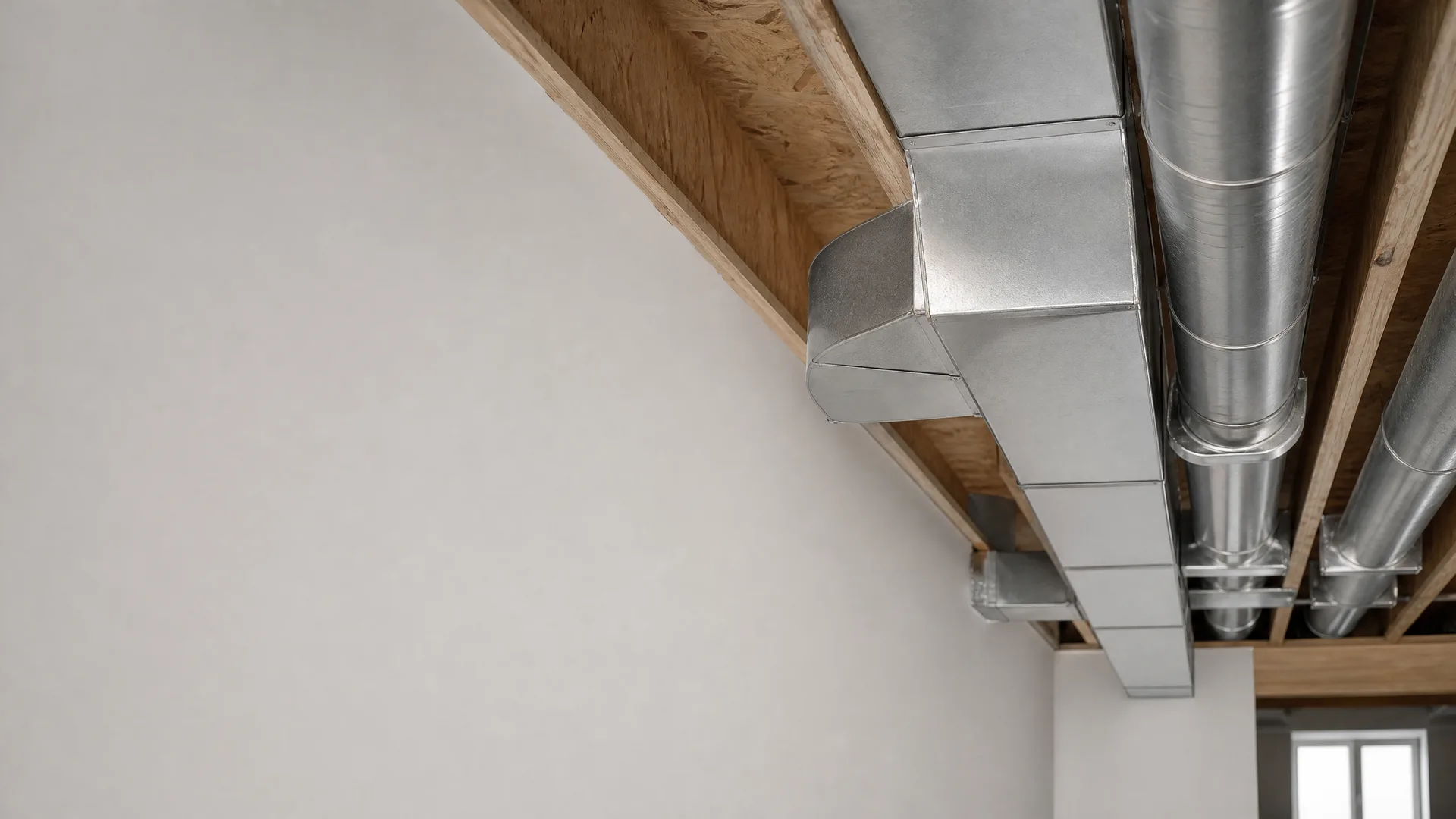
Galvanized rectangular and round sheet-metal ductwork mounted beneath an exposed wooden joist and OSB ceiling, next to a plain white wall and a window at lower right.

One contractor, not five calls

You're not getting a string of callbacks from companies working off the same lead. One local contractor gets your request, looks at what you've described, and follows up with you directly. They've seen what West Virginia summers do to a duct system and what winter heating adds on top of it, so you're not explaining the basics before they can even look at the job.

So the answer stands: cleaning your ducts can cut down what you're breathing if the system's actually dirty, but it won't touch what's coming in through your windows and doors every time they open. A contractor who services West Virginia systems all year, through the sticky summers and the long electric-heat winters, has seen what usually sits in a trunk line left alone for years and what's just normal household dust. That's who gets matched to your house, one contractor who works on this equipment in homes like yours, not a handful of companies competing for your call. They'll look at your vents and tell you straight whether cleaning is worth doing or whether your sneezing has another cause entirely. You end up with an answer specific to your ducts, not a guess based on what usually helps.

A modern two-story house with dark siding and stone base at dusk, with lit soffit lights, a path of large rectangular pavers set in dark gravel, planting beds, a lawn, and an orange and blue sunset sky above distant trees and water.

Ductwork Cleaning

Explain it one time

Duct and vent cleaningDucts or ventsWest Virginia
Step 1 of 2

What ZIP code is the job in?

  • A dimly lit living room corner with a beige upholstered sofa holding a dark green cushion and a chunky knit throw, beside a wooden sideboard with a lit ceramic table lamp, a small potted plant, and a wooden bowl, with a framed artwork on the wall and a mug on a book in the foreground.
    • A local pro who cleans ducts gets in touch with you.
    • Your duct cleaning request goes to a local pro who does this work.
  • A round wooden coffee table holding a round stone vase of green foliage, a lit candle in a glass container, and a small dark bowl, with a beige sofa, cushions and knit throw behind and a window at left.
    • One request and the search for a pro is handled.
    • Send it once and finding someone is no longer on you.
  • Sunlit living room with a wooden coffee table holding a ceramic vase of leafy branches and a carved wooden tray with two stacked books, in front of a beige sofa with tan and green cushions and a potted plant near a window.
    • Skip calling around for someone who cleans ducts.
    • Answer a few questions about the duct cleaning and skip the search.
  • Interior corner with a lit ceramic table lamp and wooden bowl on a wood sideboard, a framed picture and branch-filled vase behind, a knit throw over an upholstered chair, and a lit candle in a glass holder, stoneware mug and round planter of green foliage on a wooden table in the foreground.
    • Only one pro gets your request, so you hear from one company.
    • Your request stays with one local pro.