

Signs of a clogged dryer vent in Huntington, WV

Get my match

A dryer that takes two or three cycles to get clothes dry, a top that's hot to the touch, a laundry room that smells warm and a little burnt, lint showing up around the drum seal instead of catching in the trap. Any one of these on its own might not mean much. Together, they point at the vent. In Huntington, with power rates what they are, a restricted vent costs you every single load, and it's a fire risk sitting behind the machine that most people don't think about until something goes wrong. You don't have to figure out whether it's lint packed in the line, a crushed section of duct, or a bird's nest in the outside hood. That part isn't on you. Share what you're noticing with the form below and it goes to a contractor who works on dryer vents in your area. They'll follow up with you directly to sort out what's actually happening with yours.

A clogged dryer vent shows up first as time. Clothes that used to dry in one cycle start needing two or three, because the moist air has nowhere to go and keeps cycling back through the drum. The vent hood outside should flap open with a strong push of air when the dryer runs. If you hold your hand near it and feel almost nothing, the line is blocked somewhere between the back of the dryer and the outside wall. Lint builds up in the duct itself, not just the trap, and a long or bent run of vent pipe gives it more places to collect. Humid Huntington summers make a slow vent worse, since the air it is trying to push out is already heavy with moisture. Left alone, a blocked vent makes the dryer run hotter and longer than it was built to, which is how lint fires start.

A white plastic hooded dryer vent cover mounted with screws on beige horizontal lap siding, next to a plain pale wall surface.

What a clear vent should do

Step outside while the dryer runs and check the vent hood on the wall. A clear line pushes air hard enough to hold the flap open the whole cycle. If the flap barely moves, or only opens partway and drops shut, lint has built up somewhere between the back of the dryer and that hood. The length of the run matters too. A dryer vented straight out through a nearby wall clears itself far easier than one with a long run through the attic to reach the roof.

A metal louvered exterior vent hood screwed to a beige horizontal lap siding wall, with a blank light-colored surface filling the left half of the frame.

Lint does not stay put

Lint is light enough to travel with the airflow, so it does not just sit at the drum end. It collects at every turn the duct makes, and a vent with several bends gives it more places to catch than a straight shot outside. Over time those spots narrow the path air can take, which is why two dryers of the same age and same use can end up in very different shape depending on how their venting is laid out.

Clean It Yourself or Call a Pro

Clean the vent yourself

  • A soft brush and a shop vac reach the first few feet of duct from inside the laundry room, where lint usually packs the thickest.
  • It costs nothing beyond the tools you already own or can buy once.
  • You can only clear what you can reach, and most runs bend through a wall or ceiling where a push rod won't follow.
  • If the vent run is long or has more than one turn, lint past the first bend stays put no matter how hard you push.
  • There's no way to check the far end from inside, so you're guessing whether the hood outside is actually clear when you're done.
  • Doing it yourself means doing it again every few months, since a partial clean leaves buildup that keeps collecting.

Have it professionally cleaned

  • A contractor runs a brush through the full length of the duct, from the dryer to the vent hood outside, not just the first few feet.
  • The job includes checking the hood flap and the outside termination, the part a homeowner can't easily see while cleaning from inside.
  • A full cleaning clears lint packed around bends and transitions that a shop vac can't pull out.
  • It costs more than doing it yourself, since you're paying for the labor and the equipment that reaches the whole run.
  • A thorough cleaning holds up longer, because the whole line gets cleared instead of just the accessible end.
  • Scheduling means working around someone else's availability instead of handling it the moment you notice a problem.
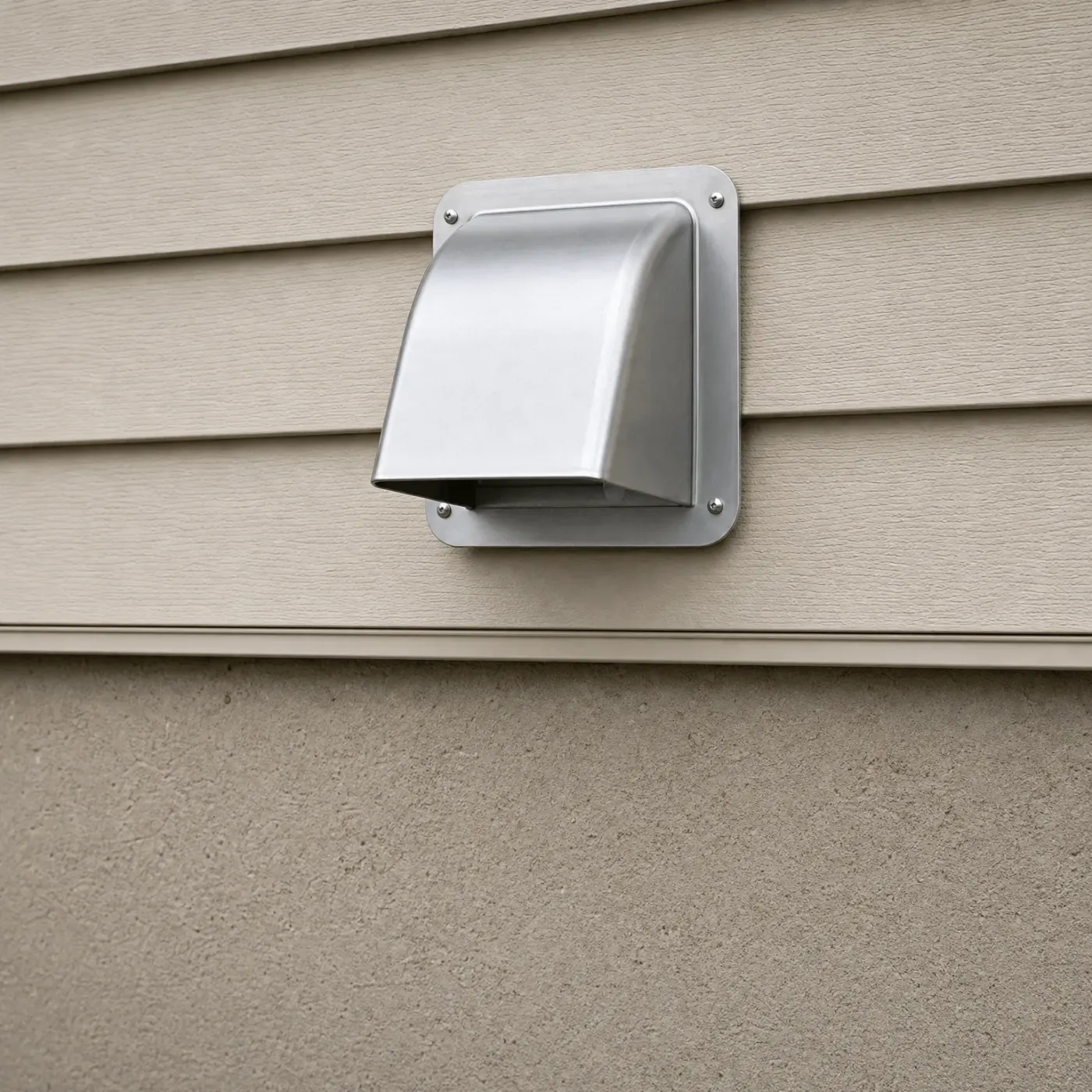
A metal hooded dryer vent cover mounted on beige horizontal lap siding above a textured concrete foundation wall.

The hood doing its job

This is what a working vent looks like. The cap sits flush against the siding, the screws holding it tight, and nothing blocks the opening. Air from the dryer should push out here with enough force to swing the hood open on its own.
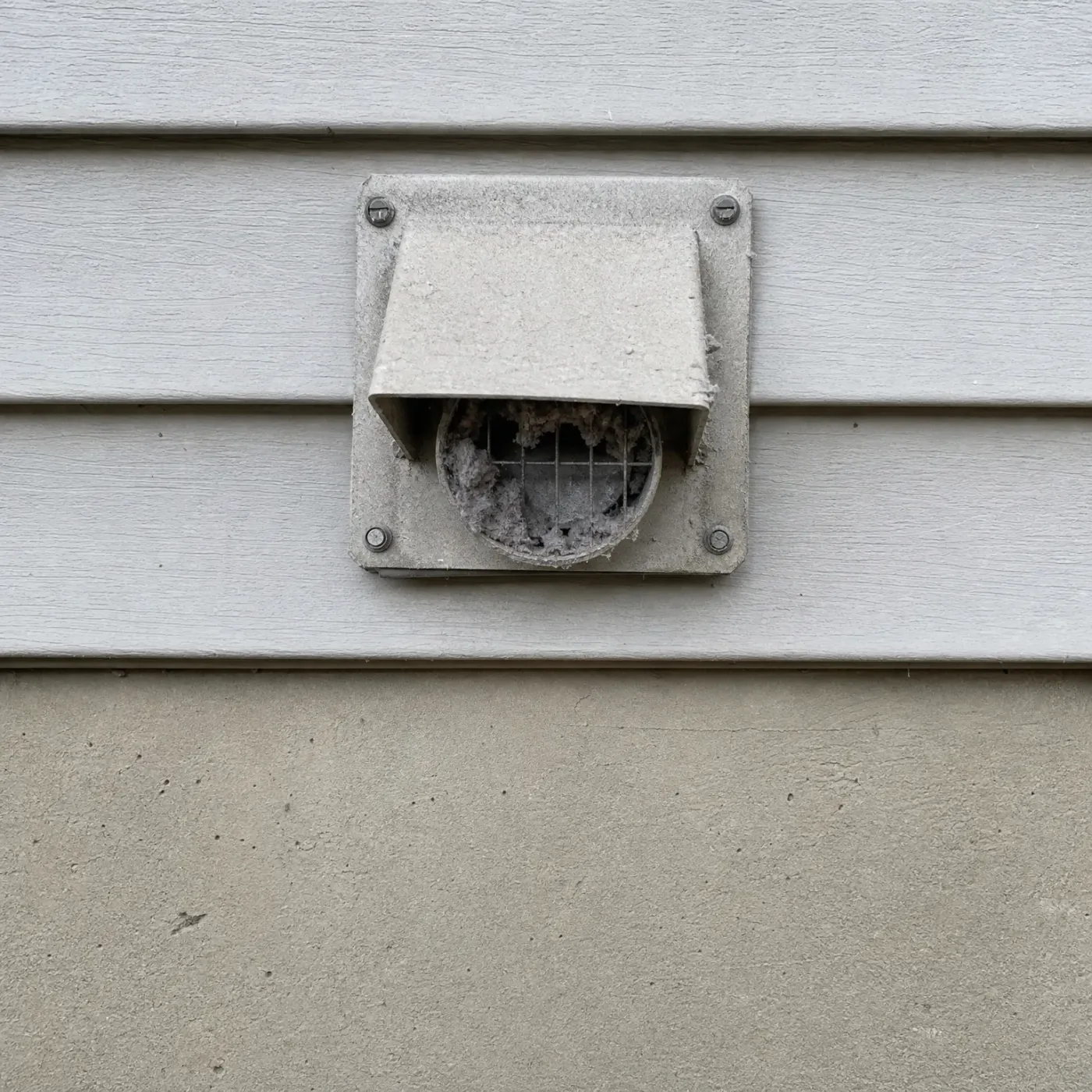
A metal dryer vent hood screwed to light gray lap siding, with lint clogging the round opening and a lower concrete wall below.

The screen that stops it all

Lint has built up across this screen until almost no gap is left for air to pass. Every load adds a little more, and once it mats like this, the dryer is pushing exhaust against a wall instead of out of the house.

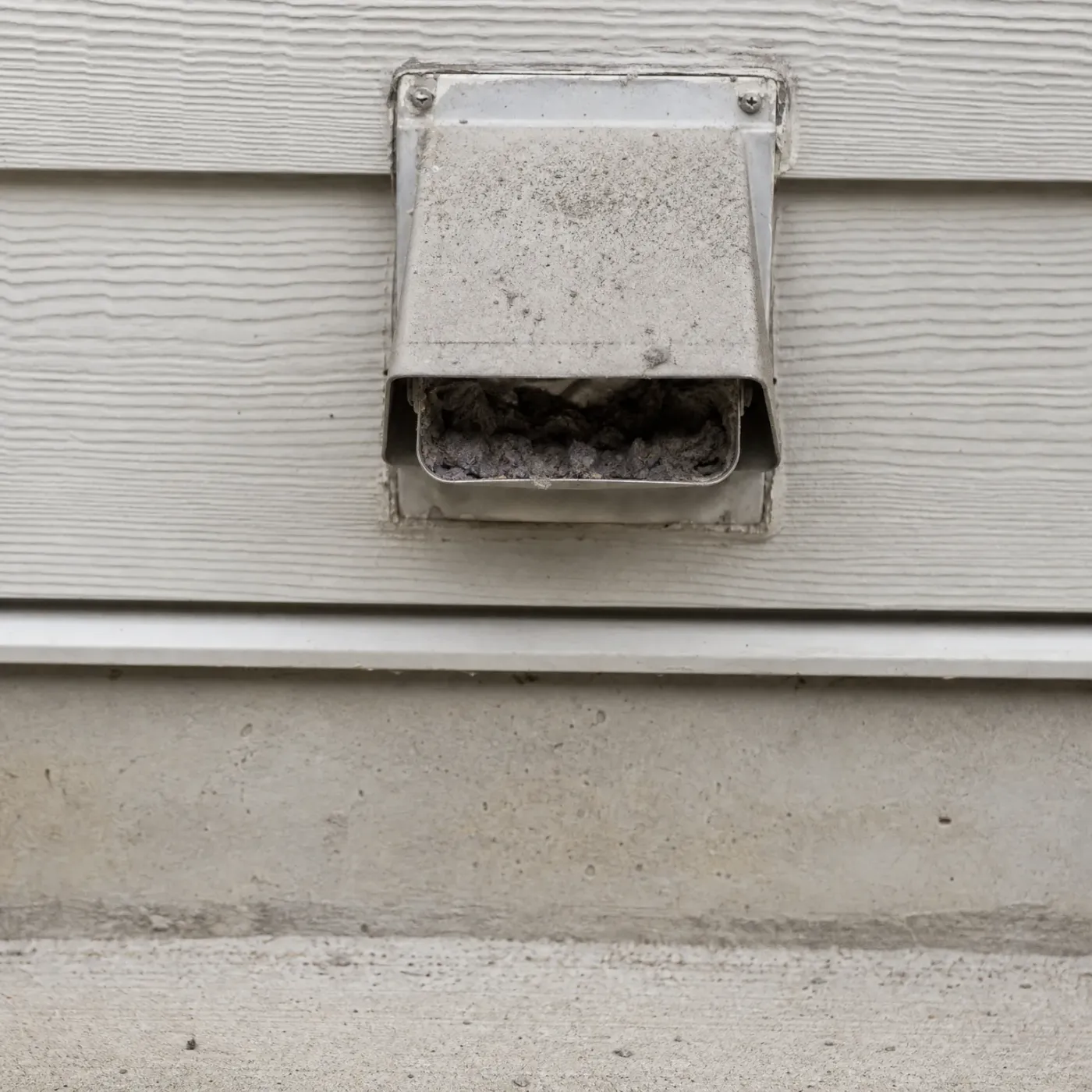
A metal dryer vent hood mounted on light gray horizontal lap siding, with its opening clogged by gray lint, above a concrete foundation wall.
Before you get your dryer vent cleaning
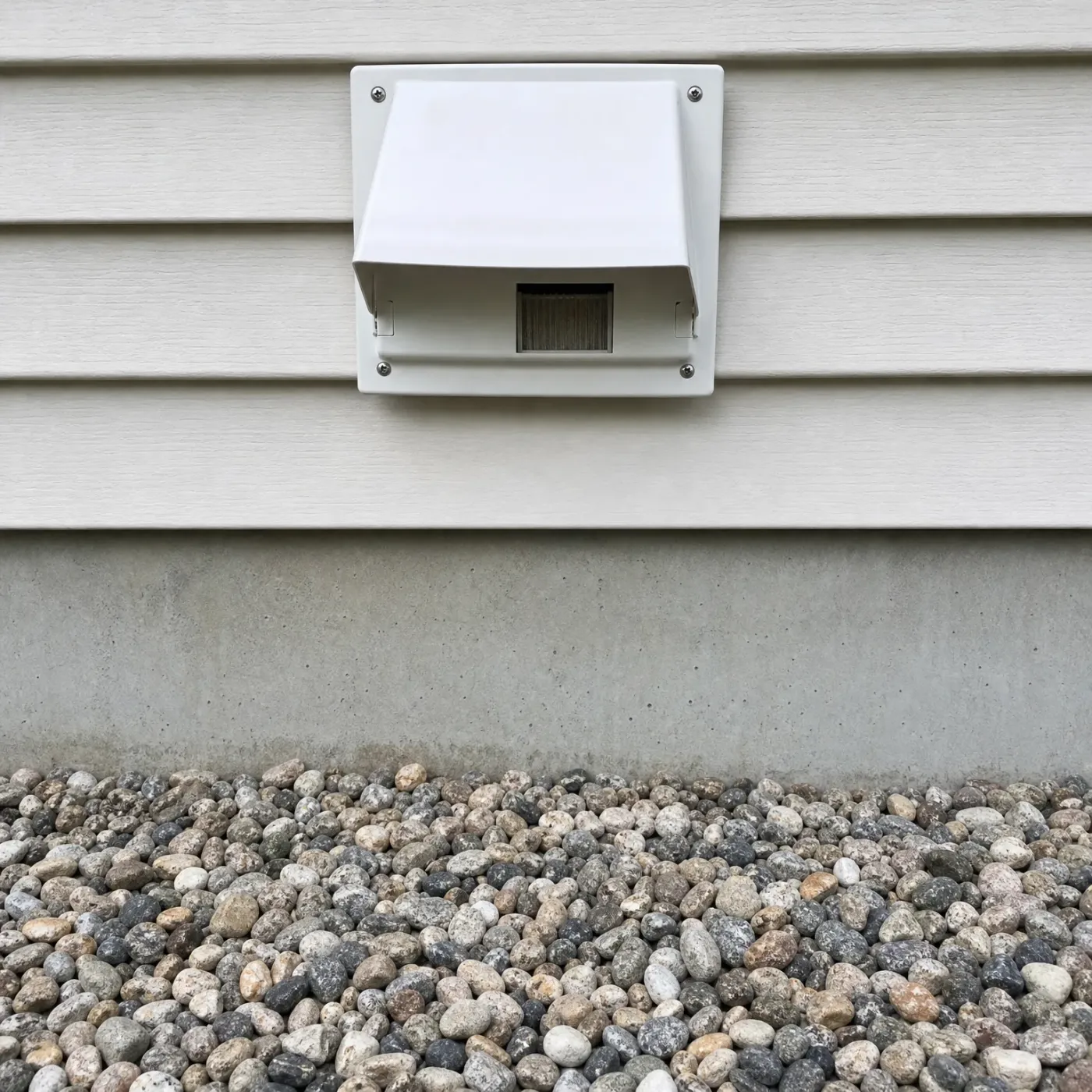
A white hooded dryer vent cover screwed into beige lap siding above a concrete foundation wall, with a bed of rounded gravel at the base.
After you get your dryer vent cleaning

A local pro for your dryer vent cleaning

One request and the dryer vent cleaning stops waiting on you.

There's no charge for the request.

How the Clog Actually Forms

  • Lint builds up in the duct in stages, starting near the drum where the air is warmest and slows down first.
  • A dryer vent run with more than one or two bends traps lint at each turn, since airflow loses force every time it changes direction.
  • The outside hood flap is the last thing to show a problem, because lint has to pack the whole run before airflow drops at the exit.
  • A rigid metal duct lets lint slide through more easily than the foil or plastic accordion ducts some older setups still use.
  • Birds and small animals nest in the vent hood over summer, which blocks the opening the same way a lint clog does.
  • The lint trap only catches a fraction of what the dryer sheds, so the rest rides the airflow down the duct every single cycle.

Lint does not clog a vent all at once. It builds in stages, and it starts close to the drum, where the air coming off wet clothes is warmest and carries the most lint with it. As that air moves down the duct it cools, slows down, and drops more of what it is carrying. Every bend in the run makes this worse. A straight shot from the laundry room to the outside wall is rare in most houses, and each turn the duct makes costs the air some of its force, so lint settles at the elbows before it ever reaches the end. That is why the outside hood is the last place a problem shows. Lint has to pack the duct most of the way through before airflow at the exit drops enough to notice. The duct material matters here too. Rigid metal lets lint slide along and out. The foil or plastic accordion duct still found in some older setups has ridges that catch lint at every fold, so those setups clog faster and in more places along the run. None of this is helped by the lint trap, which only catches a fraction of what the dryer sheds each cycle. The rest rides the airflow the whole way down, cycle after cycle, building in the same spots every time.

A woman wrapped in a thick cream knit blanket sits in a chair with an open book on her lap, beside a lit table lamp and a frost-covered window at night.
An older woman in a cream knit sweater smiles while looking off-camera in a warmly lit kitchen, with a round loaf of bread on a wooden board in the foreground and a dark window behind her.

What does your household mean for your dryer vent?

  • 2.24 people per household on average

    Cabell County households run 2.24 people on average, which means a load most days. A vent that's clogged gets used hard before anyone notices it's slow.

  • Half the homes here were built by 1971

    Half the homes in Cabell County went up in 1971 or earlier. A duct run that old has had decades to collect lint in bends nobody's looked at.

  • Power here costs 16.97 cents per kilowatt-hour

    Power here runs 16.97 cents per kilowatt-hour. A clogged vent that forces two or three cycles to dry one load burns through that rate fast.

ACS 2020-2024 · EIA-861 2025

A man in a dark polo shirt and cap, seen from behind, walks up a paver path toward a woman standing in the open front doorway of a single-story stucco and stone house.

A slow dryer tells you before it fails you

Every sign points back to the same thing. A hot top, a burnt smell, lint at the seal instead of the trap, a hood that won't swing open outside. The vent is blocked, and the dryer is working harder than it should to finish a load. None of that fixes itself. It gets worse one load at a time until the duct is packed tight enough to matter.

You don't have to figure out how bad it is on your own. Once you send the request, a contractor who clears vents like yours for a living takes it from there and reaches out to you directly. The checking, the ladder, the brush work, all of it moves off your list the moment you ask.

A gray upholstered sofa with a textured cushion sits beside a dark round side table holding a vase of green foliage, with a table lamp and sheer-curtained window behind.
A gray-haired man in a dark coat with snow on the shoulders and collar stands smiling in a dimly lit entryway with a paneled front door, lamps, and a framed picture in an adjoining room.
A gray-haired, bearded man in a dark winter coat with snow on the shoulders stands in a doorway of a home interior with a lit lamp, framed pictures, a potted plant and a staircase behind him, and an evergreen wreath at the left edge.
An older man with gray hair and a beard, wearing a snow-dusted dark coat and knit scarf, stands smiling in a dimly lit house entry with a lit lamp, mirror, and a living room with snow visible through the window behind him.
A smiling gray-haired man in a dark wool coat with snow flecks stands in a dimly lit home entryway, with a lit table lamp, potted plant, framed pictures and a living room visible behind him.

Dryer Vent Cleaning

Get the right pro for your dryer vent

Once you send the form, finding a pro is off your list.

A black-framed smartphone standing upright against a plain light gray background, its screen filled with solid green.
Duct and vent cleaningCabell County, WV
Step 1 of 3

What kind of equipment?