Signs your ducts need cleaning in Charleston, WV

Get matched

You noticed something, dust coming back fast, a musty smell when the furnace kicks on, more sneezing than usual, maybe a room that never seems to get enough air. That's what sends most Kanawha County homeowners looking into duct cleaning in the first place. Figuring out whether what you're seeing actually calls for it is only half the problem. The other half is finding someone who'll look at your actual system, in your actual house, and tell you straight instead of guessing over the phone. That usually means calling around, explaining the same thing three or four times, and trying to compare quotes from people you've never worked with. This page skips that part. Tell it a little about your place and what you're noticing, and it matches you with a contractor who takes it from there, reaching out to you directly. No more chasing down names or repeating yourself to each one.

The signs are usually simple to catch. Dust that settles back on furniture within a day or two of cleaning means your ducts are feeding it right back into the room. A musty smell when the furnace or AC first kicks on points to mold or dust sitting in the line somewhere past the filter. More sneezing or a stuffy feeling indoors than outdoors is another one, especially if it eases up when you leave the house. Some rooms running warmer or cooler than others, or weak airflow at a vent you know used to blow harder, can mean buildup is narrowing the duct itself. None of these prove the ducts are the cause by themselves. A dirty filter or a failing part can cause the same symptoms. But when a few of these show up together, especially after the system has run hard through a Charleston summer or a cold stretch of winter, the ducts are worth having looked at before you spend money guessing at something else.

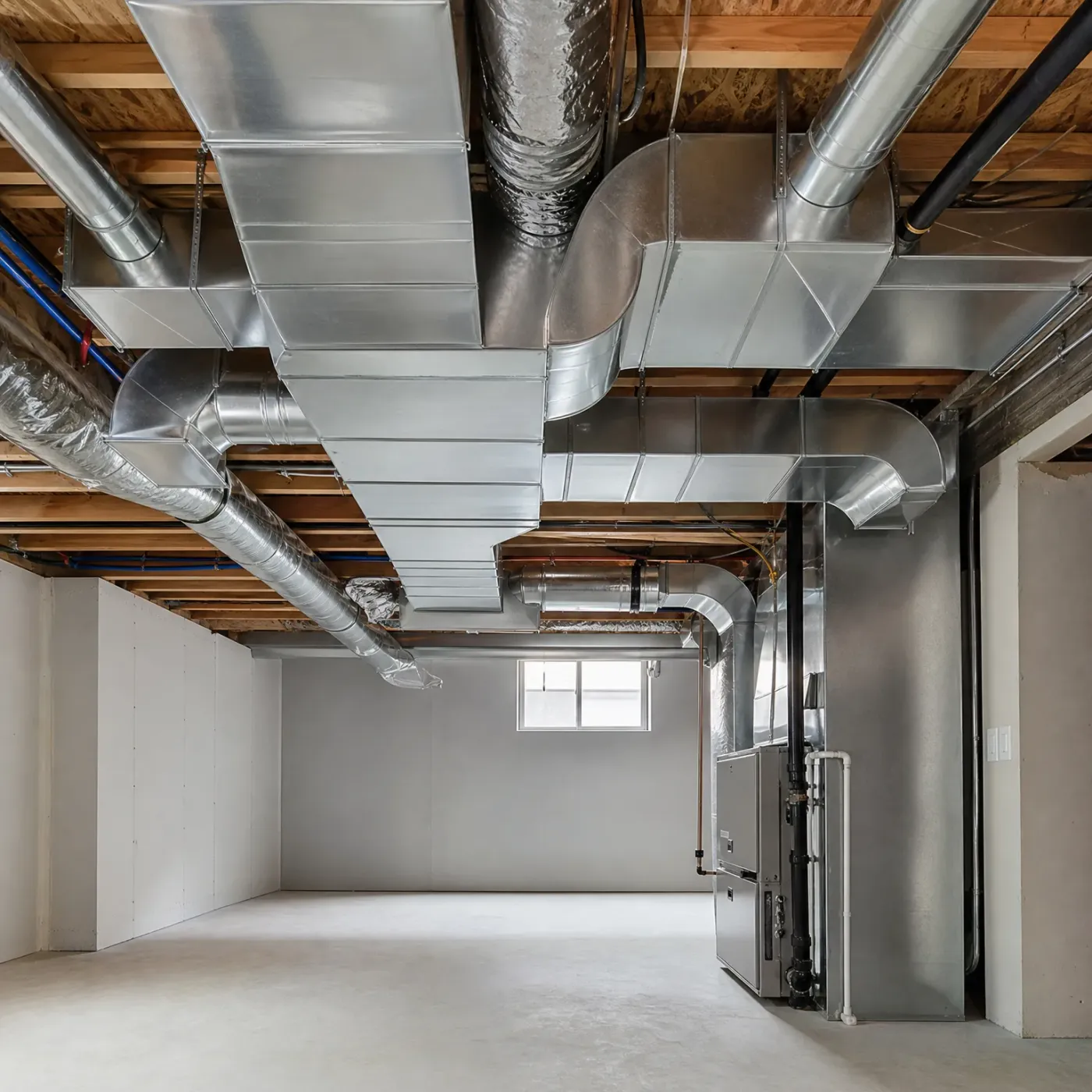
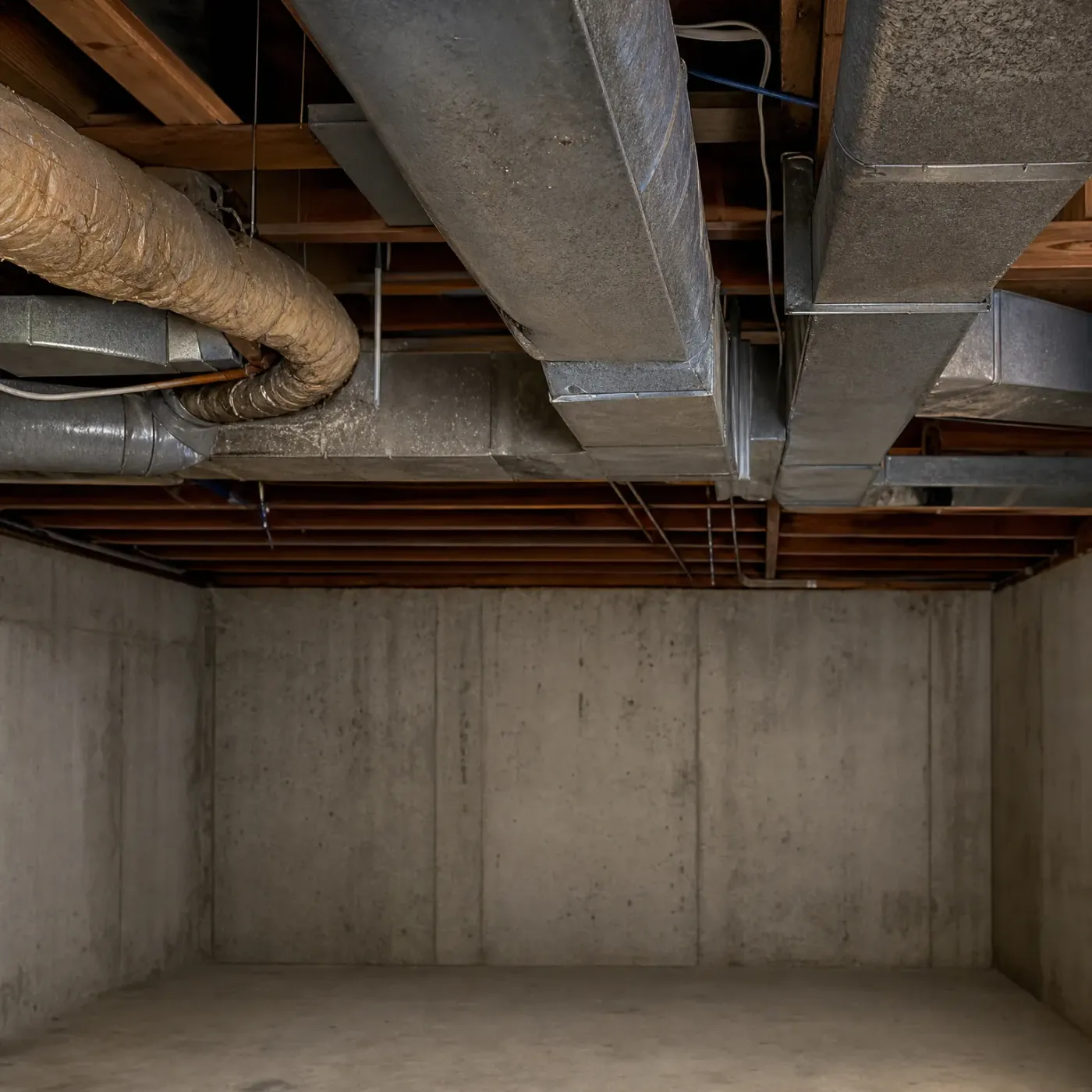
Empty unfinished basement with bare concrete walls and floor, showing galvanized sheet metal ductwork, insulated flexible duct, and pipes running along the wood-framed ceiling, with a small window at left.

Ducts doing their job

This is what a clean system looks like from underneath. Air moves through the metal without much resistance, and nothing inside is restricting the flow. A system like this won't be pulling dust back into your rooms or feeding mold spores through the vents.
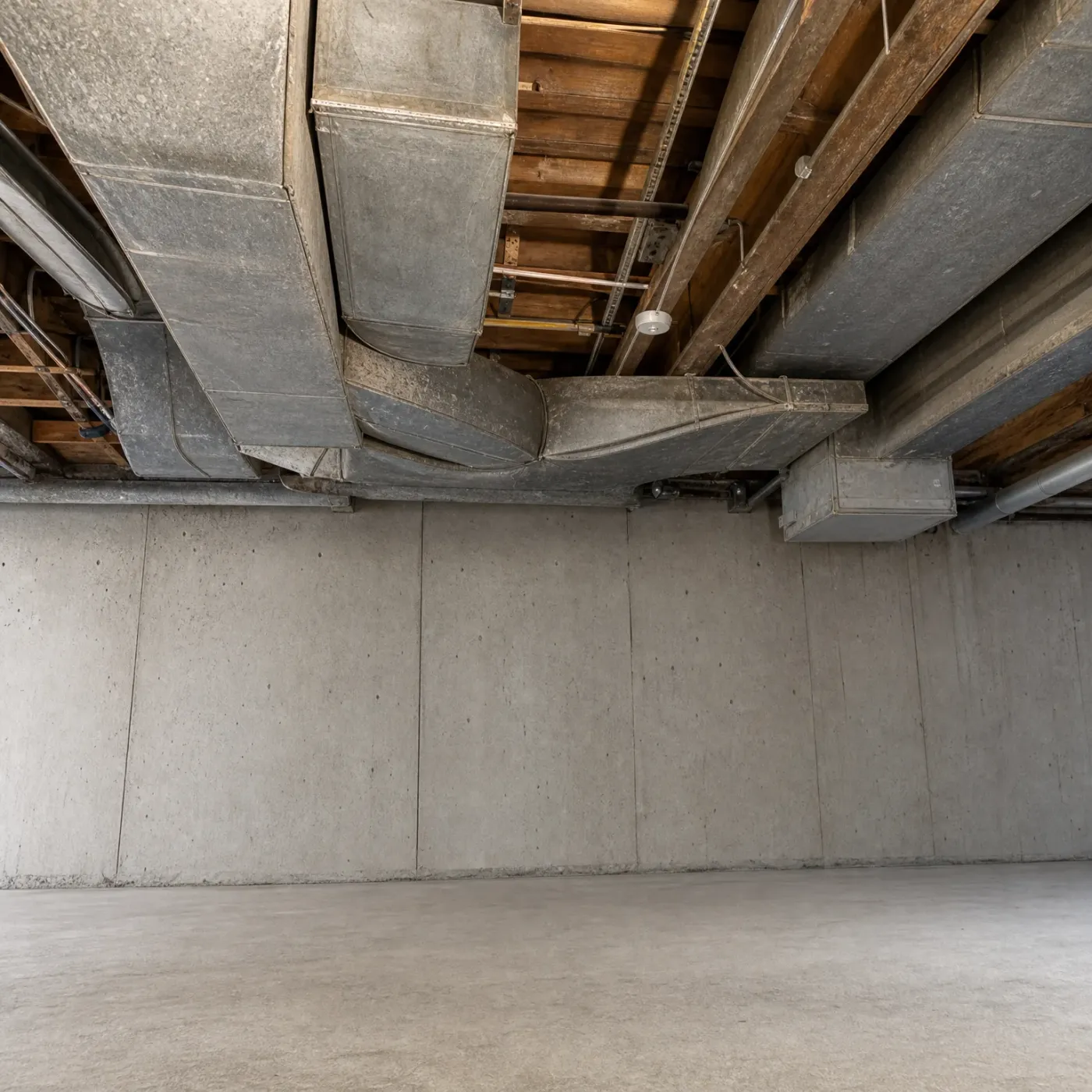
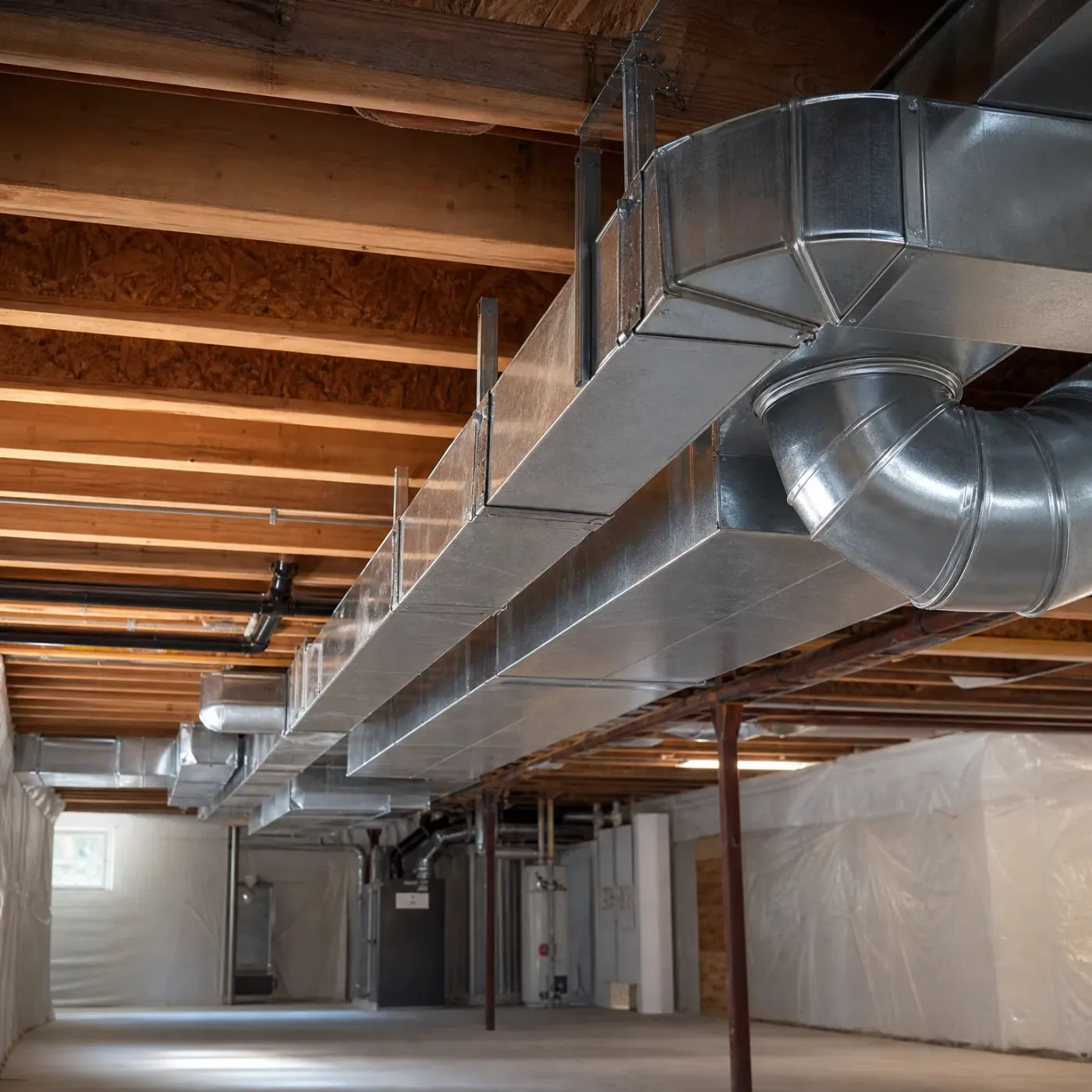
Empty basement room with bare concrete walls and floor, with exposed wooden joists, sheet-metal HVAC ducts, an insulated flexible duct, and pipes running across the ceiling.

Ducts under strain

Flex duct sagging between joists, wiring crossing right over the metal, tight runs that make the blower work harder than it should. None of this means dirty ducts on its own, but a setup this cluttered is harder to inspect and harder to keep clean.

Why do Kanawha County ducts get dirty in the first place?

  • Half the homes here were built by 1966

    Half the homes in Kanawha County were built in 1966 or earlier, per Census data. Older duct runs have had more years to collect dust, and more chances for a repair to leave gaps where it gets pulled back in.

  • Heat runs October through April

    Heat runs here about seven months a year, October through April. That's seven months of furnace air pushing through the same ducts, carrying whatever has settled in them toward every room.

  • Cooling runs June through September

    Cooling runs June through September. Add it to the heating months and there are only a few weeks a year your system isn't moving air, and dust, through the ductwork.

ACS 2020-2024 · NOAA nClimDiv 1991-2020

Gas furnaces here run from October through March, and every one of those months pushes air through the same ducts, so whatever is sitting in them gets circulated into every room on a daily cycle.

That constant air movement is exactly why dust and mold spores in the ducts end up back on your furniture and in your lungs. A system that is clean inside has nothing to add to the air passing through it.

Empty basement room with bare concrete walls and floor, and an exposed ceiling of wooden joists with large galvanized sheet-metal ductwork and pipes.
Before you get your ductwork cleaning
Unfinished basement with exposed wood joists, galvanized sheet-metal ductwork, insulated flex ducts, piping, a small window, and a furnace or air handler against a gray wall.
After you get your ductwork cleaning

Six months of furnace air

Gas furnaces here run October through March. Whatever is sitting in your ducts gets pushed into every room you breathe in for half the year.

Find a duct system pro

One call instead of a list

Skip searching, calling around, and repeating the same description to every company. Get matched with a contractor who handles duct cleaning and let them reach out.

Find a duct system pro

Does Your Ductwork Need Cleaning

Clean when you check

  • Pull a vent cover and the metal behind it looks gray at most, not coated in a soft layer you can wipe off with a finger.
  • No musty smell comes out when the furnace first kicks on in the morning.
  • Dust on the furniture builds up over a normal week, not within a day or two of dusting.
  • Nobody in the house is sneezing more than they did last year at the same time.
  • Every room gets roughly the same amount of air out of the vents, including the ones farthest from the furnace.

Needs a look

  • Dust settles back on tables and shelves within a day or two of cleaning them off.
  • A musty or stale smell shows up every time the furnace or AC first turns on.
  • One or two rooms stay noticeably warmer or cooler than the rest of the house no matter the setting.
  • Someone in the house has started sneezing or coughing more since the heat or AC came on for the season.
  • A vent cover feels gritty to the touch, or you can see buildup inside the first few inches of ductwork.
  • A repair was done on the ducts or the furnace recently and the dust or smell showed up soon after.
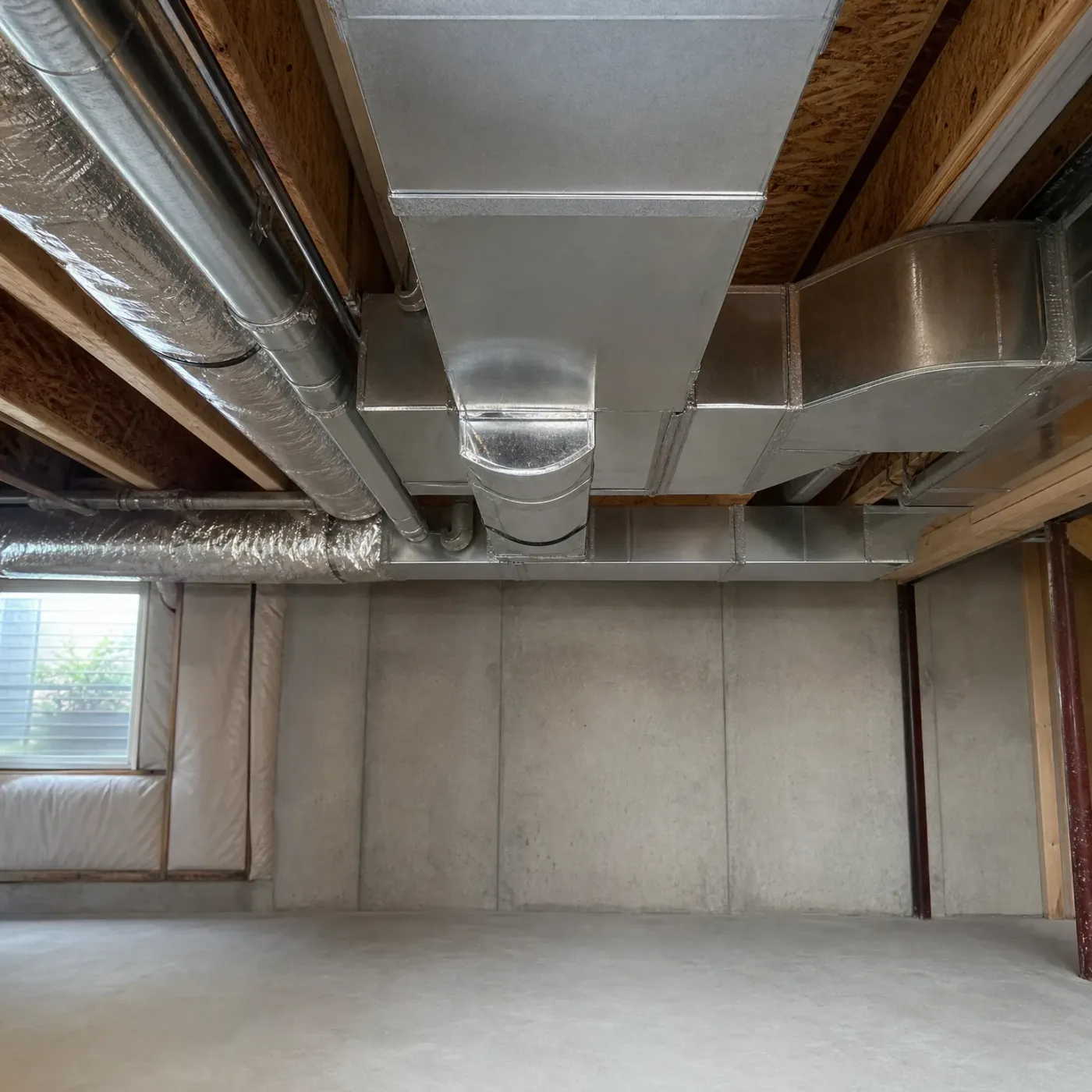
Unfinished basement with concrete walls and floor, a steel beam on posts, and exposed wooden joists with sheet-metal ductwork and piping overhead.

Ducts running clear

This is what the inside of a working system looks like. The metal is open from end to end, so air moves through at full force and reaches every room it's supposed to. Nothing is sitting inside the ducts, so nothing gets stirred loose and blown back out into your house.

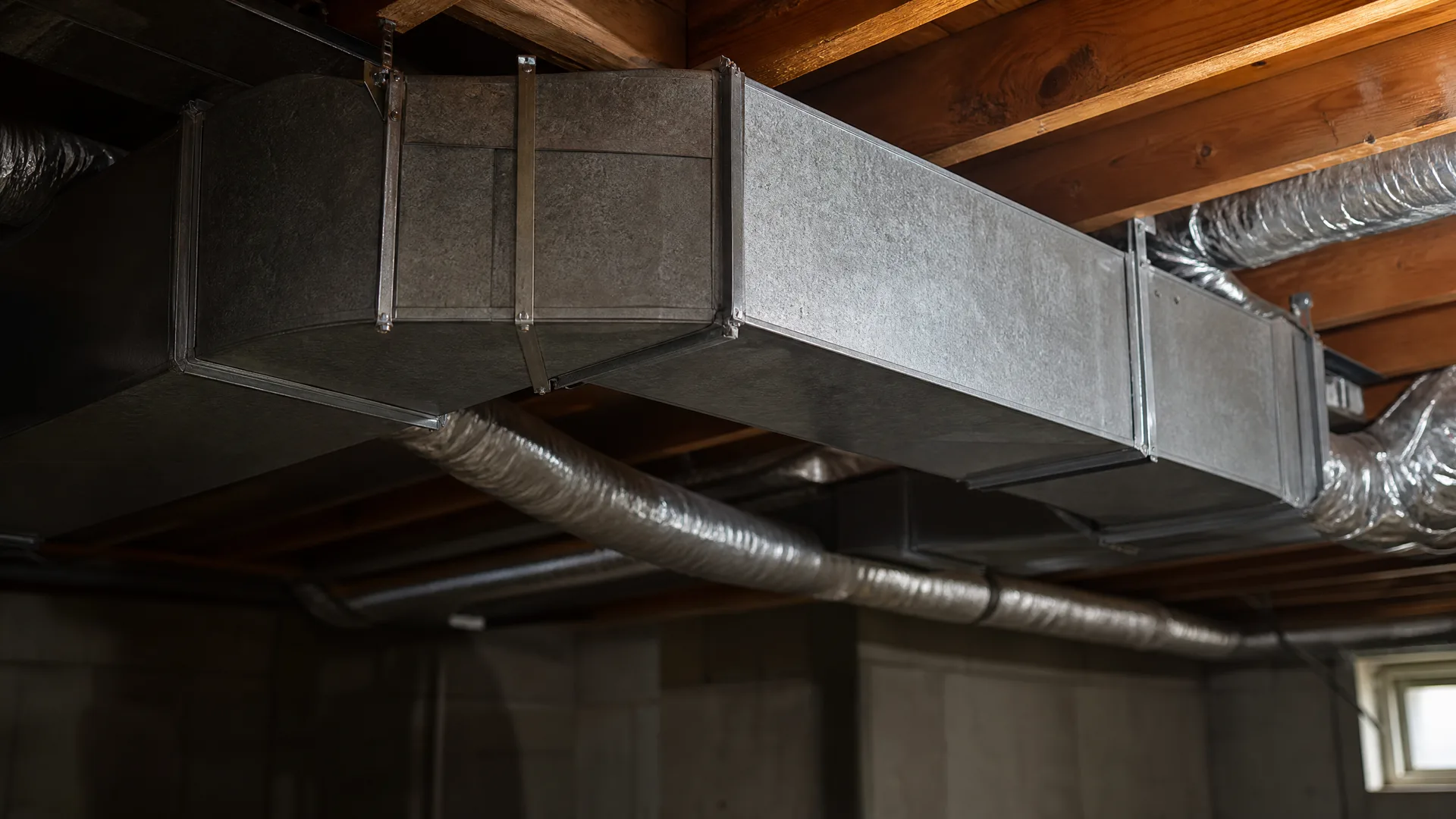
Unfinished basement with bare concrete walls and floor, and galvanized sheet-metal HVAC ducts, pipes and wiring running along the wood-joist ceiling.

Ducts holding buildup

Here the same kind of ductwork is carrying more than air. Dust and debris collect along the bottom of the metal and near the joints, and every time the furnace or AC runs, some of it gets pulled into the stream and pushed out through your vents into the rooms you're sitting in.

What's actually going on in your house right now

Check the floor near your vents. If there's a thin layer of dust back within a day of wiping it down, your system is putting it there. Open a closet or a back bedroom that always runs warmer or cooler than the rest of the house, that's airflow getting choked somewhere in the run. Anyone in the house sneezing more at home than away from it, or a cough that eases up when they leave for a few days, is worth paying attention to. If you've got pets, the hair and dander problem is worse than it looks on the surface, because a good amount of it is moving through the ducts instead of staying on the floor where you can vacuum it up.

A bearded man in a plaid flannel shirt stands indoors looking out a window at snow-covered conifers, with a ceramic mug on the wooden sill and wooden cabinets behind him.
A bearded man in a navy T-shirt sits on a light-colored couch indoors, smiling while looking down at a laptop screen in the foreground, with a framed picture and a potted plant blurred behind him.
Unfinished basement with galvanized sheet-metal trunk ductwork and round branch ducts suspended beneath wood floor joists, with support posts, plastic sheeting on the walls, and a furnace and water heater along the far wall.

Find a duct system cleaning pro in Kanawha County

Describe your ductwork job once, to one pro.

Get matched with someone who does this kind of work in Kanawha County.

Get a local pro

Asking costs nothing, and the choice to hire stays yours.

Why does my register vent whistle or blow weaker than the others?

You walk past a vent and hear a thin whistle, or you hold your hand up to one register and barely feel anything compared to the room next door. It's easy to assume that vent is just built that way, or that the room was always going to run warmer or colder than the rest of the house. But a whistle or weak airflow at one register usually means something specific is happening inside the duct feeding it.

A blockage or a narrow gap is forcing air through a smaller opening than it should have

A whistle happens when air gets squeezed through a space narrower than the duct was built for, the same way air whistles through a cracked window. Dust and debris built up along the inside of the duct can narrow that path enough to cause it. Weak airflow at one register while others blow fine points to the same kind of blockage, just further back in that branch line. Gas furnaces here run October through March, so that register will keep underperforming through the whole stretch of winter unless whatever is narrowing the duct gets cleared out. A duct that's open along its full length lets air reach the register at the same force it left the furnace with.

A woman in a cream cowl-neck sweater stands in a lamp-lit room looking out a window at a snow-covered yard with shrubs and bare trees at dusk.
A woman in a gray turtleneck sweater stands near a large window in a lamp-lit living room, looking out at falling snow and snow-covered conifers.
A woman in a chunky knit sweater stands by a large window looking out at snow-covered ground, with a dimly lit living room containing a gray sofa, framed artwork, shelves and table lamps behind her.
A woman in a gray turtleneck sweater stands in a dimly lit living room with a lamp and bookshelves, looking out a multi-pane window at falling snow.
A man in a dark jacket and khaki pants walks through an open gate in a stone wall toward a woman standing in the open front doorway of a single-story white house with a dark shingled roof and river-rock accents.

What this is doing to your house right now

Every bedroom gets a share of the same air. If one register is coated inside, that dust isn't staying behind the vent cover. It's landing on the dresser in the kid's room, on the TV stand, on the ceiling fan blades. You can wipe it down on Monday and find it again by Thursday, and the cleaning never actually catches up. Meanwhile the room at the end of the hall that never warms up right, or the one that always feels stuffy, might not be a thermostat problem at all. It might be a duct run that's partly blocked and not delivering what the furnace is sending.

None of this means tearing anything apart to find out. A contractor who works on duct systems in Kanawha County homes can look at what you're describing and tell you whether it's buildup, a gap in the ductwork, or something else entirely. That's one visit instead of you guessing room by room, pricing out cleaning companies on your own, and explaining the same symptoms to three different people before one of them can actually look at it.

A mug and a small round vase sit on a wooden windowsill beside sheer and heavier curtains, with blurred autumn trees seen through the rain-speckled window and a sofa with cushions and a throw in the foreground.
  1. Dust and debris collect inside the duct runs over months of use.

  2. The furnace or AC blower pushes air through those same ducts every cycle.

  3. Moving air stirs up what's loose and carries it into the supply registers.

  4. Registers release that dust and any mold spores straight into each room.

Power here costs 16.96 cents per kilowatt-hour

A clogged duct system makes your blower work harder to push the same air through every room, and that extra draw shows up on your bill at 16.96 cents a kilowatt-hour. Clear ducts mean the blower motor isn't straining against buildup it shouldn't have to move through.

EIA-861 2025

What the Signs Add Up To

  • Dust back on furniture within a day, a musty smell at startup, and weak airflow in one or two rooms are the clearest signs your ducts need cleaning.
  • A quick look behind a vent cover tells you more than guessing ever will, since gray metal means fine and a soft gray coat means it is time.
  • None of these signs point to a furnace or AC that is failing, just a duct system doing its job poorly for six months of gas heat every year.
  • Finding a contractor on your own means searching, calling around, and explaining the same symptoms to every company before you get a single quote.
  • Getting matched with one contractor who already knows what Kanawha County duct systems look like skips that whole process and gets you to an answer faster.
  • Whether it is one bedroom that never warms up or dust on every surface in the house, the signs are there to check before you call anyone.

You came here with a question, and the answer is straightforward. Dust that resettles fast, a musty smell when the system starts, one room that never gets enough air, a vent cover that looks dirty underneath. Any one of those is worth checking. Two or three together means the ducts are the reason, not the furnace and not the AC. Those units are doing what they're built to do. The ducts are just carrying more than they should through every register in the house.

Checking takes a few minutes. Pull a cover, wipe a sill, stand in the room that runs warm or cold and ask why. None of it requires a technician standing in your living room to confirm what you can already see.

Getting it fixed is a different matter, and that's where most people lose time they didn't plan on losing. Searching for a duct cleaning contractor in Kanawha County, calling two or three, describing the same gray buildup and the same musty smell to each one, then sitting on quotes trying to compare companies you don't know anything about. That's the part that wears people down, not the signs themselves.

The signs you just read are enough to know whether you have a problem. What happens next is just finding someone qualified to deal with it, and that part doesn't have to take as long as it usually does.

Rectangular sheet-metal HVAC trunk ducting and insulated flexible ducts running along wooden floor joists in an unfinished basement ceiling above concrete block walls.

The right pro for this job

Duct and vent cleaningDucts or ventsKanawha County, WV
Step 1 of 2

What ZIP code is the job in?