

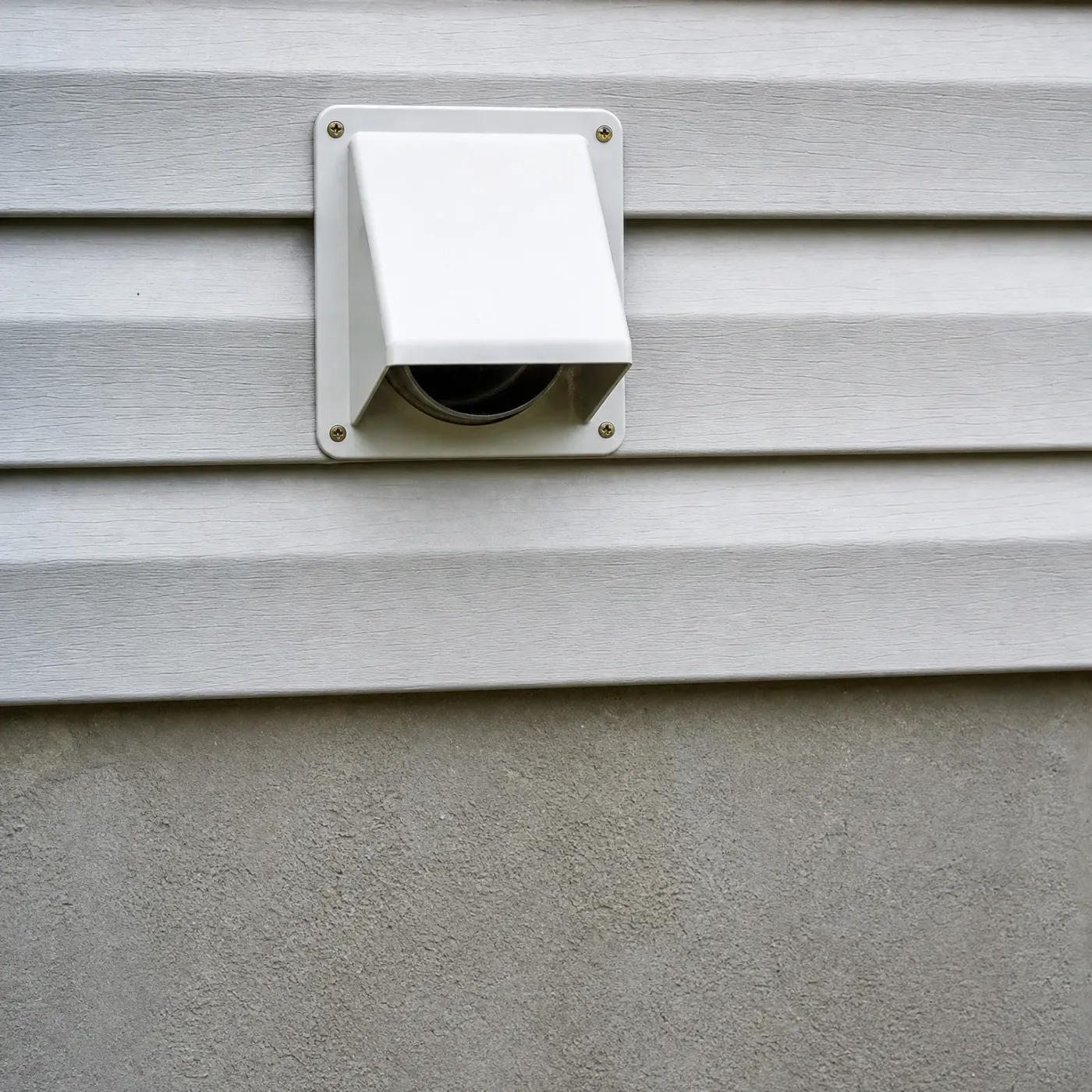
Vent clear and capped
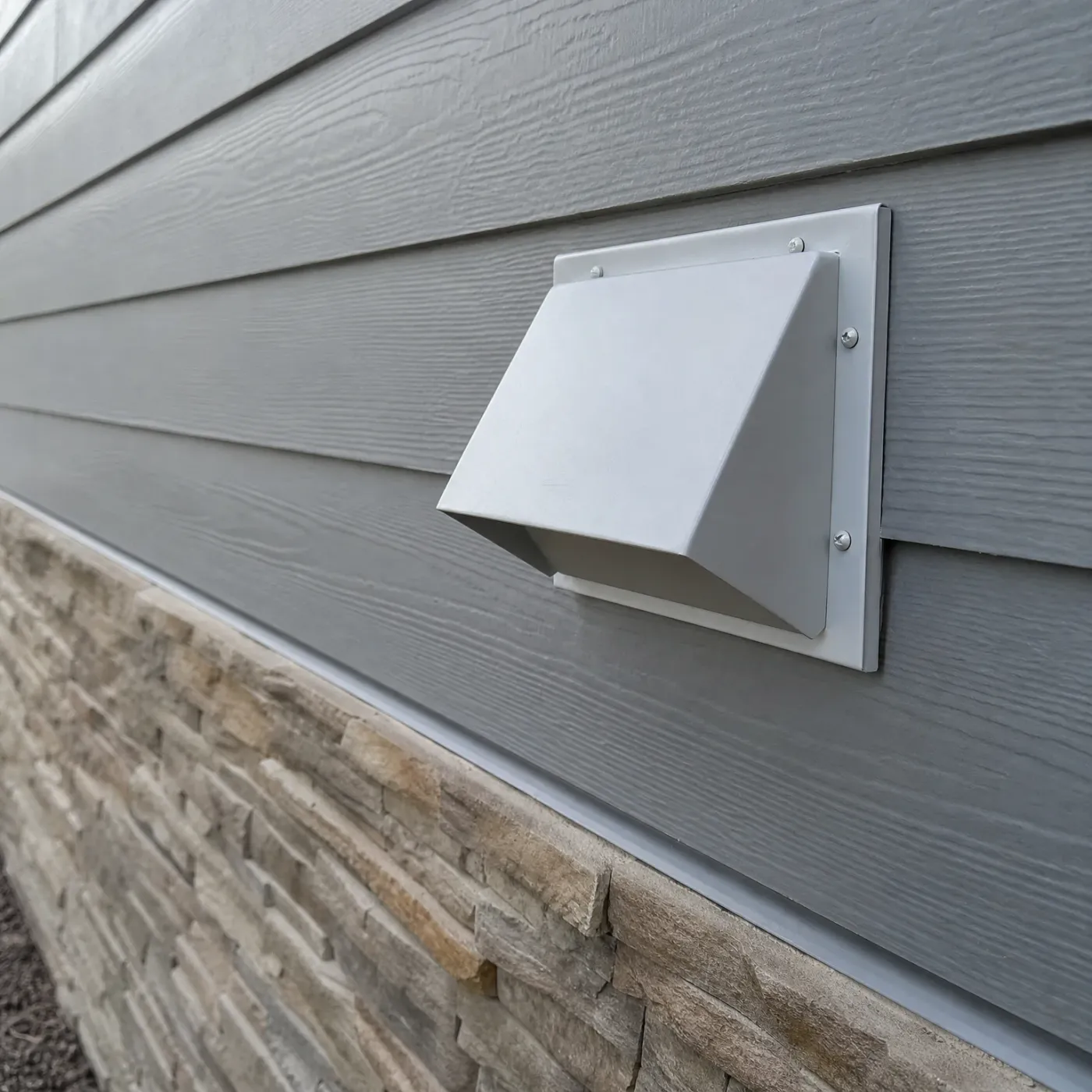
The flap sits closed against the hood until the dryer kicks on. Air pushes it open, lint blows clear outside, and it swings shut again when the load ends. Nothing can crawl in behind it because there's nothing propping it open.
Send the form and finding a dryer vent cleaner is handled.
Hand off the searchA bird in your dryer vent usually means a nest, and it happens most in spring when house sparrows and starlings are looking for a tight, warm place to raise young. Your vent hood has a flap that is supposed to keep them out, but if the flap is stuck open, bent, or missing, the vent duct looks like a ready-made cavity. Once a nest is built in there, it blocks the duct almost completely. Your dryer will take much longer to dry a load, the outside of the machine may run hotter than usual, and lint that can't escape through the blocked vent has nowhere to go but back into the duct and the dryer itself. That buildup against a nest of dry grass and feathers is a real fire risk, not a minor inconvenience. It also means the moisture from every load is venting into your wall or attic space instead of outside. The vent needs to be cleared and the hood checked before the dryer runs again.
The flap sits closed against the hood until the dryer kicks on. Air pushes it open, lint blows clear outside, and it swings shut again when the load ends. Nothing can crawl in behind it because there's nothing propping it open.
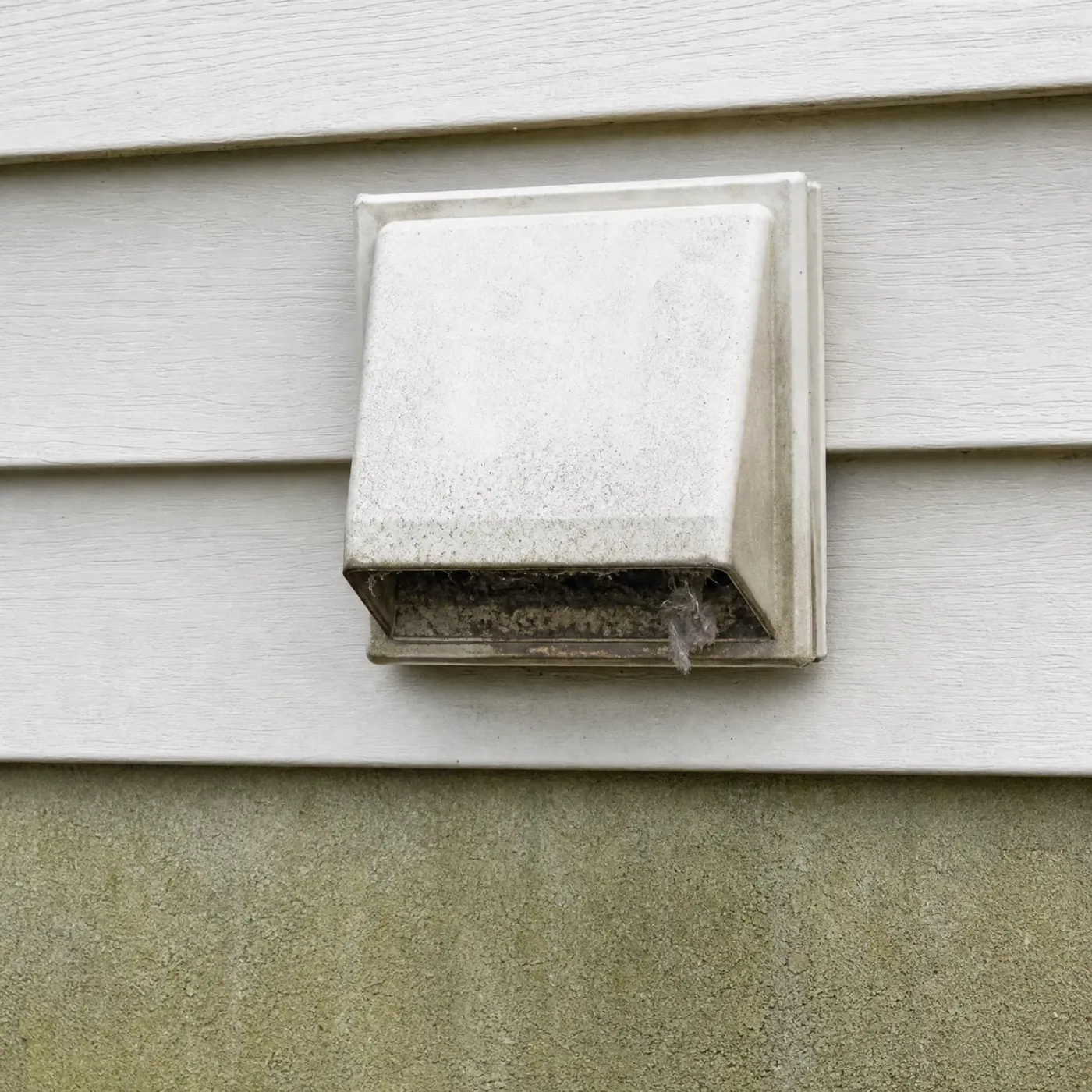
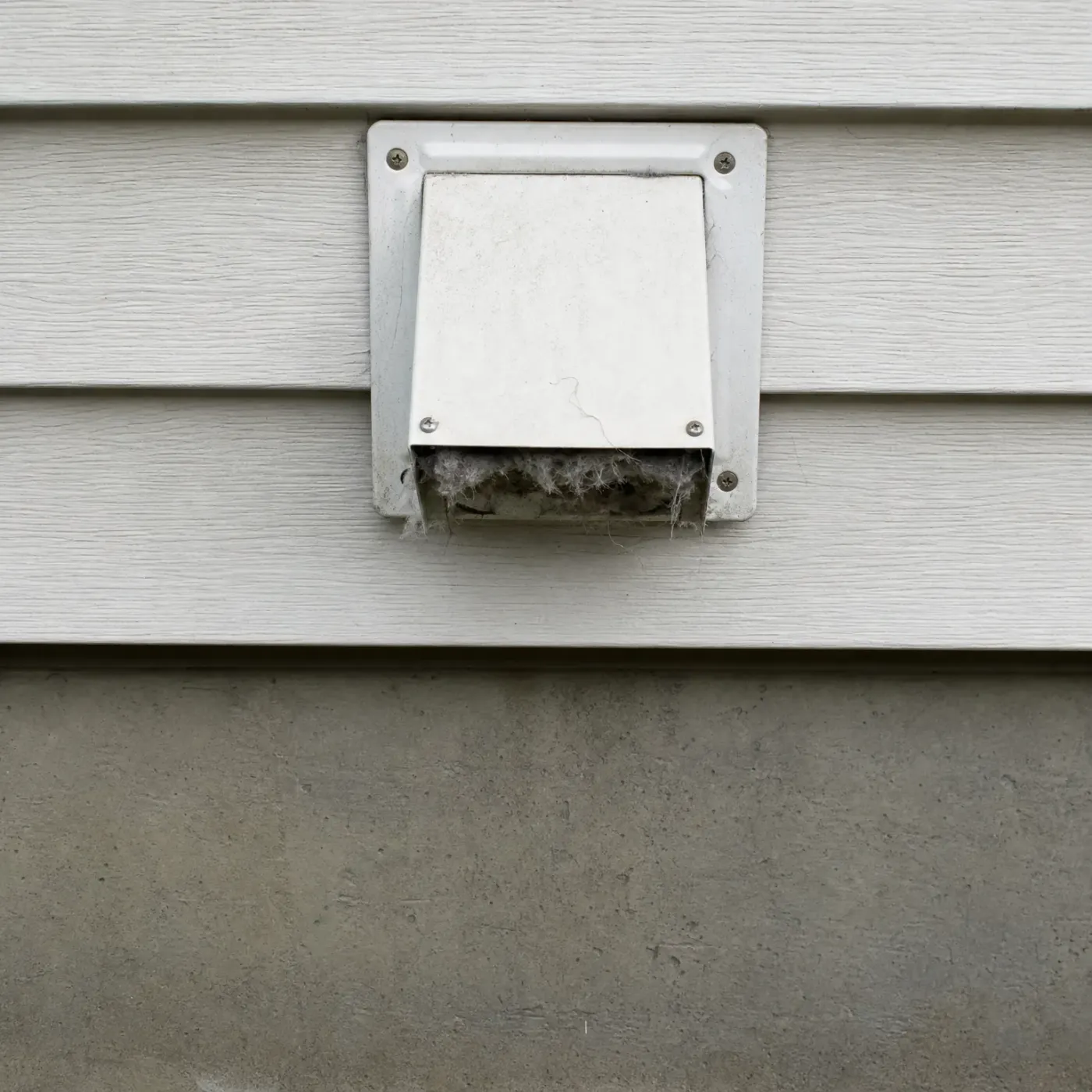
Lint has built up at the opening and the flap can't close all the way, leaving a gap a sparrow can push through. Once nesting material packs in behind it, air has nowhere to go. Your dryer runs longer, and the exhaust backs up into the duct.
2.27 people per household on average
With 2.27 people in the average Kanawha County household, most homes here run a load most days, so the vent stays active enough that a nest blocking it gets noticed fast, through longer dry times or a burning smell.
Half the homes here were built by 1966
Half the homes in Kanawha County were built in 1966 or earlier, and a vent hood that old has likely had its flap replaced, bent, or painted over at some point, any of which can keep it from closing all the way.
Power here costs 16.96 cents per kilowatt-hour
Power here runs 16.96 cents per kilowatt-hour, so a blocked vent that forces your dryer to run two or three cycles to dry one load costs more here than it would somewhere with cheaper electricity.
ACS 2020-2024 · EIA-861 2025
A dryer vent isn't just a pipe to the outside. It's carrying hot, damp air loaded with lint, and that air needs a clear path to leave the house. A nest sitting in that path doesn't just slow the airflow down. It traps heat against material a bird built out of dry grass, twigs and fuzz, which is exactly the kind of thing that catches fire easily. That's why a blocked vent isn't treated as a minor fix. The blockage and the fire risk are the same problem, not two separate ones.
Once the nest is out, the flap on the hood needs to move freely again, swinging open when the dryer runs and closing flat the rest of the time. A contractor checking the work will run the dryer and watch for strong, steady airflow at the hood, not a weak trickle. The duct itself should be clear end to end, with no leftover twigs or packed lint catching on a seam or a bend. If the flap was bent or the screen was damaged getting the nest out, that gets replaced too, so the vent can keep doing its job of keeping birds from getting back in.




The dryer takes longer to finish a load, sometimes two cycles for what used to be one. Clothes come out warmer than usual, or the laundry room itself gets warmer and more humid while it runs. You might catch a chirping sound from the vent line, or notice lint and bits of nesting material around the outside hood. Some homeowners smell something burnt, which means lint is scorching against the heating element instead of blowing outside. Any one of these on its own could be something else, but together they point to a blocked vent.
A dryer running against a blocked vent works harder for every load, which shows up on the power bill, and power here isn't cheap. The bigger risk is heat. Lint is one of the most common house fire starters, and a nest packed against the vent gives it somewhere to build up fast. Moisture backs up too, with nowhere to go but into the vent line and the wall around it. Left long enough, that dampness can mean mold or rot behind the dryer, not just a slower load of laundry.
The pro who gets in touch is licensed in West Virginia and works in Kanawha County.
One request and the dryer vent cleaning stops waiting on you.
Sending the form costs nothing.
If a load needs a second run to finish, or the top of the dryer feels hot to the touch, a blocked vent is the usual reason. Check the outside hood while the dryer runs. If the flap barely moves, or you see grass and twigs poking out around it, something is sitting in the duct. You might hear a faint chirping near the vent or the wall behind it, especially in spring. Lint has nowhere to go when the path out is blocked, and lint that backs up into the duct instead of venting outside is how dryer fires start. A dryer running hotter and longer than it used to is not something to leave alone.
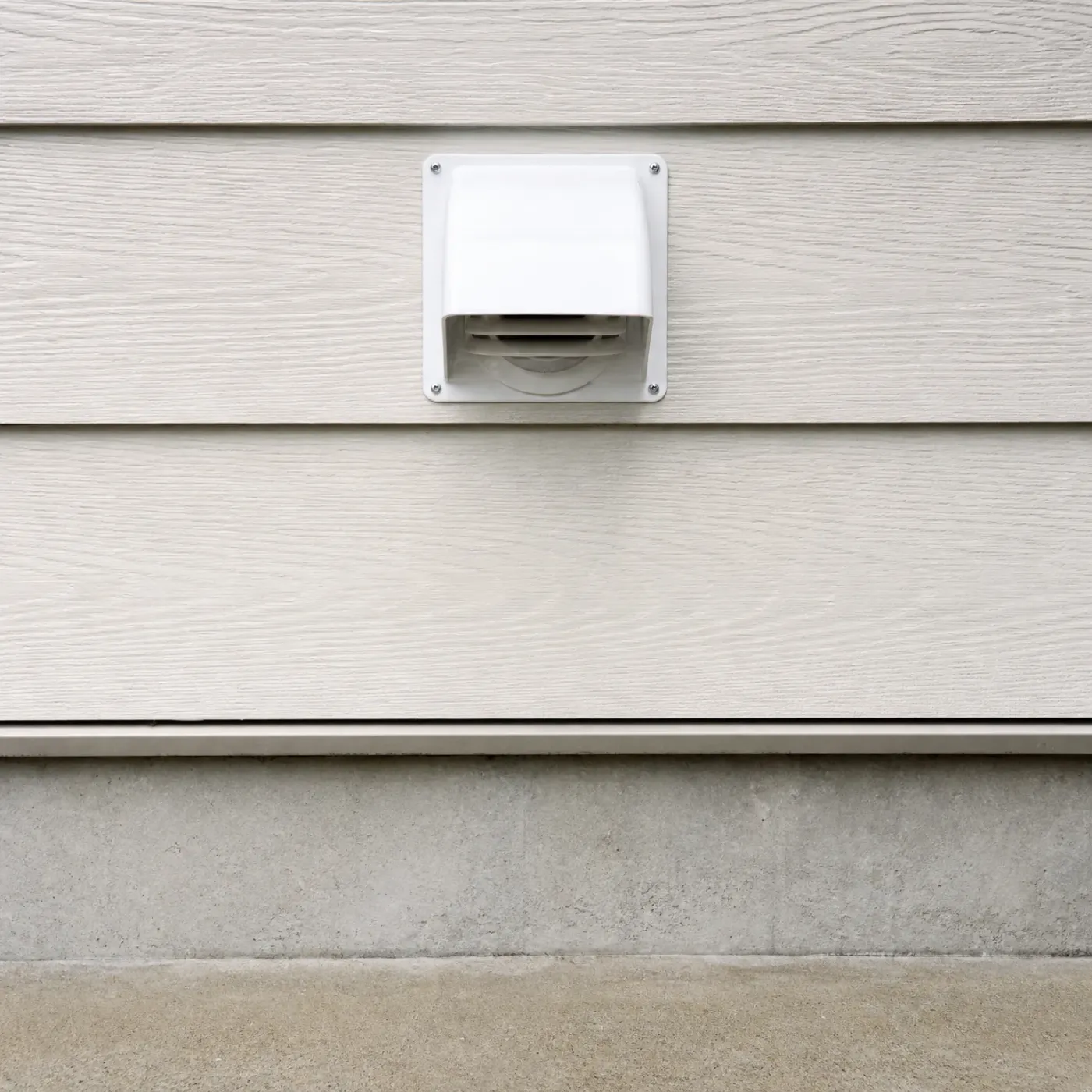
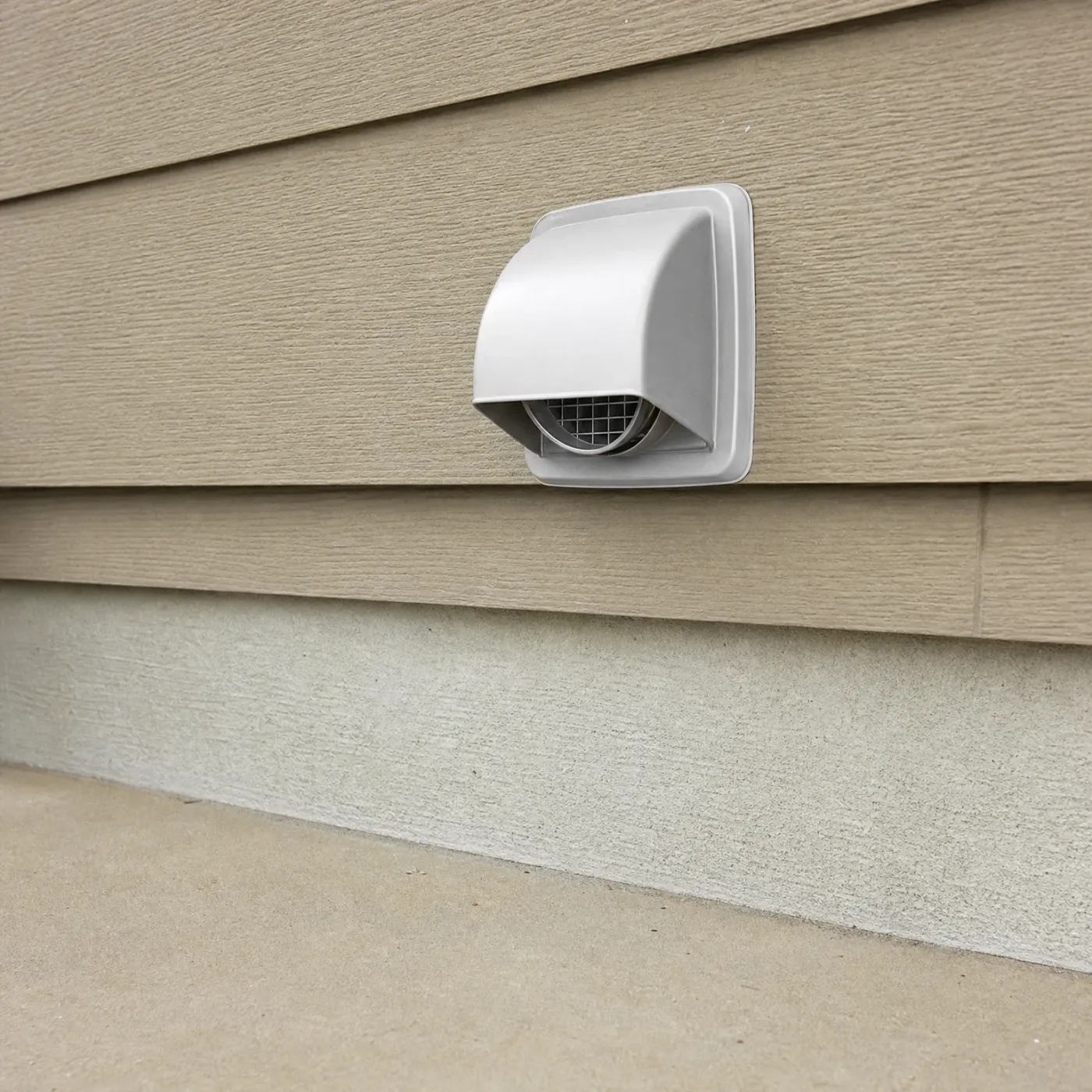
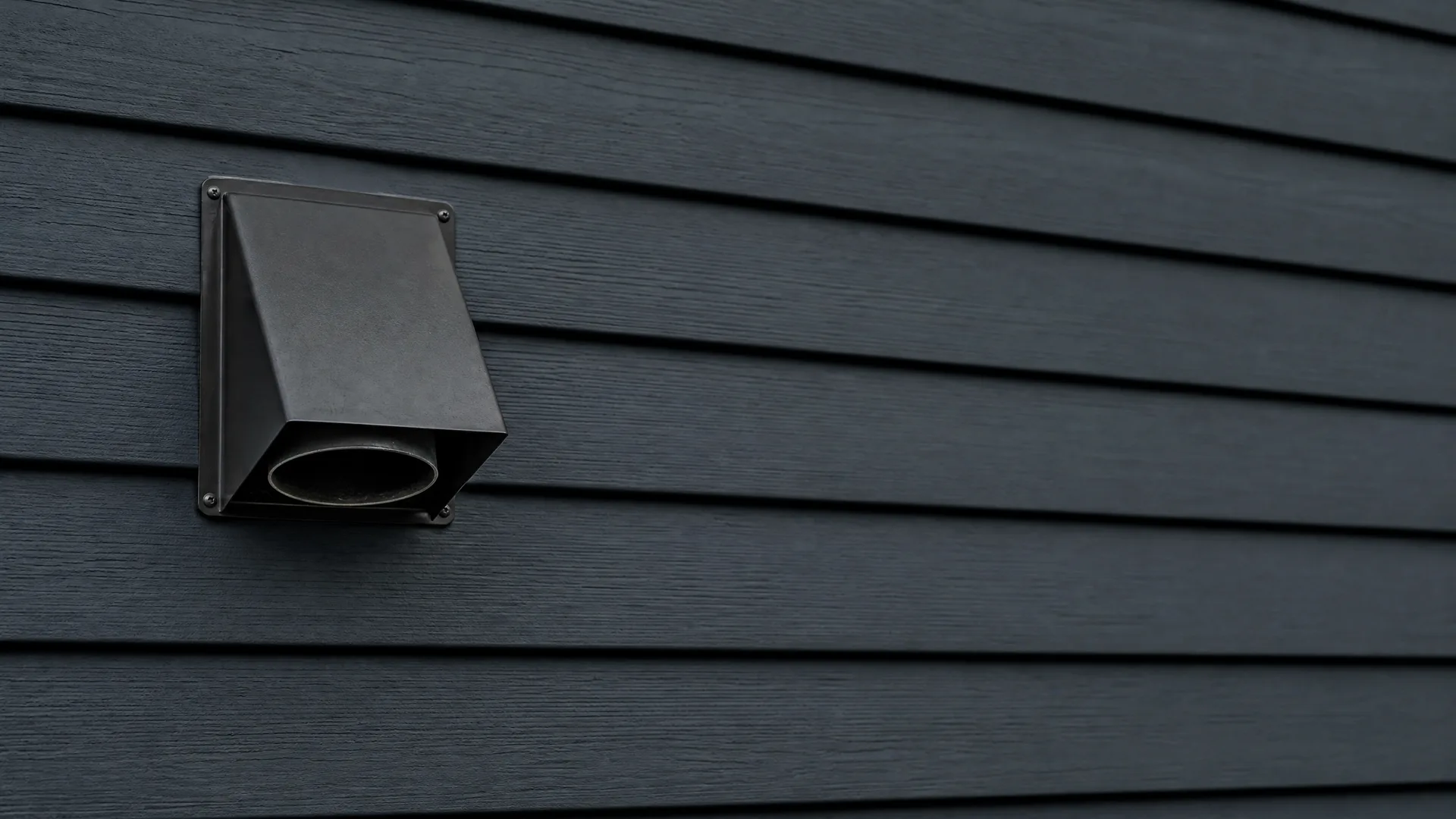
This is a hood with nothing behind it. The screws are tight, the louvers hang loose, and air can push them open every time the dryer runs. No gap, no ledge, nothing for a sparrow to build on.
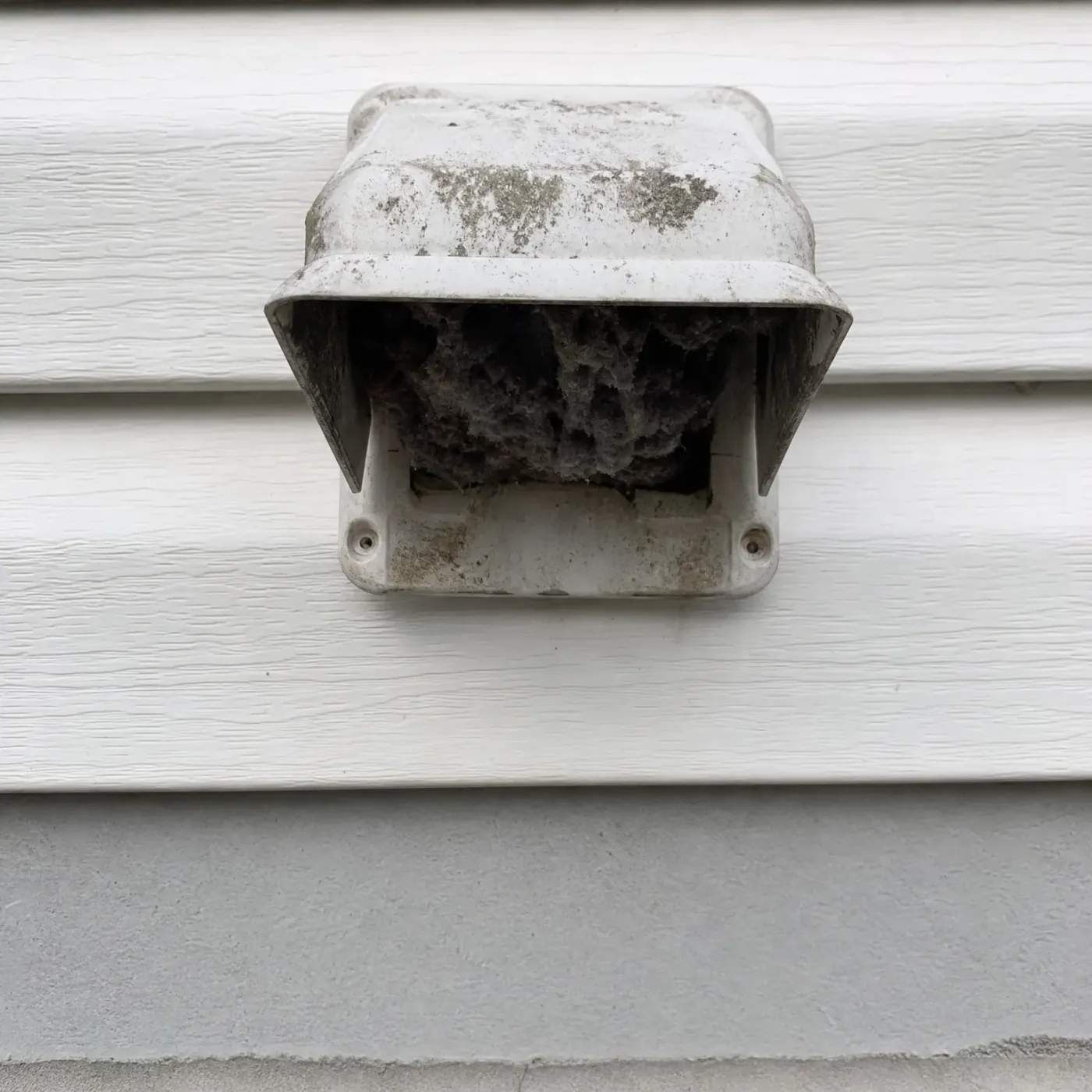
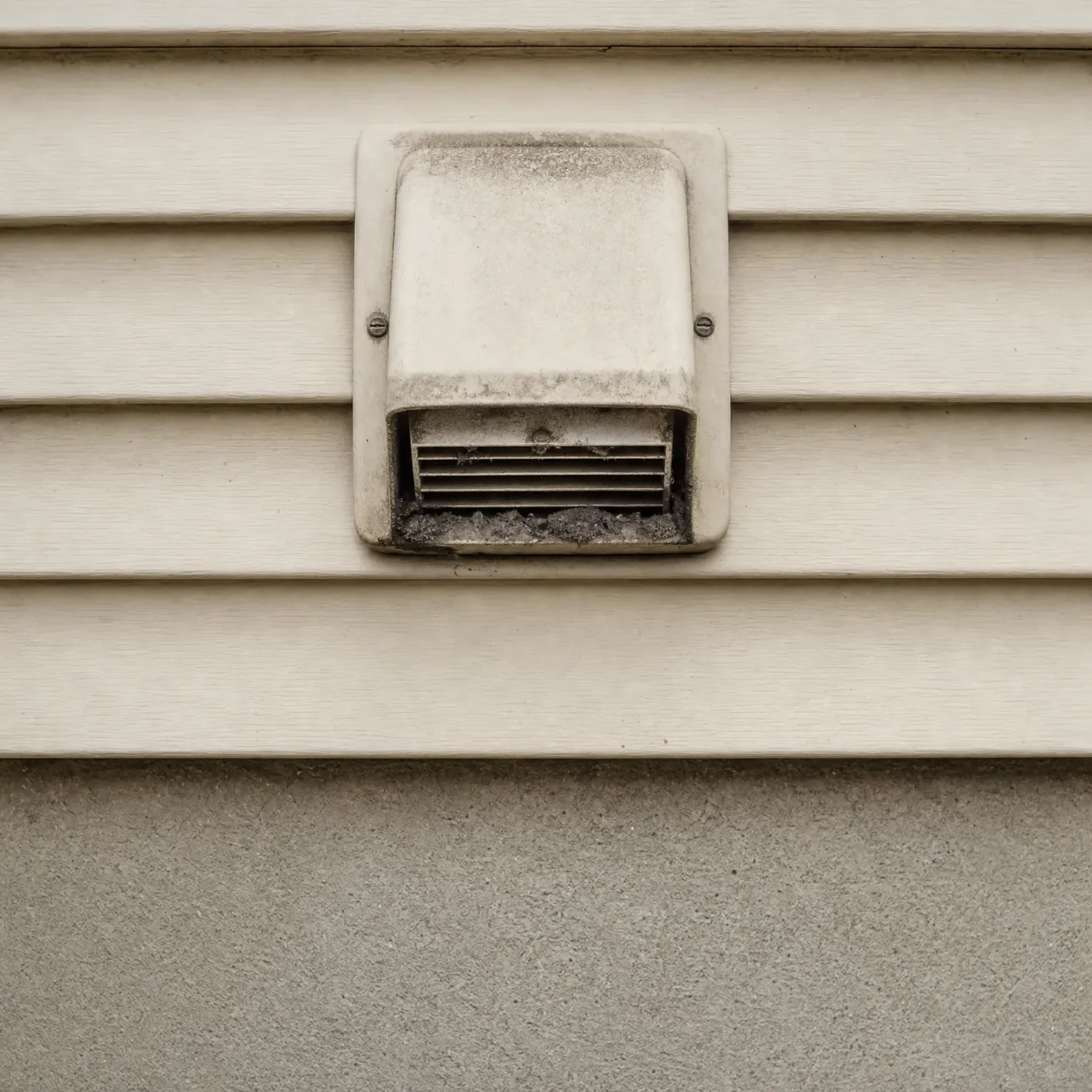
This opening is nearly sealed shut. Lint has built up into a solid mat, and dirt and mildew have spread across the cap itself. Air has nowhere to go, and neither does a bird looking for a way out.
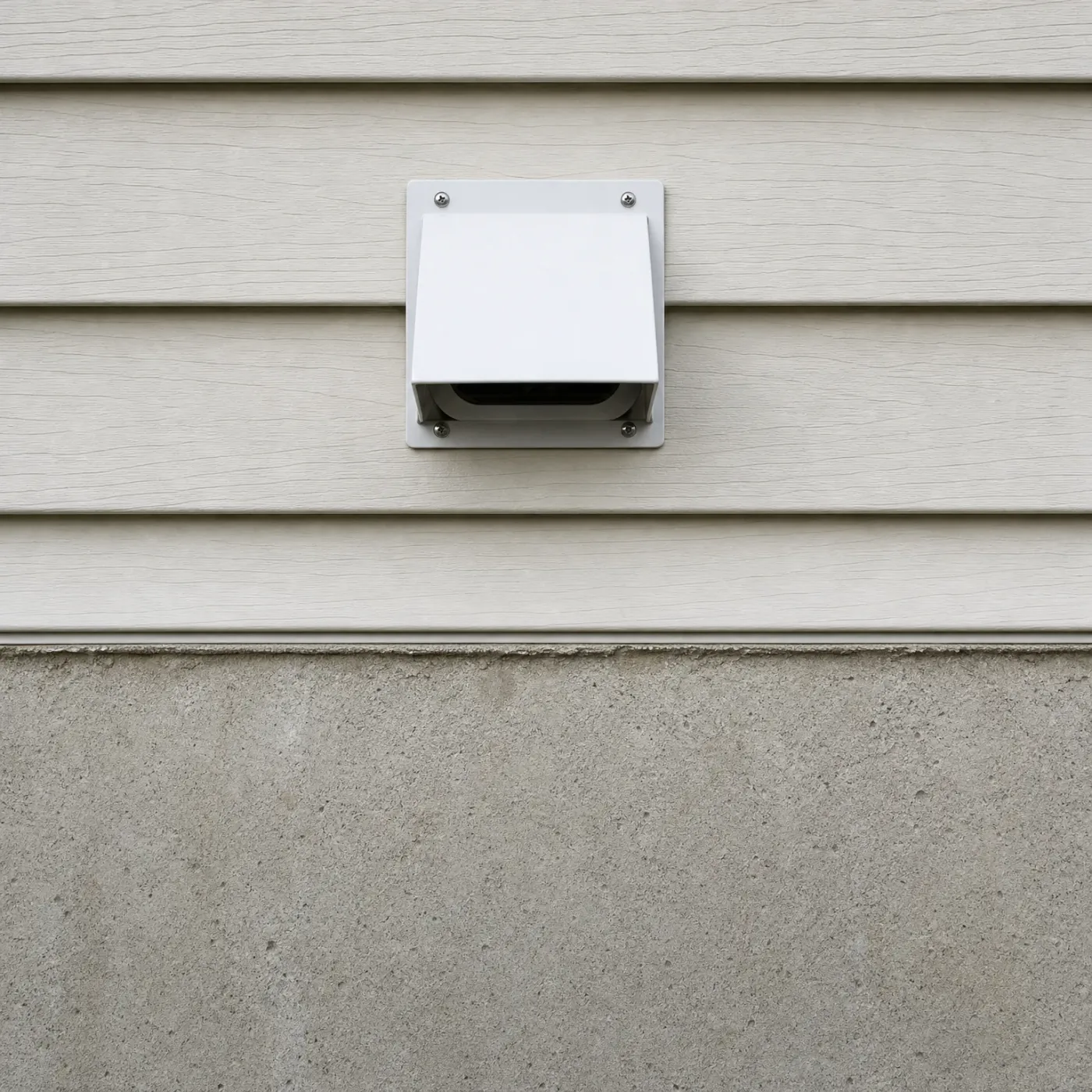
At 2.27 people, most Kanawha County households aren't doing huge loads of laundry, but even a couple loads a week keeps the vent running often enough that a nest inside gets found fast, through slower drying or a burning smell, before it turns into something worse.
ACS 2020-2024
A sparrow or starling pulls twigs and grass into the vent pipe
The nest packs tight around the duct, blocking most of the airflow
Lint drifting from the dryer catches and builds up in the nesting material
A contractor opens the line, clears the nest, and checks the flap seals shut
You've seen a bird near the vent hood outside, or you just want to rule it out before you call anyone. The dryer still runs, so it's hard to tell if something is actually stuck in there or if you're overthinking a sparrow you saw once in the yard.
Go outside while the dryer is running and watch the vent hood. The flap should swing open with the airflow and you should feel warm air pushing out. If the flap barely moves, or you see grass or twigs poking through the louvers, something is sitting in the line. Inside, the clearest sign is time. A load that used to take 40 minutes stretching to 60 or needing a second cycle means the vent isn't clearing the air like it should. A scratching sound when the dryer kicks on is another sign, especially in spring when nests are fresh and still loose rather than packed down with lint.


A bird nest in the vent isn't a mystery problem. It's a blockage, same as a thick mat of lint would be, and the fix is the same too: get it out, get the flap moving again, let the dryer push air outside the way it's supposed to. Most people in Kanawha County notice something is wrong before they know why. The dryer runs long, the top feels hot, or there's a smell like something's burning. Any of those is reason enough to get the vent looked at.
A contractor who works on vents through the spring knows to check for nesting material before assuming it's just lint, because this time of year it often isn't. That's the kind of thing you learn from doing the job in the same county season after season, not from a manual. And when the request goes to one licensed contractor instead of several, you get one visit that actually clears the line, not a round of quotes to sort through first.
However the nest comes out, by hand from outside or with a contractor's rods and vacuum, the end point looks the same. The flap sits flush against the hood and swings open and shut on its own. The dryer finishes a load in one cycle again. And with the vent clear and the flap doing its job, the odds of another bird finding a way in next spring drop off considerably.
A licensed pro who works in Kanawha County gets your request.