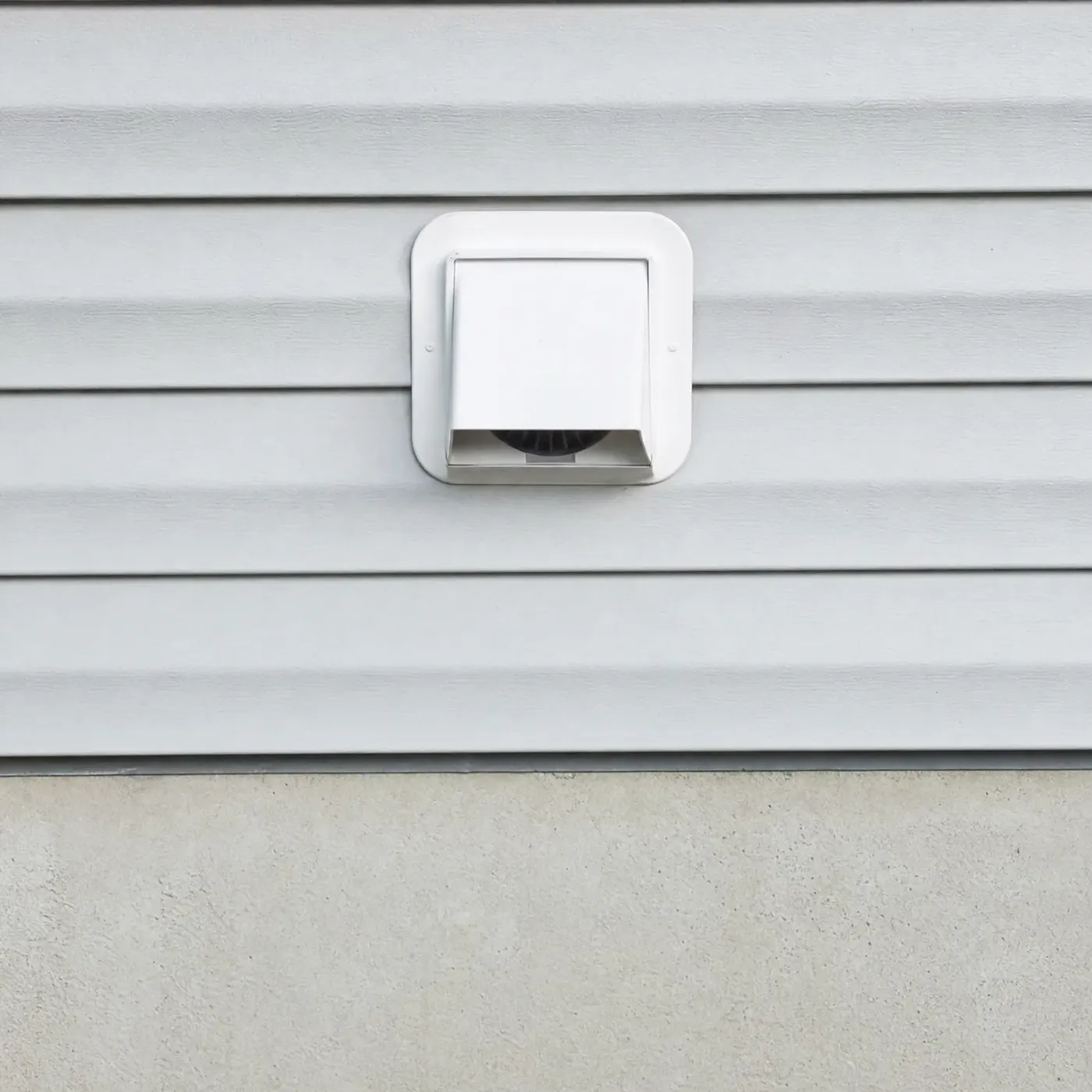
Clear and venting properly
Air pushes out hard enough to swing the hood flap wide open on its hinge. No lint rings the opening, and the screen behind it stays clear so the dryer can push damp air out as fast as it's made.

Clean your dryer vent once a year. If you run a lot of loads, every six months is safer. The vent carries hot, damp air outside, and lint builds up along the way no matter how clean you keep the lint trap, because the trap only catches what's on the surface. A clogged vent makes the dryer run hotter and longer to dry the same load, and that heat has nowhere to go but back into the duct. Summers in the Charleston area already run muggy, so clothes take longer to dry and the dryer works harder for more of the year than it would somewhere dry. If a load that used to take 40 minutes now takes an hour or more, or the top of the dryer feels hot to the touch, the vent is likely blocked and it's time to have it cleaned.


Your dryer pushes hot, wet air through a duct that runs from the back of the machine to a hood on the outside of your house. As that air cools down on its way out, the moisture in it slows, and lint sticks to the sides of the duct along the whole path. Every bend in that run, and most runs have at least one, gives lint another spot to build up. The longer and more twisted the path, the sooner it clogs. Once enough lint collects, the dryer has to work harder and run longer to get clothes dry, and that extra heat has nowhere to go but back toward the drum. Outside, a small flapper on the hood is supposed to swing open while the dryer runs and shut again when it stops, keeping birds and weather out. Lint can gum that up too. A real cleaning clears the whole run, not just the lint trap, so air can move the way it's supposed to again.
You notice a clogged dryer vent before you ever think to check it. Towels that used to come out dry in fifty minutes now need a second or third cycle, and you end up running a load twice just to finish what should have taken once. The dryer itself runs hotter than it needs to, because it is pushing heat into a duct that will not let the air out, and that heat has nowhere to go but back into your laundry room and into the clothes themselves. Pull a shirt out mid-cycle and it will feel hotter than it should. Open the laundry room door and the air sits warm and damp instead of clearing out. None of this is free. Every extra cycle and every extra minute of runtime shows up on your electric or gas bill, and in a place where power already costs what it does, a dryer working twice as hard to do the same job adds up fast. There is also what you cannot see: lint sitting against a duct wall that gets hot every time you dry a load, next to the wood framing in your wall or attic. The longer that lint builds, the longer that heat sits somewhere it should not. Through a Kanawha County winter, with laundry piling up and the dryer already running slower, a clogged vent is the last place you want to lose time.
2.27 people per household on average
With 2.27 people in the average Kanawha County household, most homes run several loads a week, enough to pack a vent with lint well before a year is up.
Half the homes here were built by 1966
Half the homes in this county were built in 1966 or earlier, and older duct runs tend to have more bends, which gives lint more places to catch along the way.
Power here costs 16.96 cents per kilowatt-hour
At 16.96 cents per kilowatt-hour, a dryer working against a clogged vent runs longer and costs more every load than one venting clean.
ACS 2020-2024 · EIA-861 2025
A vent that runs straight out an exterior wall clears itself easier than one that snakes up through a wall or across an attic to reach the roof. Houses built with the dryer tucked in a basement or interior laundry room often need a longer run with more turns, and every turn is a spot for lint to catch. If your dryer sits far from an outside wall, the vent behind it is doing more work than one in a house where the laundry sits against the outside wall, and it is worth checking more than once a year.
The motor and heating element are built to push air against some resistance, but not against a duct packed with lint. When the vent is blocked, heat has nowhere to go but back into the drum and the cabinet around it. That is why a clogged vent runs hotter than it should and why some dryers shut off mid-cycle on their own safety switch. Gas dryers add another concern, since the same blocked vent that traps heat also traps the exhaust from the burner, and that exhaust needs a clear path outside with every single load.




Skip searching for someone who cleans dryer vents in Kanawha County.
Asking costs nothing, and the choice to hire stays yours.
Clean the vent on schedule and the dryer vents the way it's built to. Hot air clears out fast, the flap swings loose, and a full load of towels finishes on one cycle.
Skip past a year or two and lint has already narrowed the duct. The dryer runs hotter and longer to do the same job, and the heat it can't vent stays in the room with your clothes.
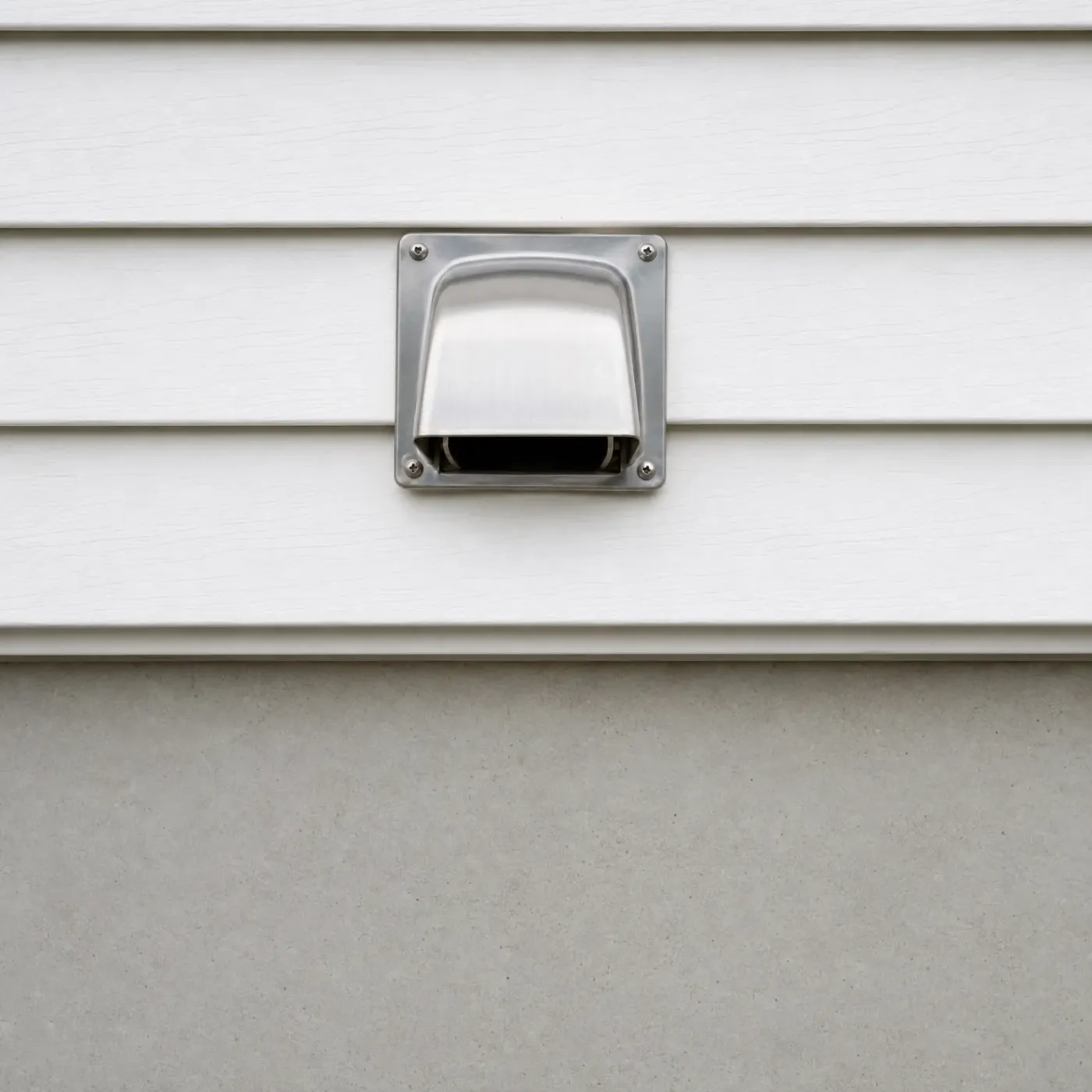

Air pushes out hard enough to swing the hood flap wide open on its hinge. No lint rings the opening, and the screen behind it stays clear so the dryer can push damp air out as fast as it's made.

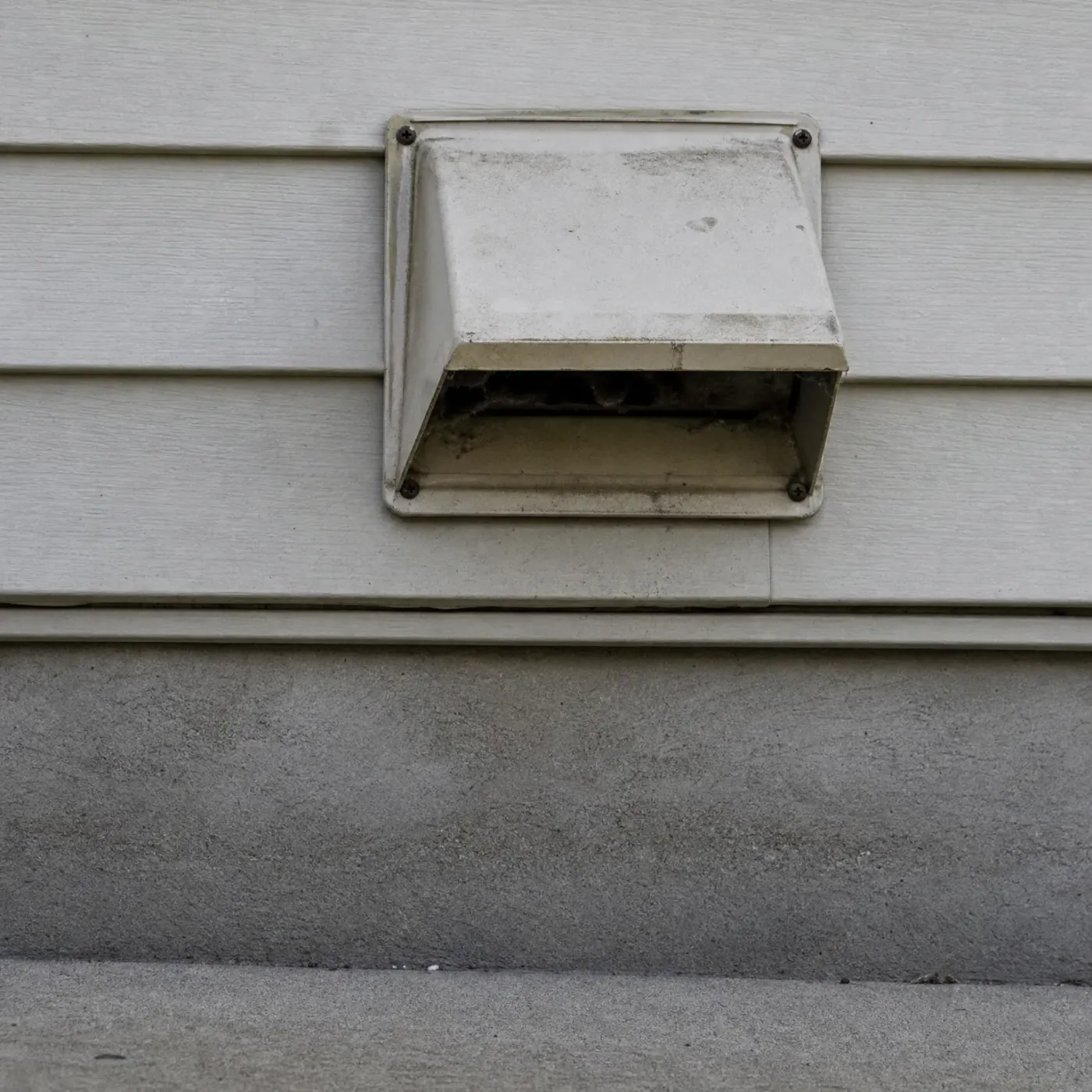
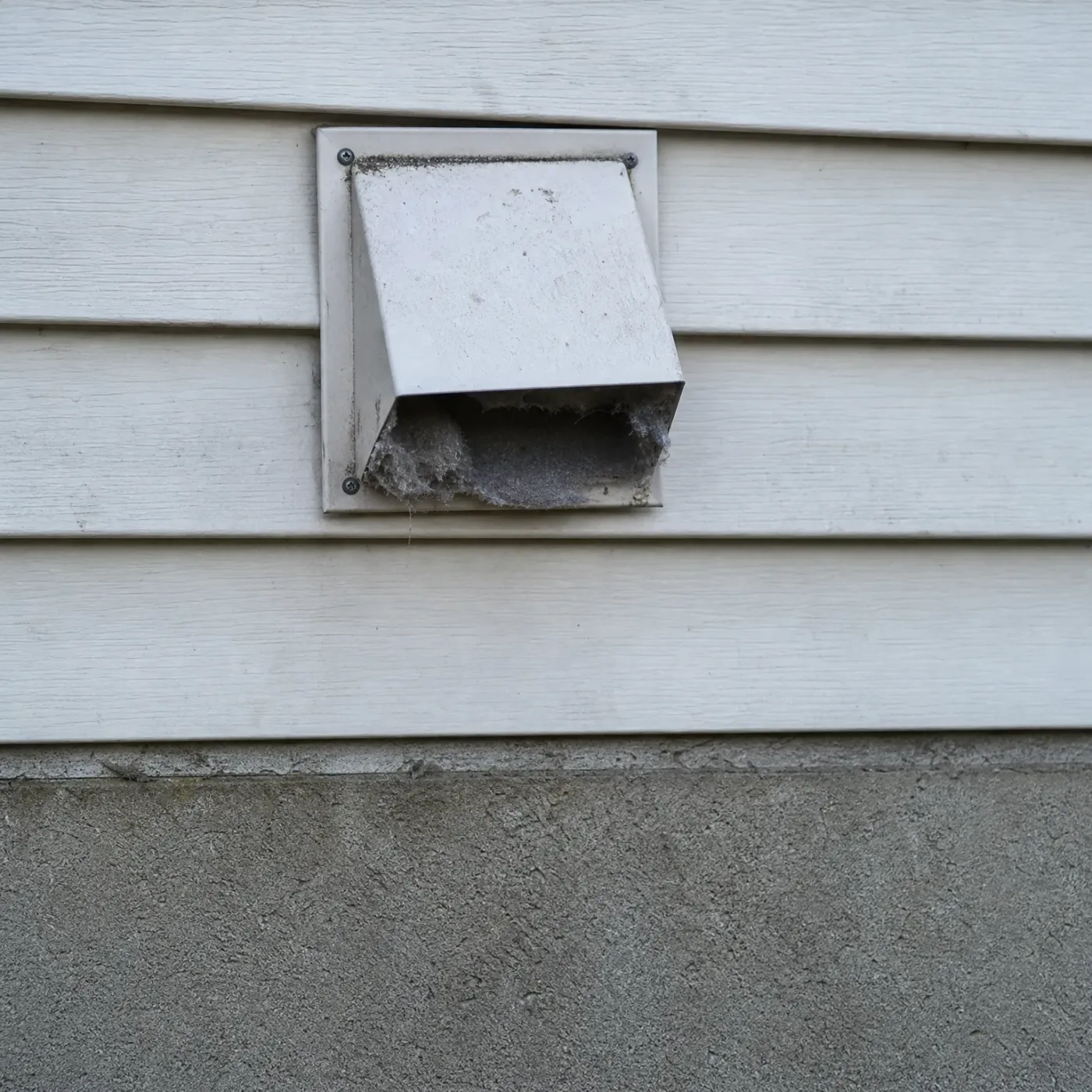
Lint has built up around the opening and hangs loose from the flap, which sags instead of swinging shut. Air that should be escaping outside is backing up into the duct instead.
At 2.27 people, most Kanawha County households are doing laundry several times a week, not once. That's a steady stream of hot, damp air through the same duct, which means lint builds up on a schedule whether or not you notice it on wash day.
ACS 2020-2024
Dryer pushes hot, damp air into the vent duct
Air slows and cools as it moves through elbows and bends
Lint drops out of the slowing air and clings to duct walls
Buildup narrows the duct and traps more lint with every load
Does it matter if my dryer vent runs straight out or up through the roof?
A dryer vent that goes straight out through an exterior wall gives lint fewer places to catch. Air moves out in a short, direct line, and whatever lint doesn't make it out the end just hasn't traveled far enough to build up fast. A vent that climbs through an attic or up to the roof covers more distance and usually bends more than once along the way, and lint drops out of the air at every bend as it slows down. A roof run can need cleaning closer to every six months, where a short, straight one might hold up closer to a year.

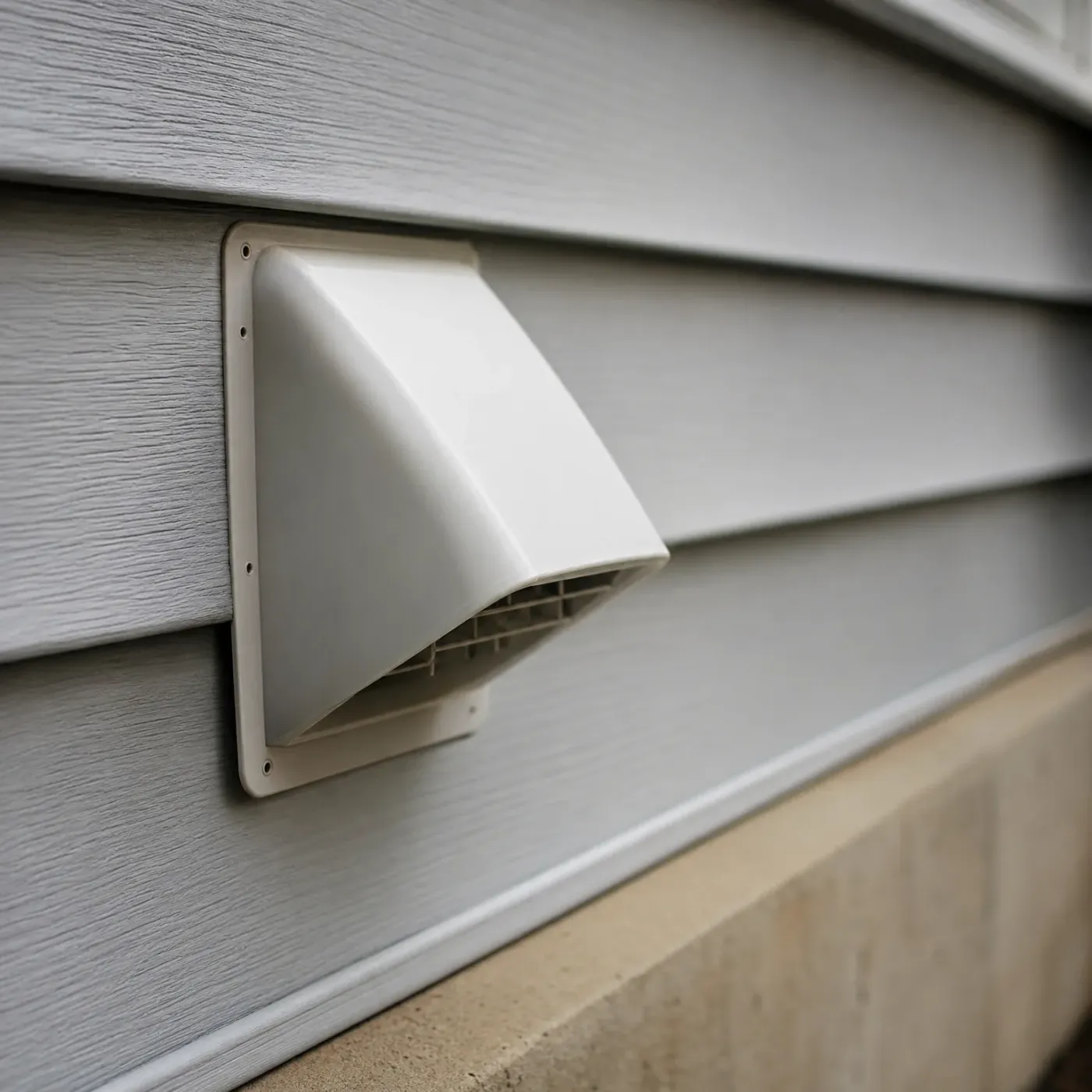
This is what a vent should look like. The hood sits flush against the siding, the louvers hang open, and air has a clear path out. Nothing rings the opening, so every load pushes its hot, damp air straight outside instead of backing up into the duct.

Lint has built up around the opening until it coats the cap and the siding beside it. The louvers can't swing shut all the way anymore, and what's visible here is only the start of what's packed into the duct behind it, slowing the dryer down load after load.

Clean the vent once a year. Every six months if there are several people in the house doing wash most days of the week. That's the whole answer, and everything else on this page is just why.
You could spend an afternoon looking up dryer vent cleaners around Charleston, calling a few, explaining what the dryer's been doing lately, and waiting on quotes that don't say much next to each other. Or you could send one form and let someone else sort out who's available and who's worth hiring. Either way the vent gets cleaned. Only one way costs you the afternoon.

Fill out one short form instead of calling around.
No fee to send it, and nothing to sign.