Vent Working Clear
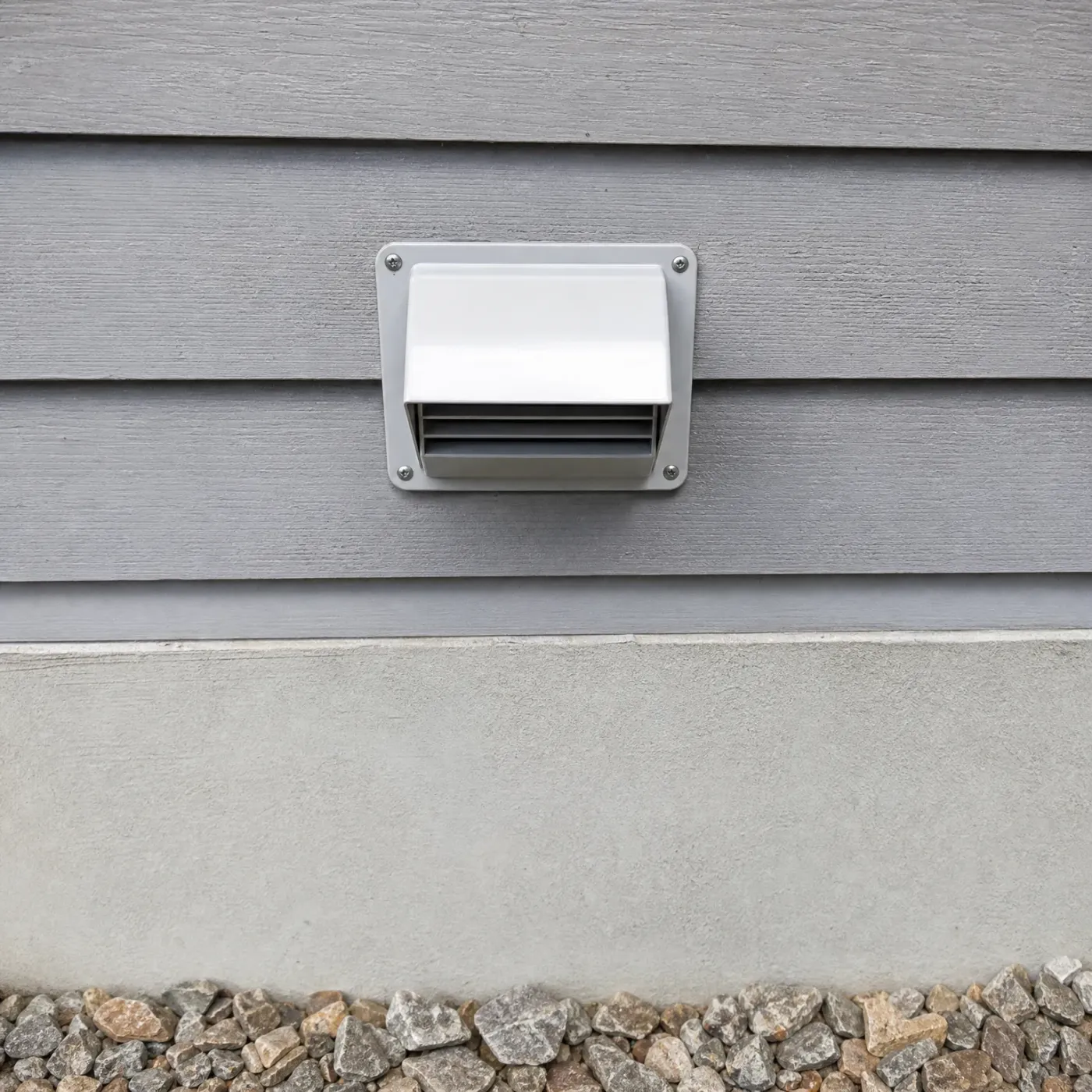
This is what a clear vent looks like. The louvers swing open when the dryer runs and close flat when it's off, keeping birds and weather out between loads. Air moves out fast, so a load dries in one cycle instead of two.
Get matched with a Monongalia County pro who cleans dryer vents.
Connect with a proSpring comes around and you hear chirping, scratching, or a flutter of wings every time the dryer kicks on. Maybe lint and twigs have started piling up outside the vent hood, or the dryer takes forever to finish a load. In Morgantown, this is a common spring problem, and once a bird picks your vent, it tends to come back.
A dryer vent hood gives a bird the same thing a tree cavity does: a small, enclosed space off the ground, sheltered from rain and wind. Starlings and house sparrows look for exactly that in the spring when they're building nests. If the flapper on your vent hood is stuck open, bent, or missing, there's nothing stopping a bird from walking right in. Once nesting material builds up inside the vent pipe, it blocks airflow, and your dryer has to push exhaust through a duct that's partly or fully clogged. That means longer dry times, a dryer that runs hotter than it should, and lint piling up in a space where it can catch fire.
This is what a clear vent looks like. The louvers swing open when the dryer runs and close flat when it's off, keeping birds and weather out between loads. Air moves out fast, so a load dries in one cycle instead of two.
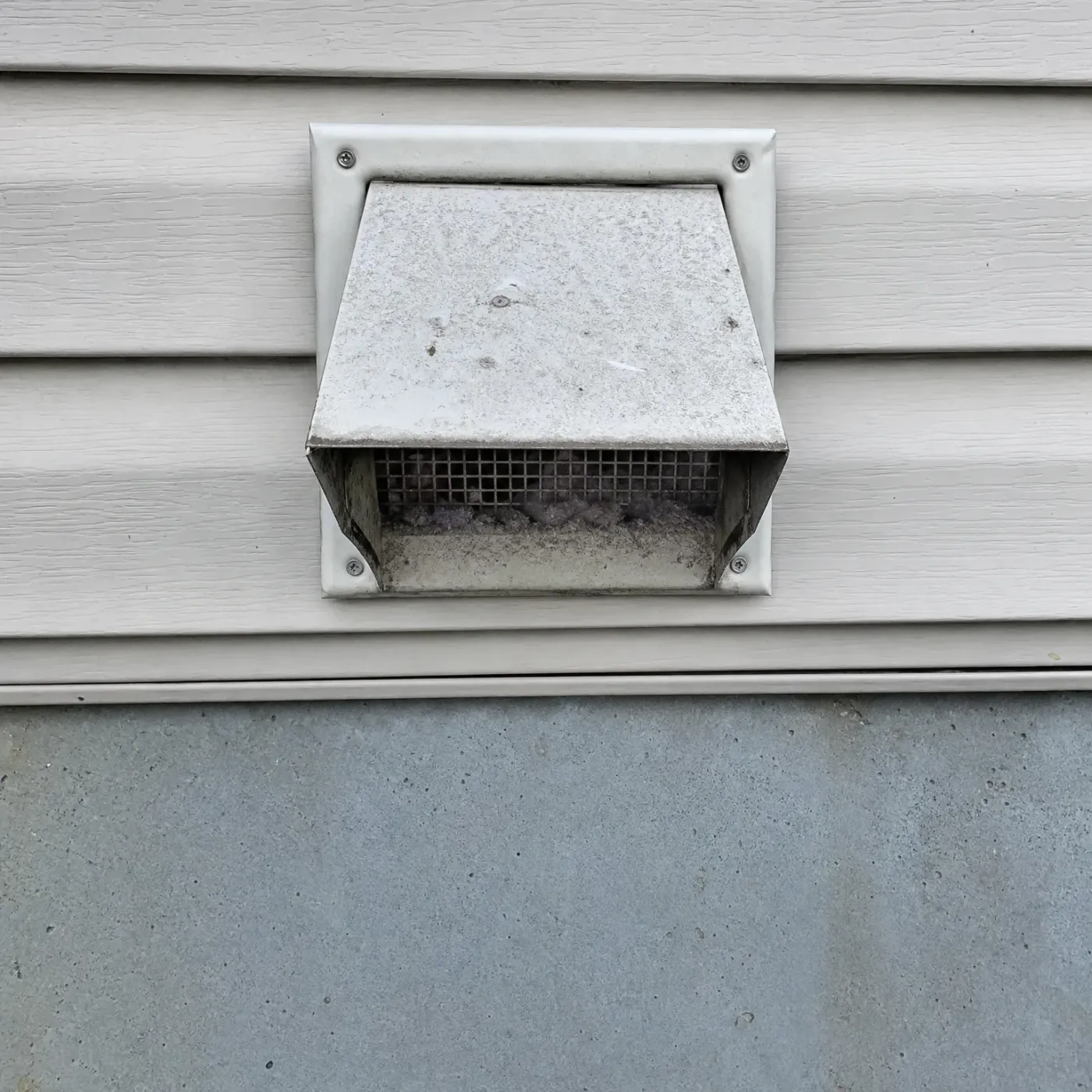
Lint has caked over the hood and mesh until the flap barely moves. A vent stuck part open or jammed with nesting material gives birds an easy way in come spring, and traps heat and moist air right where the dryer pushes it out.

The flap opens when the dryer runs and drops shut the moment it stops. No gap, no twigs caught in the screen behind it. Air from the dryer pushes straight out instead of backing up into the line.

Grime has built up thick enough to coat the screws and the housing. If the flap can't sit flush anymore, a bird has room to work bedding in around the edges, and the next nest has a head start.
You'll usually catch it with your ears first. A soft chirping or scratching that starts a minute or two after the dryer kicks on, then stops when it shuts off. Outside, check the vent hood on the wall of your house. Twigs poking out past the louvers, a loose pile of grass or straw underneath it, or lint that looks matted with debris rather than just fluffy are all signs something's built a home in there. Drying times stretching out, where a load that used to take forty minutes now needs an extra cycle, often points the same direction. Left alone, the nest keeps that moist air from venting outside, and it gives the lint behind it a place to collect instead of blowing clear.

Birds in Monongalia County start looking for nest sites as soon as the weather turns in early spring, and a dryer vent hood offers exactly what they want. It's off the ground, shielded from rain, and warm air drifts out of it every time a load runs. A starling or sparrow can carry in enough material to block the hood in a few days, usually before anyone notices the dryer is struggling.

A dryer is built to push air and lint out through several feet of duct and out the hood. When a nest blocks that path, the same moist, lint-heavy air has nowhere to go, so it backs up into the line. The motor still runs the same amount of time, but less of that heat is leaving the house, which is part of why a load that used to take one cycle starts taking two.
2.26 people per household on average
The average home here holds 2.26 people, and a blocked vent means every one of those loads of laundry takes longer or doesn't dry at all.
Half the homes here were built by 1988
Half the homes in Monongalia County were built in 1988 or earlier, and vent hoods that old often have louvers worn loose enough for a bird to push through.
Power here costs 14.31 cents per kilowatt-hour
Power here runs 14.31 cents per kilowatt-hour, and a dryer fighting a blocked vent pulls more of it every load until the nest is cleared out.
ACS 2020-2024 · EIA-861 2025








After this form, you can stop searching for a dryer vent pro.
There's no charge for the request.
A nest blocks the vent hood louvers from opening fully
Moist air backs up through the vent line toward the dryer
Lint sits against the nest instead of venting outside
A contractor opens the line, clears the nest, and checks the flap


The vent hood on the outside wall is built with a flap or a set of hinged louvers, not a screen, so it only keeps birds out when those louvers are free to close. A bird working at the opening from outside can push through before anything is nested there at all, which is why some homes get a nest even with a dryer that's run fine for years. Once the nest is in, it wedges the louvers partway open, and that gap stays there whether the dryer is running or not. Rain gets in. So does the next bird looking for a spot. The warm air the dryer pushes out, somewhere in the range of 125 to 135 degrees, works against you here. It dries out the nesting material over a few loads and packs it tighter against the duct instead of breaking it down. Wrens and sparrows are the usual culprits in this area, and it's not random. The hood opening is close to the size of the tree cavities they'd nest in anyway, so it reads to them as a ready-made spot. Clearing it properly means working the line from both ends, the hood outside and the connection at the back of the dryer, so nothing is left sitting in the elbow or the transition duct between them. Once that's done, running the dryer and watching the flap confirms it's opening all the way and dropping shut again when the cycle ends.
Most houses in Monongalia County hold about 2.26 people, so there's usually more than one hamper feeding that dryer. With a nest blocking the vent, every one of those loads sits damp longer, and the next person in line is waiting on a machine that can't finish its job.
ACS 2020-2024
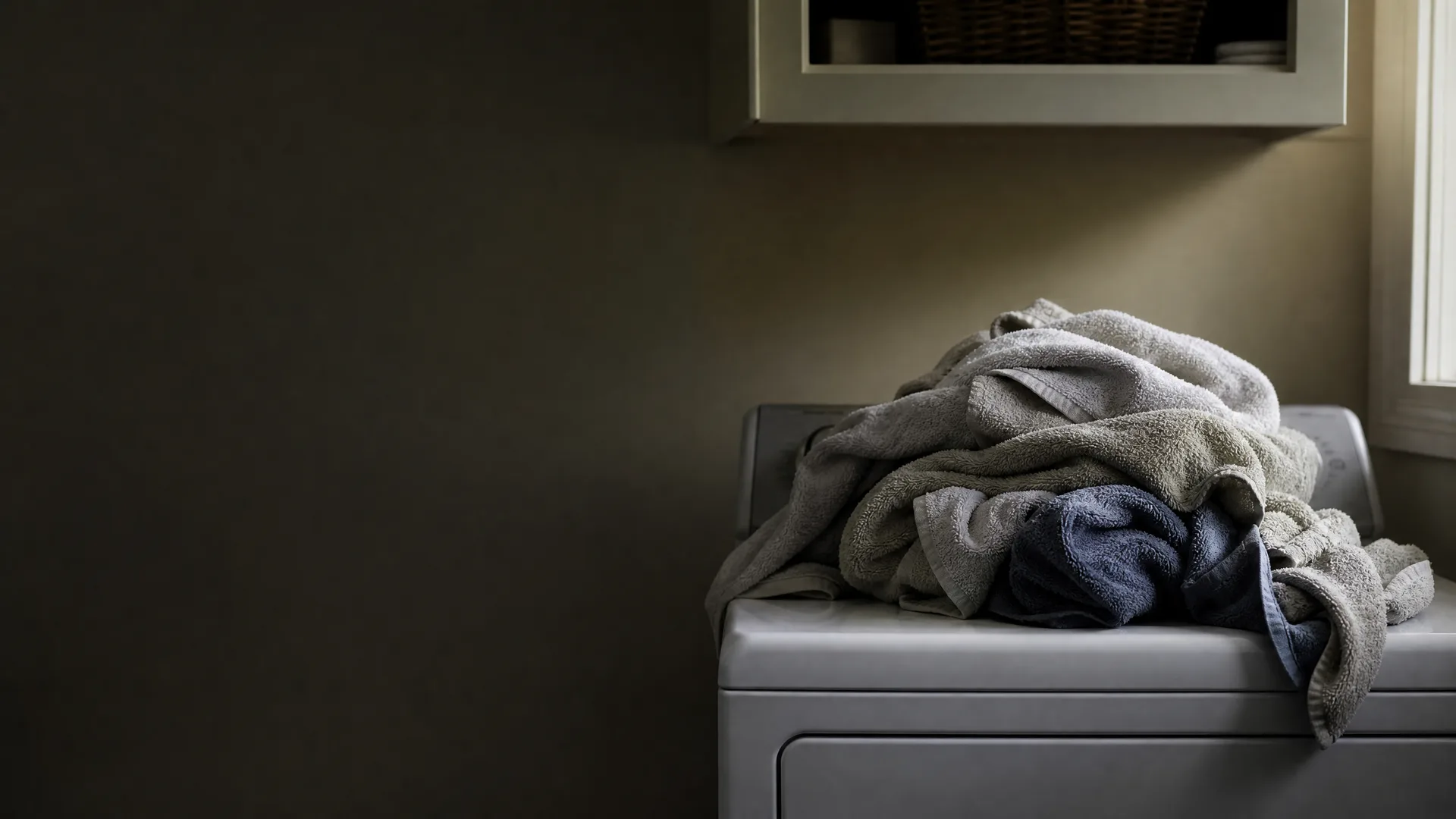
It's almost eight on a Tuesday and you're the last one still up. The dryer's been running since before dinner, going on its second cycle now, and when you open the door the towels on top of the pile are still cool and damp underneath. You pull them out anyway and stack them on the lid, telling yourself you'll run it again after you check something outside. Through the laundry room wall you can hear it, that faint scratching that starts a few minutes into the cycle. The room smells warm but not like clean laundry, more like heated dust that isn't going anywhere. You leave the damp heap where it is and go to find a flashlight.
A bird's nest in the vent is a mechanical blockage, not a nuisance that works itself out. The louvers can't close around it, the lint has nowhere to go but back toward the dryer, and every load takes longer until someone clears the line. Clearing it means opening the vent hood, pulling the nest and the lint packed behind it, and checking that the flap swings shut on its own again. That's a job for a contractor who does this kind of work regularly, not a coat hanger and a flashlight. Once you send the request, you're done chasing it down. Someone who handles dryer vents for homes around Morgantown gets in touch, and from there it's their job to find the nest, clear it, and make sure the flap seats right when they're done. You go back to running the dryer without listening for wings.

Find a dryer vent cleaning pro in Monongalia County