Dryer hot but clothes still wet in West Virginia

A white square plastic dryer vent hood with a hinged flap propped open, revealing a round duct opening, shown against a plain light gray background.
Get a dryer vent pro

A dryer that runs hot but leaves clothes damp almost always means the air isn't moving. The heater works fine, but wet air has nowhere to go, so it just sits in the drum with your clothes. The usual cause is a vent clogged with lint, bird nests, or lint packed down in a long or bent run of ductwork. Summers here get sticky, and that extra moisture in the air makes a half-blocked vent even slower to clear the damp out, so you notice the problem faster than someone would in a drier climate. Check the outside vent hood while the dryer runs. If you feel only a weak puff of air, or none, that confirms the blockage. Left alone, this makes every load take two or three cycles, and it strains the heating element since it keeps firing without the airflow to use the heat. A full cleaning of the vent line clears that path and brings drying time back to normal.

A bearded man in a dark navy sweater over a collared shirt smiles and looks off to the side while seated at a dinner table with a glass of red wine, a lit candle, and a plate of food in the foreground of a dimly lit room.
A woman in a dark gray sweater reclines on a couch with her eyes closed and a knit blanket over her lap, an open book resting face-down in front of her, with a lit table lamp and shelving blurred in the background.

Why Heat Alone Won't Dry

  • A dryer heats with a coil or gas burner, but a blower wheel is what actually pulls the wet air out through the vent.
  • When the vent is restricted, the blower can't push the moist air out fast enough, so it recirculates past the heat source and stays warm without drying anything.
  • Full lint screens only catch some of the lint; the rest rides the airflow down the vent run and builds up at bends and the outside hood.
  • A vent much longer than a few feet, or one with several turns, needs more airflow to clear itself than a short straight run does.
  • The flapper on the outside hood should swing open when the dryer runs; if it barely moves, that's a sign the line is already restricted.
  • High heat with a long cycle time is the dryer compensating for weak airflow, not a sign the heating element is working harder than it should.

A dryer only gets clothes dry if the wet air leaves the drum, and that's the blower's job, not the heater's. The heating coil or burner can run at full strength the whole cycle and still leave a damp load if that air has nowhere to go. Lint screens catch what's on the surface, but a share of every load's lint gets past the screen and rides the airflow into the vent itself. It settles at bends first, then builds up near the outside hood, narrowing the path a little more each month. A short, straight vent run clears itself fairly well. A longer run, or one with a few turns to get around a wall or a corner of the house, needs stronger airflow to push that same lint all the way out, and it's exactly those runs that clog first. The outside hood has a flapper that should swing open wide when the dryer's running and close when it's off. If you look and it only opens a crack, or barely moves at all, that's the line telling you it's already restricted. What you feel as high heat with a cycle that drags on isn't the dryer trying harder to dry the clothes. It's the dryer compensating for air that isn't moving the way it should, recirculating warm, damp air past the heating element instead of carrying it outside.

A white hooded exterior dryer vent with a mesh screen, screwed to light gray horizontal lap siding above a concrete foundation.
The flap opens fully and swings shut when the dryer stops, so moist air gets out and nothing from outside crawls back in.
A metal dryer vent hood mounted on beige horizontal lap siding, with gray lint clogging its open flap, above a lighter textured foundation wall.
When lint packs the hood like this, the flap barely moves, and the air your dryer is pushing has nowhere to go but back into the drum.
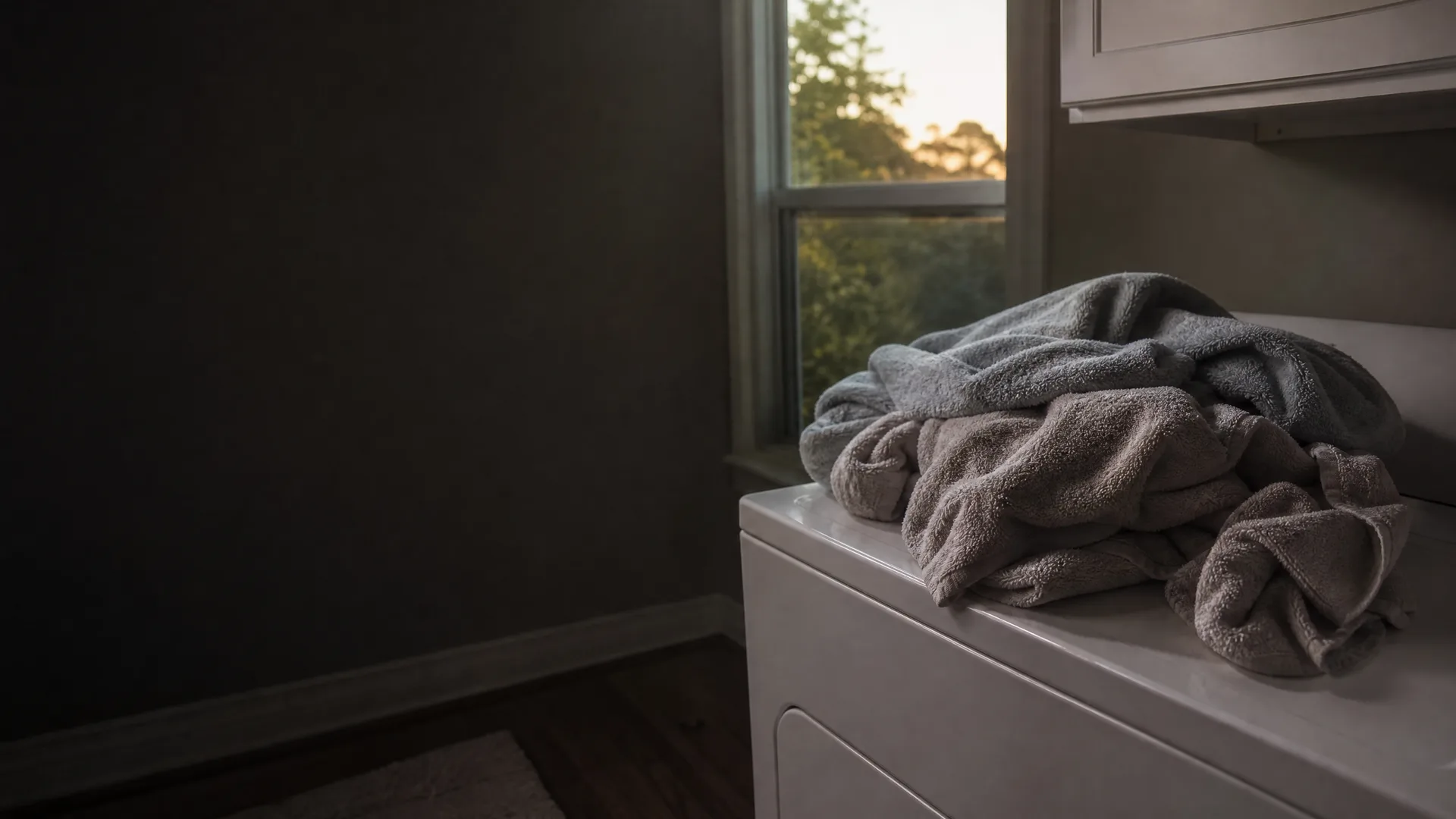
A pile of gray and taupe towels sits on top of a white laundry appliance in a dim room beside a window with trees and sunlight outside.

It's past eight and you're still in the laundry room because this load was supposed to be done before dinner. You pull the towels out and they're warm, almost hot, but heavy and damp the way they were an hour ago. You run your hand along the back of the dryer and feel the heat coming off it, so you know it's not that. The air in the room feels thicker than it should, the way it gets in a West Virginia summer when the humidity doesn't let up even indoors. You open the lint trap, clean out what's there, and start the cycle again anyway, because it's late and the towels have to dry before anyone goes to bed.


A pro who works on dryer vents

A clogged vent doesn't clear itself, and running another load through it just adds more lint to what's already packed in there. Summers here get sticky enough that clothes take longer to dry on a good day, and a blocked vent on top of that means towels and sheets that stay damp no matter how long you run the cycle. Left alone, it's also a fire risk, since lint sitting against a hot coil or burner is exactly what you don't want in a laundry room. Finding someone to clear it out usually means searching for a vent cleaning company, calling a few, explaining the same symptoms each time, then weighing quotes that aren't easy to compare. Handing that off means one contractor who works on dryer vents gets your request and reaches out to you, so you're back to doing laundry on a normal schedule instead of babysitting a dryer that runs hot and gets you nowhere.

A white hooded exterior vent cover with a louvered underside, screwed to beige horizontal lap siding above a lighter stucco lower wall.

Clear vent, open flap

This is what a dryer vent looks like when it's doing its job. The hood sits open, air moves out in a steady stream, and the flap swings shut as soon as the cycle ends. A load of towels comes out dry because the moisture had somewhere to go.

A beige plastic dryer vent hood mounted on horizontal vinyl siding, with clumps of gray lint protruding from the open flap.

Packed with lint

Lint has built up until it's pushing out through the louvers instead of staying inside the duct where it belongs. The flap can't close over it, let alone open against it. Air from the dryer hits that wall of lint and turns back, so the heat stays in the drum but the moisture doesn't leave.

Clear It Yourself or Call In Help

Clean the vent yourself

  • You can pull the hood cover off and clear what you can reach with a brush, but most clogs sit further back in the duct than an arm can reach.
  • A shop vac at the wall end might pull out loose lint near the opening, but it won't move lint packed against a bend or a joint.
  • If the run is long or has more than one turn, you won't know how much is still in there after you stop pulling lint out.
  • Doing it yourself costs you an evening and tells you nothing about whether the duct itself has come loose or crushed somewhere you can't see.
  • You can repeat this every few months on your own schedule, but you're guessing at how clean it actually got.

Have it cleaned professionally

  • A contractor runs a brush or rod the full length of the duct, from the dryer connection to the hood outside, not just what's within reach.
  • The job includes checking that the hood flap opens fully and swings shut, since a damaged or rusted flap won't seal even with a clear duct.
  • A cleaning also turns up problems you can't see from either end, like a crushed section or a disconnected joint hidden behind a wall.
  • Instead of searching for someone, calling around, and describing the same problem to each one, you get matched with a contractor who reaches out to you directly.
  • You skip comparing quotes on your own and sorting through who actually services dryer vents in your area.
A white hooded dryer vent mounted on horizontal lap siding, with a thick mass of gray lint clogging the opening beneath the hood.
Before you get your dryer vent cleaning
A metal hooded dryer vent with a louvered opening mounted on beige horizontal lap siding above a concrete foundation wall.
After you get your dryer vent cleaning

Power costs 15.39 cents per kilowatt-hour statewide

At 15.39 cents per kilowatt-hour, every extra cycle you run to get a load dry adds up fast, especially with most homes here heating on electricity already. A blocked vent can mean running towels through twice, and that second cycle costs as much as the first did.

EIA-861 2025 statewide residential average

A white louvered dryer vent hood mounted with four screws on beige horizontal lap siding above a gray stucco foundation and concrete walkway.

Vent hood sitting open

This is the hood doing its job. Four screws, louvers shut loose, nothing packed behind them. Air leaves the dryer and keeps going past the siding and out, so the moisture in a load of towels actually has somewhere to go.

A white plastic dryer vent hood mounted on beige horizontal vinyl siding, with lint clogging its lower opening and a concrete foundation below.

Vent hood packed with lint

This is the same kind of hood with gray lint built up thick across the opening. The cover can't swing past it. Whatever the dryer pushes toward this spot stops here and works its way back into the drum instead.

A woman stands in the open black front door of a white-sided house with a dark shingled roof while a man in a navy jacket approaches along the walkway, with lantern wall lights, a potted shrub, and flowering garden beds nearby.

Hot dryer, wet clothes: it's the vent, not the heat

A dryer that runs hot but won't dry a load almost always has air backing up somewhere between the drum and the hood outside. You've seen what that looks like now, the clogged hood, the flap that won't swing, the lint packed further back than a brush or a shop vac can reach. None of that clears on its own, and in a West Virginia summer, with the air already heavy, a blocked vent is the difference between a load done before dinner and one still damp at eight.

What you don't have to do is figure out who handles this or spend an evening calling around and describing the same problem three times. Once you're matched with a contractor who works on vents like yours, they'll reach out to you directly, and the comparing and sorting is off your plate. You already know what's wrong. The next step is just getting the right person out to clear it.

Interior corner of a dining room with a round wooden table, a ceramic vase holding olive branches, a dark spindle-back chair near a curtained window, and a sideboard with a lamp against beige walls.
A smiling woman with long dark hair in a gray sweater sits at a white stone counter with a glass of white wine, with a kitchen, fireplace and sofa visible behind her.
A smiling woman with dark hair in a cream sweater sits at a marble table with a glass of red wine, with a lit lamp, sofa, fireplace and kitchen counter behind her.
A woman in a cream sweater laughs while seated at a marble countertop with a glass of red wine, with a dimly lit living room and sofa behind her.
A woman in a beige turtleneck sweater with her hair up sits laughing and looking to the side at a white marble table with a glass of red wine, in a dimly lit interior with a lamp and seating area behind her.

Dryer Vent Cleaning

Get your dryer vent to the right pro

Answer a few questions about the dryer vent cleaning and skip the search.

A black-framed smartphone standing upright against a plain white background, its screen filled with solid green.
Duct and vent cleaningWest Virginia
Step 1 of 3

What kind of equipment?