

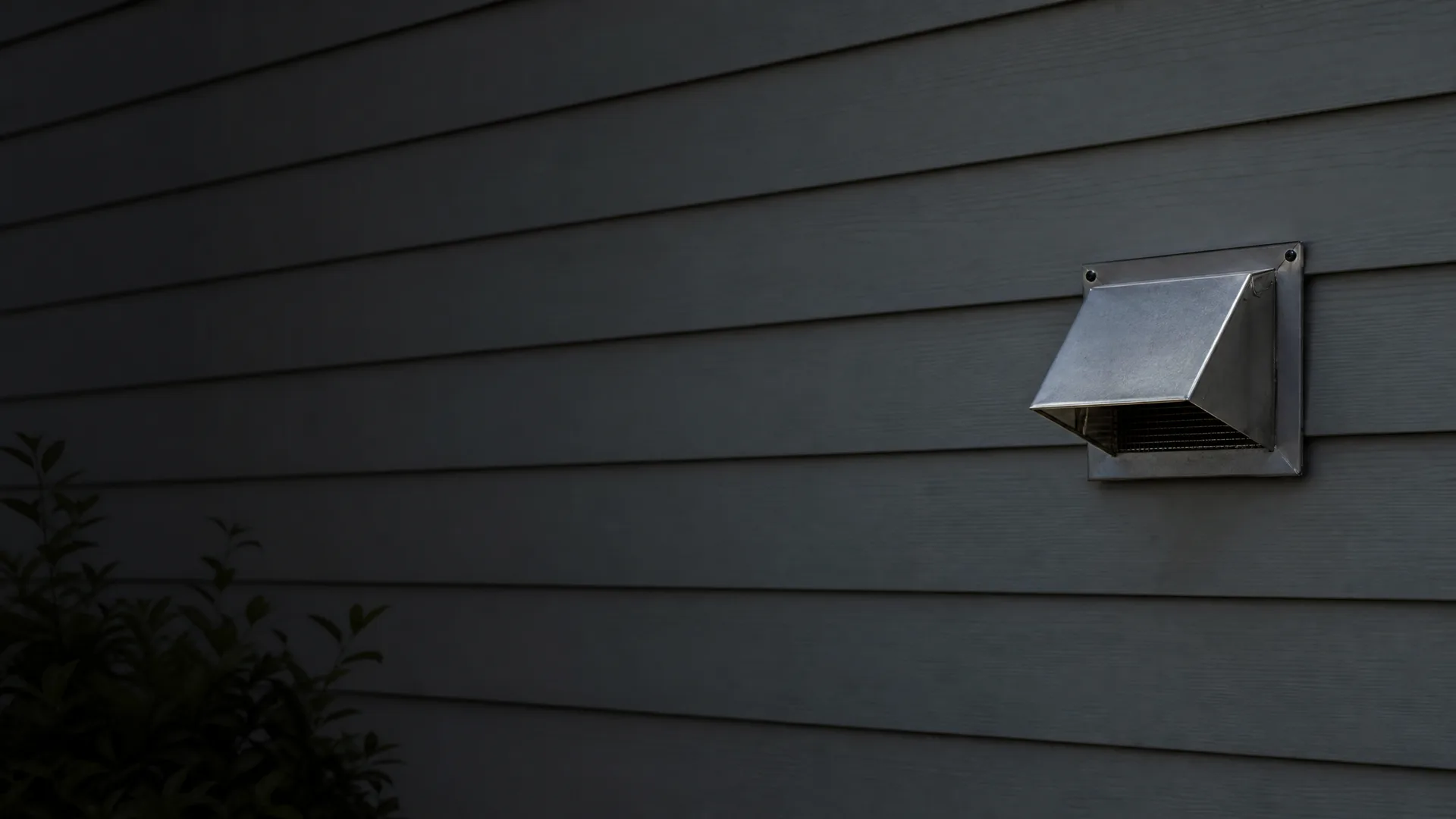
Vent working as it should
Air moves freely through the hood and out past the flap, carrying the moisture out of your clothes and out of the house. The flap opens on its own with each cycle and closes flat against the siding when the dryer shuts off.
A dryer that runs through two or three cycles for one load is usually choked with lint somewhere past the lint trap, in the vent itself or the hose running behind the machine. Summers here get sticky, and that extra moisture in the air gives a clogged vent even less room to push air and moisture outside, so the dryer keeps heating and tumbling without actually drying. The lint trap only catches part of what comes off your clothes. The rest settles in the vent run, and over time it narrows the path until the dryer is fighting to push air through at all. Since most homes here heat with electricity, a dryer working this hard is also pulling more power to do the same job, so you feel it on the bill as well as in the extra time standing at the machine. A clear vent fixes both.


A dryer dries clothes by moving air, not just heating it. The drum tumbles the load while hot air passes through it, and that air has to go somewhere: out through the hose behind the machine, through the wall duct, and out the hood on the outside of your house. Lint catches on the way. It builds up slowly along the inside of the hose and the duct, long before enough collects in the trap to make you think there's a problem. As that path narrows, the same volume of hot air can't get out fast enough, so it backs up around the drum instead of carrying moisture outside with it. You can often see the result at the vent hood itself. The flapper should swing open wide when the dryer runs. If it barely moves, or only opens partway, air isn't pushing through the way it should, and that's airflow being choked off somewhere between the drum and the outside wall. West Virginia summers make this worse. Muggy air outside means the air your dryer pulls in to begin with already carries more moisture, so the vent has more work to do moving it back out. A duct that was just getting by in the spring can leave a load damp by July. It also runs the dryer hotter for longer stretches, and that extra heat is hard on the parts built to handle normal operating temperatures, including the thermal fuse and the igniter.






Explain the job once and skip repeating it on every call.
No fee to send it, and nothing to sign.
Clothes coming out of the washer already hold water, and the dryer has to push that water out as vapor through the vent. When the air outside is already thick with moisture, the dryer is working against a smaller difference between what's inside the vent and what's outside it. A vent that's partly blocked with lint has less room for that vapor to move through in the first place. Put those two together and the dryer needs more time, more heat, or both, to get a load dry. A vent that's clear handles that humid air fine. One that's narrowed by lint is already struggling before summer even gets involved.
Most homes in West Virginia heat with electricity, and that usually means the dryer is electric too. An electric dryer makes heat with a coil, not a flame, so it depends even more on steady airflow to carry that heat and the moisture it picks up out of the vent. A gas dryer has some extra heat to spare if airflow drops some. An electric dryer doesn't have that margin. When lint narrows the path, the coil keeps heating but the wet air moves out slower, and the load sits there damp cycle after cycle.
At 15.39 cents per kilowatt-hour, every extra cycle a clogged vent forces costs you twice over, since most homes here heat with electricity too. A dryer straining to push air through packed lint just runs longer to get clothes dry, and you pay for every extra minute.
EIA-861 2025 statewide residential average

Air moves freely through the hood and out past the flap, carrying the moisture out of your clothes and out of the house. The flap opens on its own with each cycle and closes flat against the siding when the dryer shuts off.

Lint has built up across the opening until the flap can barely move, and loose fibers hang off the hood where they caught on their way out. Air that should be leaving the house is backing up into the vent instead, so the dryer runs longer and still comes up short.

A dryer that needs two or three runs for one load isn't worn out. It's blocked, almost always in the vent or the hose behind the machine, and West Virginia's sticky summers make that blockage work harder against you. Clear the vent and the dryer goes back to doing what it was built to do: push hot air through, pull moisture out, and shut off on schedule.
Finding someone qualified to clean a vent properly, not just vacuum the lint trap, usually means calling around, asking what their process actually covers, and comparing answers before you pick one. Send the form and that part is done. You'll hear from a contractor who does this work, and the rest of your evening stays yours.

Skip searching for a dryer vent pro and answer a few questions instead.