
Mold in air ducts in Morgantown, WV

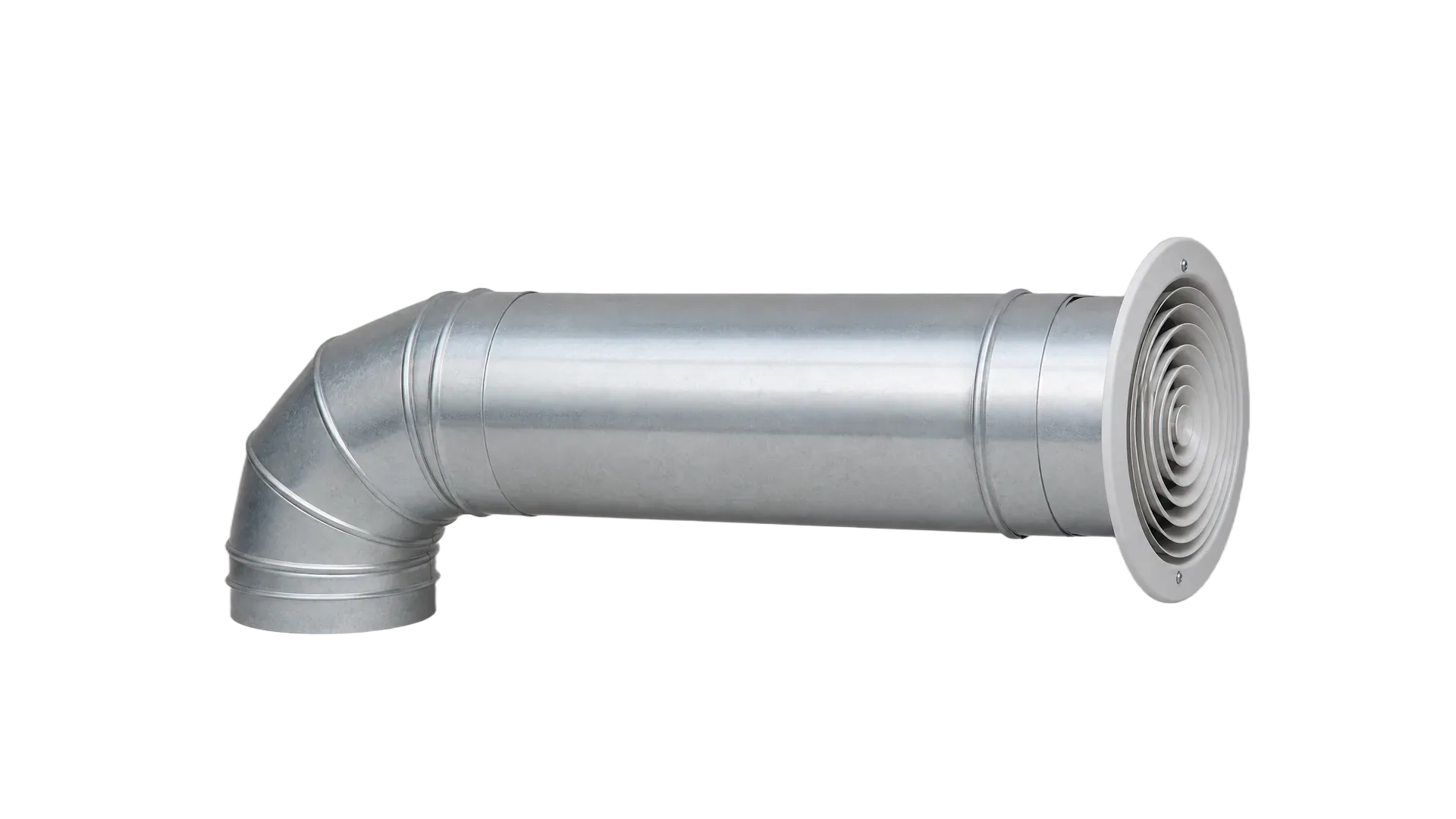
A galvanized metal duct assembly with a 90-degree elbow, straight section, and round louvered vent grille on a plain gray background.
Hand off the search

Can mold really grow in my air ducts?

It sounds like a problem that belongs somewhere else, not inside metal ductwork. But maybe there's a musty smell when the furnace kicks on, or a vent cover that looks dusty in a way that doesn't quite wipe clean. You're trying to figure out if what you're smelling or seeing is actually mold, and whether that's even possible inside a duct system, before you decide this is worth doing anything about.

Yes, mold can grow inside air ducts

Mold needs moisture, and ducts get damp more often than people expect. Condensation forms on duct surfaces when humid air meets cool metal, especially on the return side near the air handler. Monongalia County summers get sticky enough that the air handler is pulling in moist air for months at a time, and any water sitting in the ductwork or around the coil gives mold a place to start. Once it takes hold, the system spreads spores through the house every time the blower runs. A musty smell when the furnace or AC kicks on, or dusty-looking buildup on a vent that doesn't wipe away clean, are both signs worth paying attention to.

Unfinished basement with bare concrete floor and walls, exposed wood joists, large galvanized sheet-metal ductwork, PVC and copper piping, and a gray furnace unit beside wood stud framing.

Ductwork running clean

Air moves through the ducts and out the vents without carrying any smell with it. The metal stays dry, the joints stay sealed, and the furnace pulls air through without picking up anything it shouldn't. This is what a basement system looks like when there's nothing growing inside it.

Basement ceiling with large galvanized sheet-metal ductwork, round metal pipes and plumbing lines running beneath wood joists, above a bare concrete wall and floor.

Signs something's wrong

Water staining on the foundation wall means moisture has been getting in. Ducts run right past it, close enough for damp air to reach the metal. Once mold takes hold inside, every vent connected to that duct can carry the smell into the rooms above.

Why does mold keep showing up in your ducts?

  • Half the homes here were built by 1988

    Half the homes in Monongalia County were built in 1988 or earlier, and ductwork that old has had a lot of years to develop a small leak or a seam that sweats.

  • Heat runs October through May

    Heat runs here from October through May, about eight months of the year, and that's eight months of a furnace pulling air through ducts that stay damp if moisture got in.

  • Cooling runs June through August

    Cooling runs June through August, and those humid months are when ducts carrying cold air sweat on the outside, which is exactly the kind of damp mold needs.

ACS 2020-2024 · NOAA nClimDiv 1991-2020

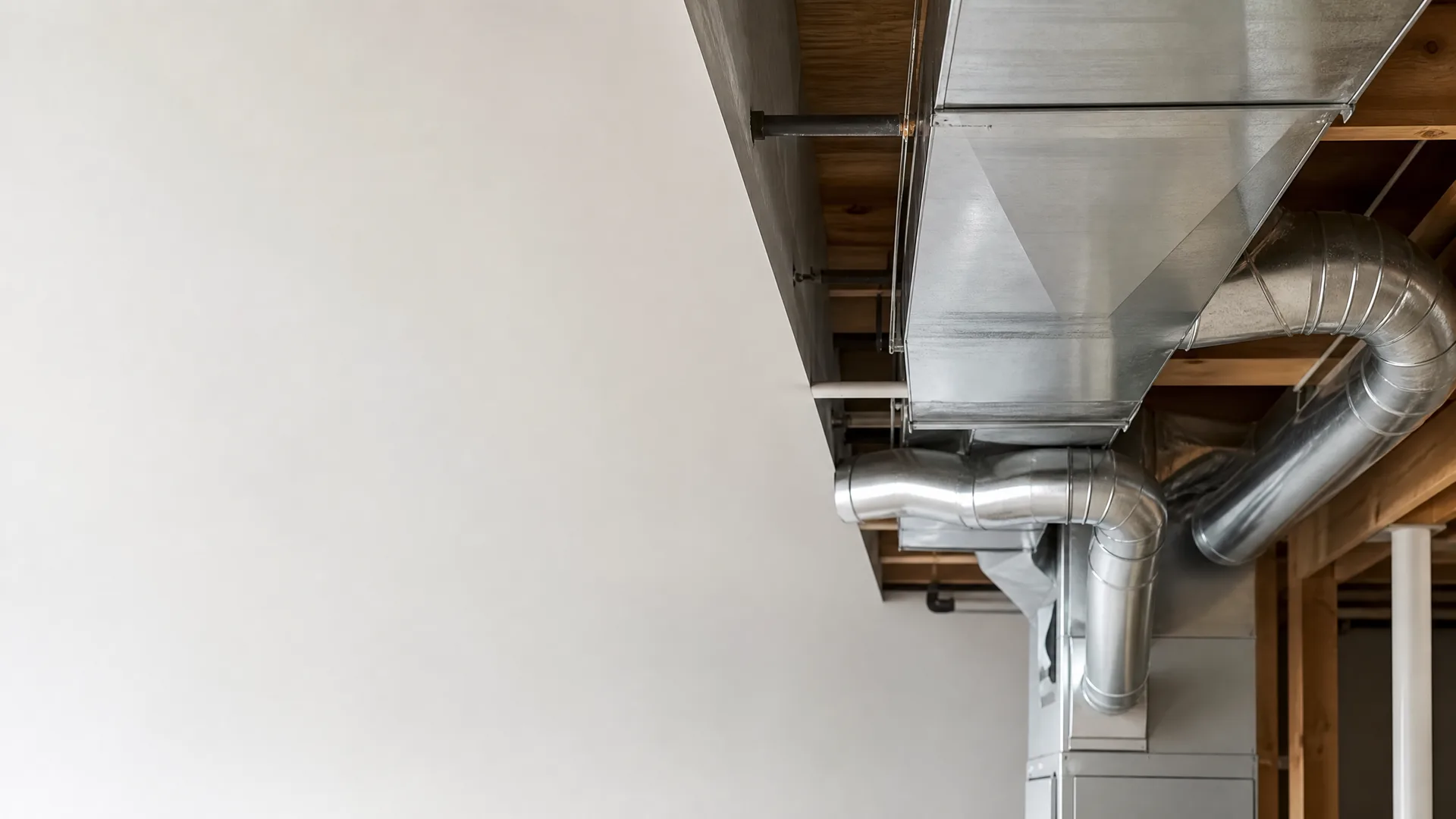
Galvanized sheet metal HVAC ductwork and insulated pipes running along a wood-framed basement ceiling beside a blank off-white wall.

Why humidity feeds the growth

Mold needs moisture to grow, and a duct system can hold onto it in more than one way. Condensation forms where warm, humid air meets a cold duct wall, usually near the AC evaporator coil or in a run that passes through an unconditioned space. Once a seam or joint stays damp, mold can take hold on the dust already sitting inside the metal. Monongalia County summers stay muggy long enough for that moisture to keep showing up.

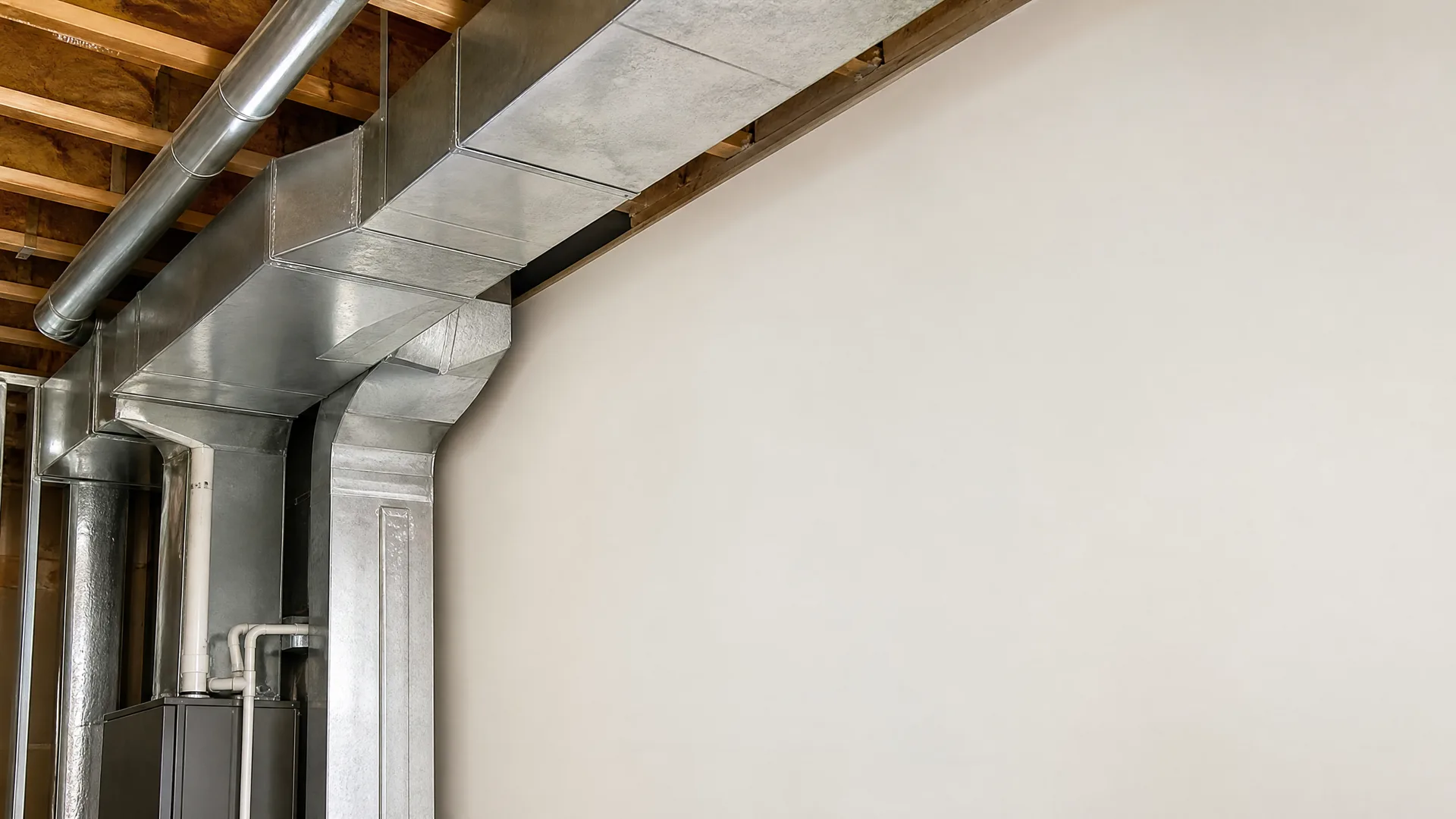
Galvanized sheet metal HVAC ductwork and flexible round pipes running along a wood-framed ceiling beside a plain white wall.

What a cleaning actually removes

Duct cleaning clears the dust, debris and mold growth off the interior surfaces of the supply and return runs, along with the grilles and registers tied into them. A contractor runs equipment through the ductwork to dislodge material from the walls and joints, then vacuums it out before it recirculates into the house. It addresses what has already built up inside the metal. It doesn't fix a leak or a damp spot that let the moisture in to begin with.

Is that smell coming from your vents?

You notice it most when the furnace or the AC first kicks on, a musty smell that fades after a few minutes and comes back the next cycle. Dust around the vent covers looks darker than normal, or has a faint gray or greenish cast that doesn't wipe away clean. Someone in the house might be sneezing more at home than away from it, or notice their eyes itching once the system has been running a while. If this sits unaddressed, the air moving through those ducts carries whatever is growing in them into every room the system reaches, not just the one where the vent is.

A smiling man in a green ribbed sweater stands behind a wooden table holding a ceramic mug of coffee in a kitchen with white subway tile, shelves of potted plants, and a bowl of fruit.
A smiling man with dark curly hair and a beard, wearing a dark green knit sweater, stands at a white marble kitchen counter with a dark blue mug, with open shelving, pendant lights and a houseplant behind him.
A smiling bearded man in a green henley shirt stands at a kitchen island with a gray mug, looking off to the side, with a dining area and shelves blurred behind him.
A smiling man in a navy long-sleeve shirt sits at a wooden table in a kitchen and dining area, with a ceramic mug, a potted plant, and a sliding glass door behind him.

One request and it's handed off

Answer a few questions about the duct cleaning and skip the search.

It costs nothing to send, and you don't have to hire anyone.

Cleaning the ducts yourself

A long vacuum hose can reach a foot or two into a duct and pull out dust, but it won't reach the runs behind the walls or under the floor, and it does nothing for mold sitting on the metal further in. Wiping the vent covers with bleach or vinegar might clear the smell at that one spot for a few days, but the growth feeding it is further up the line where you can't get a brush or a rag to it. Sealing a sweating joint you can see and reach is worth doing, but a duct system has runs you'll never see without taking the house apart around them.

What a full cleaning reaches

A contractor cleaning the system uses equipment that reaches the full length of the ductwork, not just the first section past the vent cover, and can get into the return runs and the plenum where mold often sits unseen. They can also tell whether the smell is coming from the ducts at all or from the coil itself, which looks and gets treated differently. Instead of spending a weekend tracking down contractors, explaining the smell over the phone to each one, and comparing what they quote, you send one form and the search for someone qualified is no longer something you have to do yourself.

A bearded man in a dark gray T-shirt sits smiling on a light gray couch, with a houseplant and a framed picture on the wall behind him.
A bearded man in a plaid flannel shirt over a gray tee looks out a frosted multi-pane window with snow outside, a steaming dark mug on the sill beside him and shelves of dishware behind.
A closed laptop and a ceramic mug on a wooden table in front of a kitchen with green cabinets, marble counter, black pot, cutting board, wooden bowl, and a white vase with greenery.

Mold in the ducts has a cause, and the cause can be fixed

Mold in a duct system comes down to moisture somewhere it shouldn't be, whether that's a sweating duct wall near the coil or a leak that's let humid air inside for years. A musty smell when the furnace or AC kicks on, dark dust around the vent covers, these are the signs, and they point to something a shop vacuum can't reach. The ductwork running behind your walls and under your floors needs a contractor with the right equipment to get all the way through it.

Finding that contractor is the part you don't have to do. Instead of calling around Monongalia County, checking who's licensed, and explaining the same musty smell to three different companies before you get a quote you trust, you send one form. What comes back is someone qualified to look at your ducts and tell you what's actually growing in them.

Living room interior with a light sofa holding a dark green cushion and a brown knit throw, a tall leafy plant by a black-framed window, a wooden coffee table with a round tray, and wooden shelves holding vases and books.
A white clapboard house at dusk with a lit pedimented portico, wooden front door, potted ferns, stone walkway, lawn, and illuminated hydrangea shrubs.

Ductwork Cleaning

Done looking for a duct system pro

Duct and vent cleaningDucts or ventsMonongalia County, WV
Step 1 of 2

What ZIP code is the job in?

  • A ceramic table lamp with a tapered beige shade sits on a wooden side table with a drawer, beside a shallow wooden bowl holding a stone sphere and a potted green plant, next to an upholstered chair with a knit throw.
    • Get matched with a pro who works on ducts in Monongalia County.
    • Your request goes to a Monongalia County pro who takes ductwork jobs.
  • A potted green trailing plant in a textured ceramic pot with saucer sits on a wooden side table beside a small wooden bowl, with a ceramic table lamp, framed picture, and sunlit window nearby.
    • Send it once and finding someone is no longer on you.
    • Send the form and finding a duct cleaner is handled.
  • A beige upholstered armchair with a green cushion and knit throw sits beside a tall indoor plant and a wooden side table holding a potted plant near a bright window.
    • Describe your ductwork job once, to one pro.
    • Skip searching for someone who cleans ducts in Monongalia County.
  • A beige upholstered armchair with a striped cushion and fringed throw sits beside a window with sheer curtains, next to a wooden side table holding a dark ceramic lamp, with a potted tree in a woven basket behind and a jute rug on the dark wood floor.
    • Your request goes to one pro, not a list of companies.
    • The pro who gets in touch is licensed in West Virginia and works in Monongalia County.