
20 to 30 percent
That's how much conditioned air a leaky duct run can lose before it ever reaches a register. Your system runs longer to make up for it, and the far bedroom still doesn't get there.
Get matched with a Berkeley County pro who cleans ducts.
Find my proLeaky ductwork usually shows up as rooms that never feel right. A bedroom at the end of the house stays warm in July no matter how long the AC runs, or cold in January even with the heat on. Your energy bills climb without any change in how you use the house. You might notice dust coming out of vents, or find bits of insulation or a musty smell near the ductwork in the attic or crawlspace. Sometimes you can hear a hiss near a joint in the duct when the system kicks on. Leaks happen where sections of duct meet, usually where the metal tape or mastic sealing those joints has dried out and pulled apart over time. Once that seal fails, conditioned air escapes into the attic or crawlspace instead of reaching the room it was meant for. The system keeps running to make up for it, working harder and longer to get the house to the temperature you set.
Half the homes here were built by 1996
Half the homes in Berkeley County were built in 1996 or earlier. If yours is one of them, check whether the ducts are original before you assume the leak is something new.
Heat runs October through April
Heat runs about seven months a year here, October through April. That's seven months of warm air pushing through every seam and joint that might be loose.
Cooling runs June through August
Cooling runs June through August. Three months isn't long, but it's enough for a leaky duct in the attic to waste cooled air before it reaches a vent.
ACS 2020-2024 · NOAA nClimDiv 1991-2020
Run your hand along the duct seams in the attic or crawl space. If you feel air moving at a joint or a sharp bend, that joint has opened up and is losing air right there.
A closed system gives you no seam to feel and no draft to find. If every joint feels still, the leak you're chasing may not be in the ductwork at all, and the register in that one bad room is worth a look instead.




Supply ducts run under positive pressure, so a gap doesn't just lose air, it pushes conditioned air into the attic or crawl space instead of your rooms. The return side does the opposite. It pulls in whatever is nearby, attic heat in July, crawl space damp in January, dust either way. That's why a leaky system can run constantly and still miss the thermostat setting by several degrees. The blower isn't struggling. It's just delivering a lot of its work somewhere other than where you live.
Mastic and metal tape close a seam for good because they don't rely on being flexible the way cloth-backed duct tape does. That matters with the swings this area sees, hot attics in summer, cold crawl spaces in winter, metal expanding and contracting through all of it. Tape dries out and peels loose within a few years under that kind of movement. Mastic cures hard and stays put through the same cycles. Once a joint is sealed with it, it's one less place pulling air out of your system every time it runs.

That's how much conditioned air a leaky duct run can lose before it ever reaches a register. Your system runs longer to make up for it, and the far bedroom still doesn't get there.
Air that leaves the furnace or coil reaches the rooms it was meant for. Rooms even out, and the system stops working overtime to cover what leaked along the way.

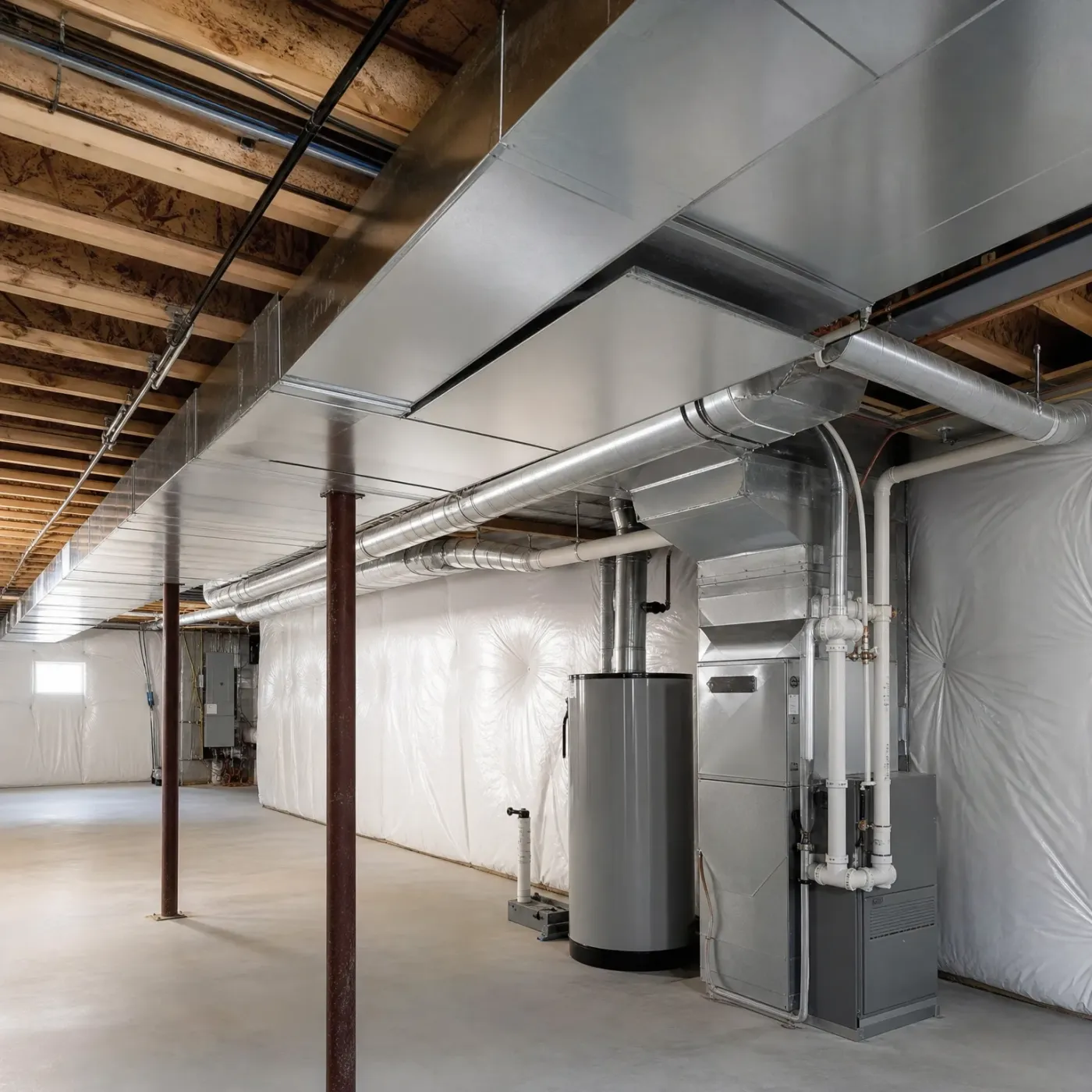
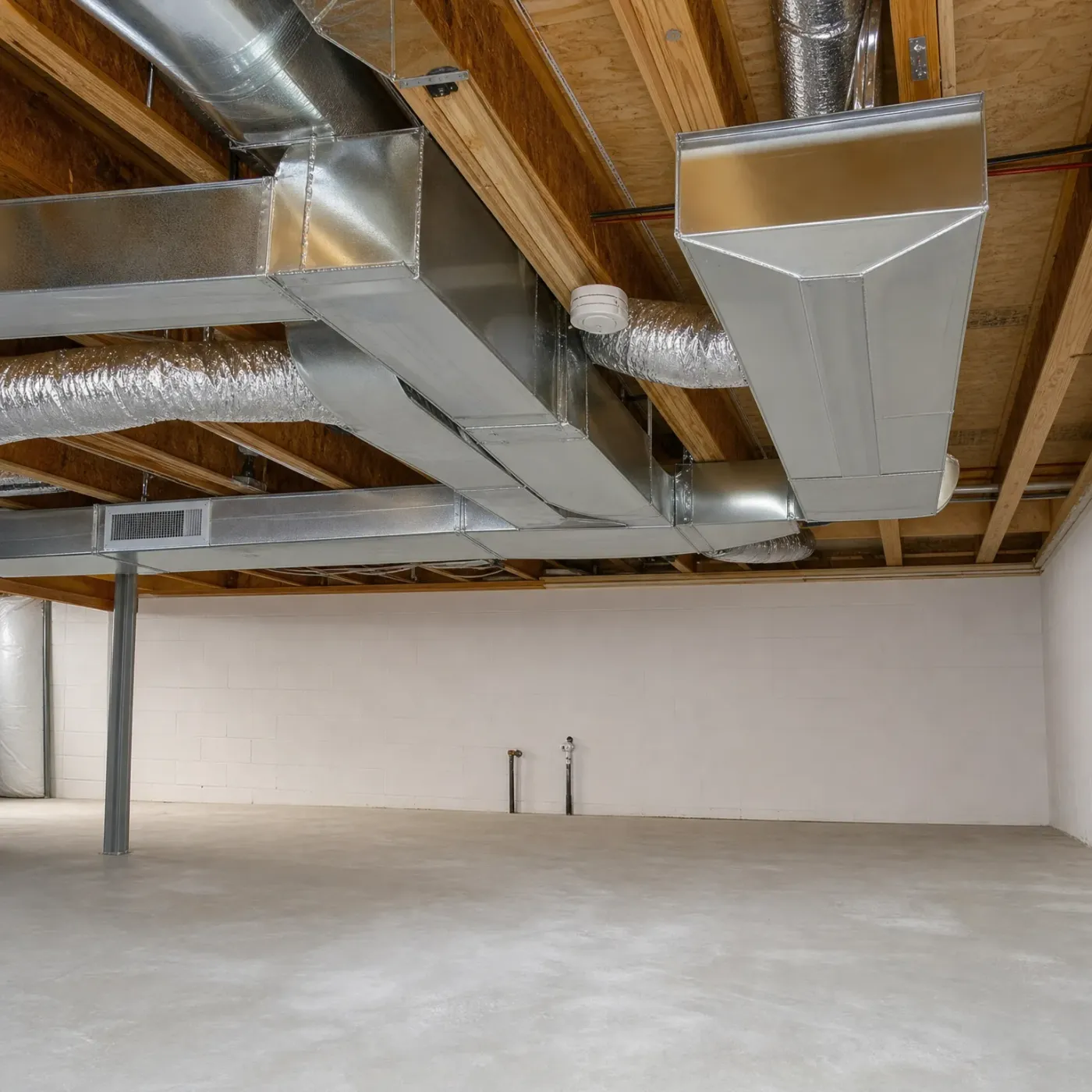
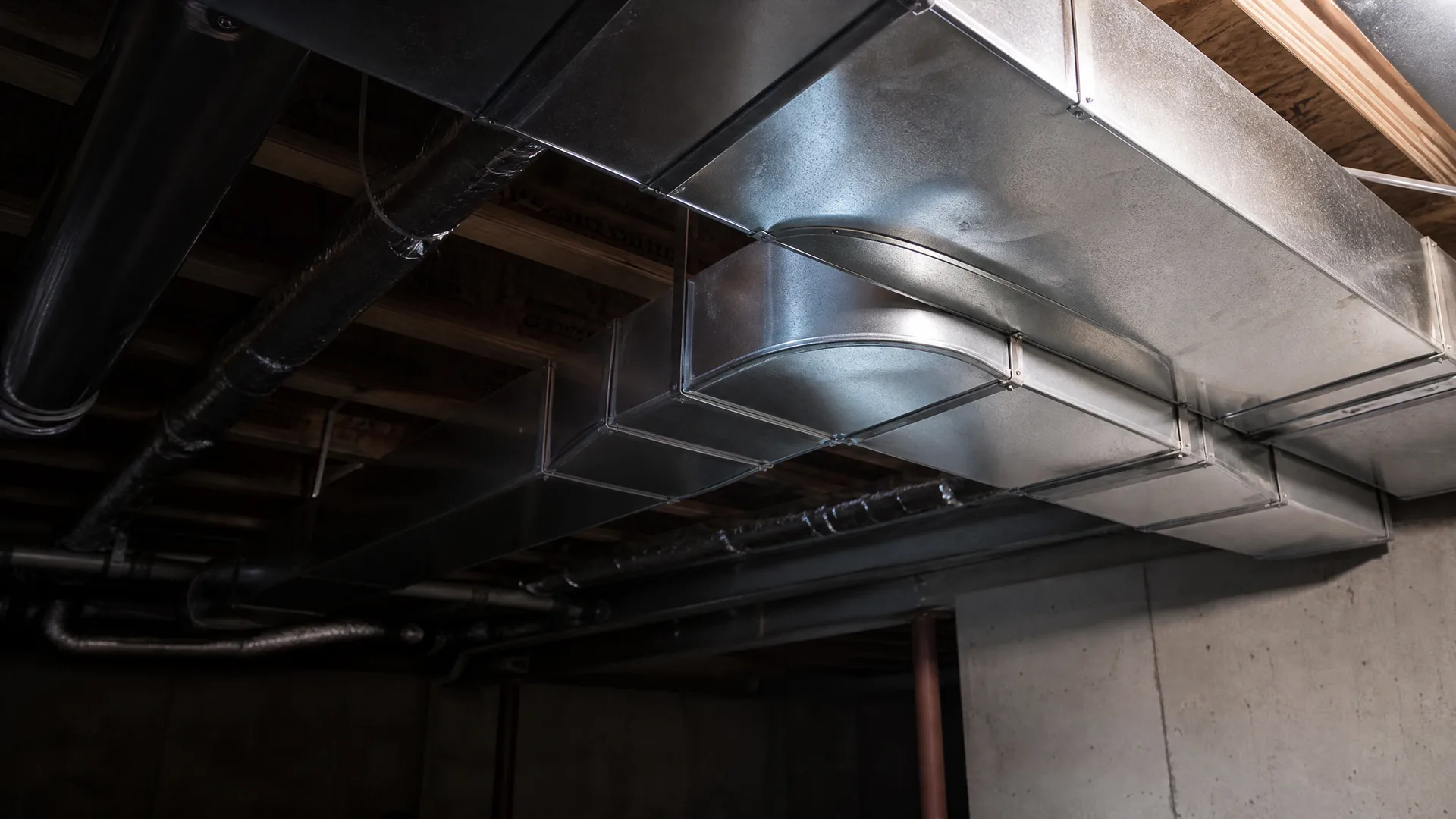
This is what a sealed system looks like. The trunk lines and flex runs sit tight at every joint, and the joists above them stay the color of clean wood. Air leaving the furnace or the AC goes where it's supposed to, into your rooms, not into the space around the ducts.

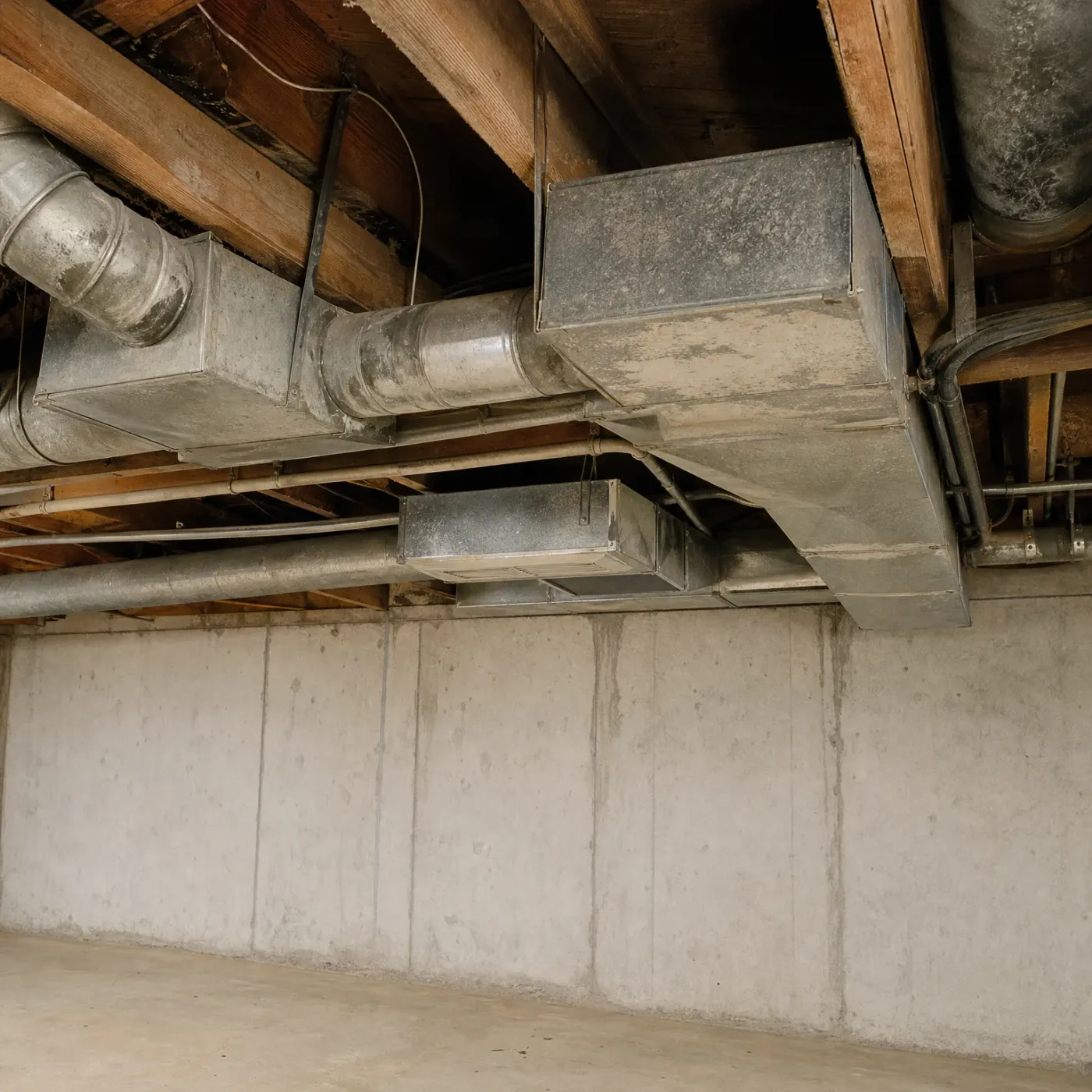
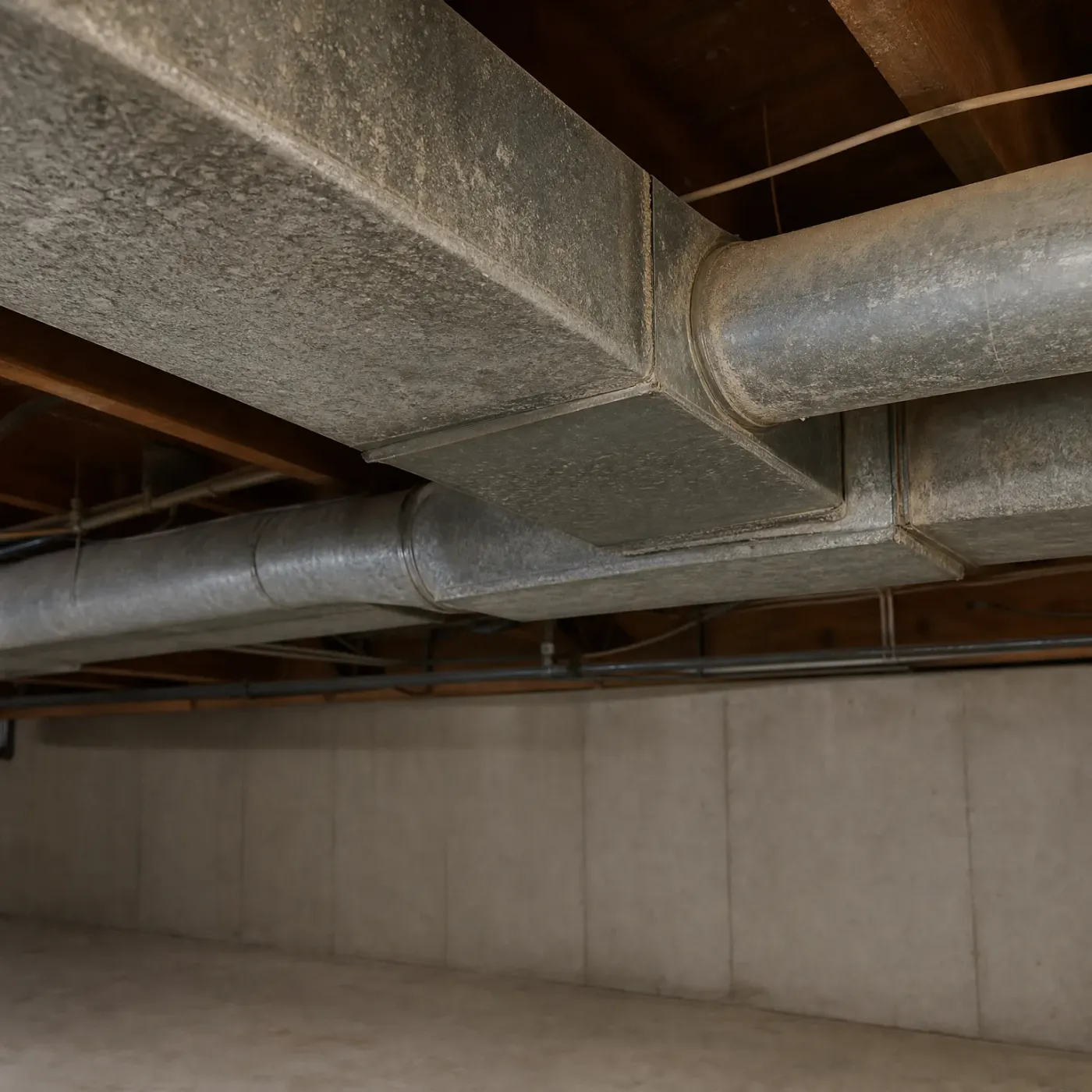
The dark staining on these joists and duct surfaces comes from moisture that condensed where leaking air meets cool wood, over and over, season after season. Once you see staining like this, the leak has been running long enough to leave a mark, not just a draft.


Your duct cleaning request goes to one local pro.
Your request goes to a Berkeley County pro who takes ductwork jobs.
Sending the form costs nothing.

It's a Saturday afternoon in April, warm enough that the AC kicked on for the first time this year. You're in the living room picking up from the weekend, and the light coming in low catches the ceiling vent grille. It's gray along the slats, and the same gray film sits on the bookshelf underneath it and along the top edge of the TV. You run a finger across the shelf and it comes away dark. The vent two rooms over, you remember now, has never looked like this. You make a note to check the attic above this room before summer gets going in earnest.
You've noticed dust collecting around a vent grille, maybe a dark smudge on the ceiling or a gray film on the register slats itself. It makes you wonder if that's just normal house dust settling, or if it's a sign the duct behind it is pulling in or pushing out air it shouldn't. You want to know what to actually look for before you decide it's worth a closer look.
A little dust on a register is normal. Dust that streaks outward from the grille onto the ceiling or wall isn't. That streaking means air is leaking out around the boot or the connection behind it, and it's carrying dust with it as it escapes into the room instead of through the vent opening the way it should. Run a finger along the drywall just past the grille. If it comes back gray, that's residue built up from months of air moving across it. Check the return vents too. A return pulling air from a dusty attic or crawl space will show the same film, and that air is going straight into your furnace or coil before it ever reaches a room.
Air leaves the furnace or AC under pressure through the trunk line
A joint or torn flex run opens along a seam in the attic or crawl space
Conditioned air escapes into that space instead of reaching the room
The return side pulls in attic or crawl space air to replace it
At 13.10 cents per kilowatt-hour, every bit of air a leaky duct pushes into your attic or crawl space instead of your living room is power you paid for and didn't get. With heat running most of the year here, that waste shows up on your bill long before you ever see the duct itself.
EIA-861 2025
A room that won't hold its temperature, dust around the registers, and a bill that climbs without any change in your habits are rarely three separate problems. They're one leak showing up three different ways. If you've found a seam in the attic or crawl space where you can feel air moving, that's the confirmation. A sealed duct run gives you nothing to feel there, no draft, no gap, nothing. Most of the time what's behind all of it is small: a few feet of flex that's torn, or one joint that's worked itself open. Not the whole system, just the part of it that's failed.
What doesn't change is the cost of ignoring it. Every month that joint stays open, you're paying to condition air that ends up in your attic or crawl space instead of your living room. The system runs longer to make up for it, and the room at the far end of the house still doesn't get what it needs.
Finding the leak is one thing. Fixing it right, so the joint stays sealed and the rest of the run holds up with it, is another. A contractor who works on duct systems around Berkeley County every season has seen where these joints tend to open first, in this kind of ductwork, in homes built the way yours likely was. When you put in a request, it goes to one licensed local contractor, not a handful of companies calling you back at once. Just someone who can look at what you've found and tell you what it actually takes to close it up.
Matched to your ductwork job