Lint is flammable
It builds up inside the vent where heat from the dryer collects. A clogged vent traps that heat instead of letting it escape outside.

Yes. A clogged dryer vent is one of the more common causes of house fires, and it works the same way in West Virginia as anywhere else. Lint is what catches. Every load leaves some behind, and it builds up inside the vent instead of blowing outside where it belongs. Once that lint pile gets thick enough, it blocks airflow, and the dryer's heating element keeps working against that blockage, pushing hot air into a space that can't vent it out. That heat has to go somewhere, and lint ignites easily. Summers here get sticky, and the added humidity makes lint cling to the inside of the vent instead of moving through it, so the buildup can happen faster than you'd expect. If your dryer is running hotter than usual, taking longer to dry a load, or the outside vent flap barely moves when it's on, the vent is likely restricted. That's worth checking before it becomes something worse.


It builds up inside the vent where heat from the dryer collects. A clogged vent traps that heat instead of letting it escape outside.
A clean vent lets hot air escape outside the way it's supposed to, instead of backing up into the dryer and the duct behind it.




A dryer pushes hot, damp air out through a duct that runs from the back of the machine to a hood on the outside of your house. Lint rides along with that air, and some of it sticks to the inside of the duct on every load. Over time it narrows the path the air has to travel. The dryer does not slow down when that happens. The burner or heating element keeps putting out the same heat, but with less air moving past it, that heat has nowhere to go. It collects inside the duct instead of leaving the house. Lint catches fire at a lower temperature than paper does, so a vent already running hot is closer to that point than most people realize. The dryer senses excess heat through a thermal fuse that shuts it off when the sensor is tripped, but that fuse is a last line, not a fix, and a vent that stays blocked trips it again on the next load. Most of the buildup happens at the bends in the duct and at the hood outside, both places out of sight behind a wall or outdoors where nobody checks them. A fire that starts there can burn for a while before anyone smells smoke or sees it. That is the part a clogged vent changes. It is not a question of the dryer wearing out. It is heat with no way out.


Send the form and finding a dryer vent cleaner is handled.
Sending the form costs nothing.

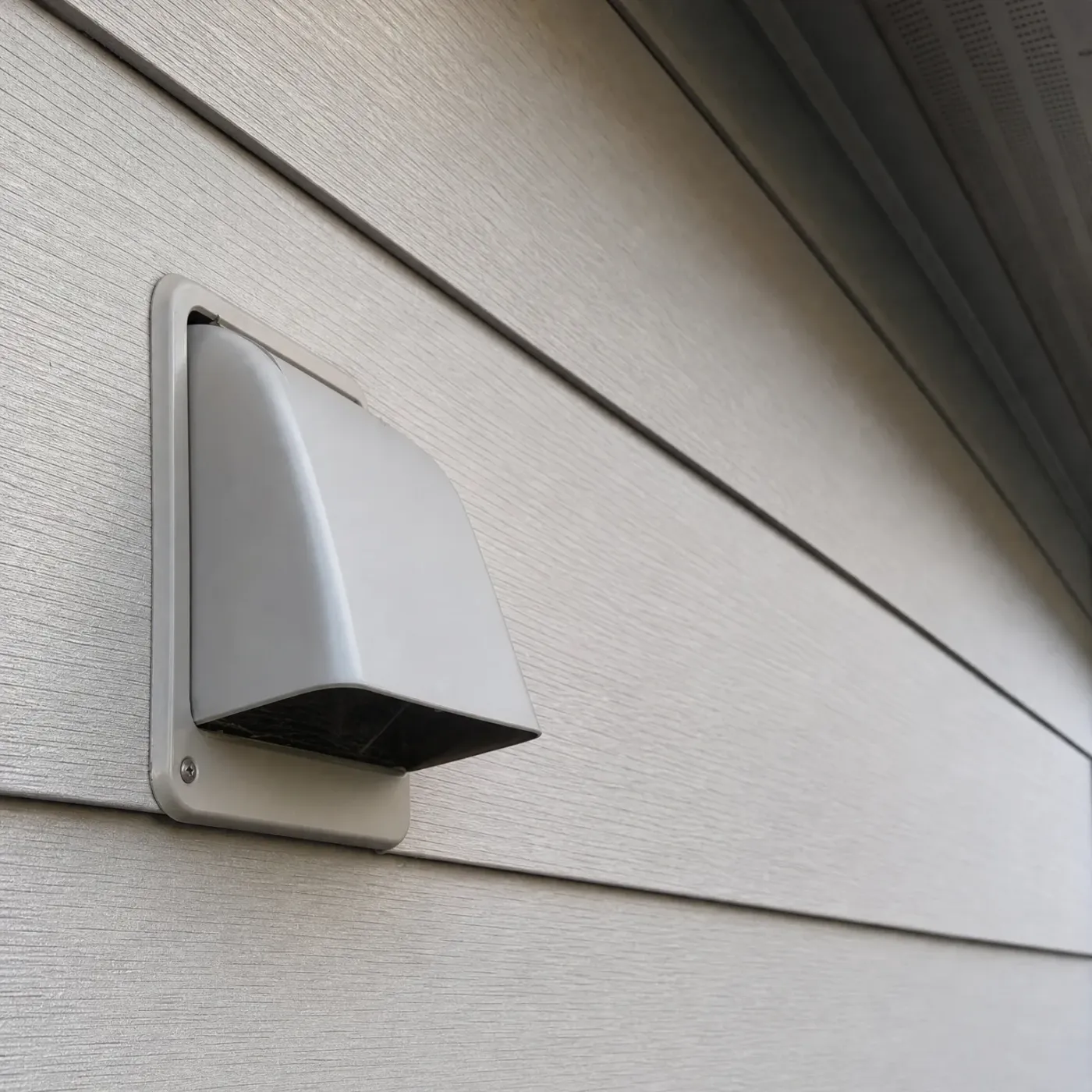
The cap sits open with the flap free to swing. Air pushes it out every time the dryer runs, and the screen stays clear enough to see through. Lint is leaving the house instead of collecting in the duct behind it.

The openings here are packed with gray lint instead of open air space. Dust has built up around every square of the grid, which means the dryer is pushing hot air against a wall of lint instead of outside. That's where the heat has nowhere to go.
Most homes in West Virginia heat with electricity, and that same meter runs your dryer. At 15.39 cents per kilowatt-hour, a dryer working harder to push air through a clogged vent pulls more power every time you run a load, on top of the fire risk it's creating.
EIA-861 2025 statewide residential average



It's a little past seven and the towels are still damp. You've run them twice already. The dryer's been going since before dinner and the laundry room has that warm, close smell to it, like the air isn't moving right. Outside it's sticky, the kind of evening where the window unit's been on all day, and you figured the dryer was just struggling to keep up with the weather. You open the door, feel the towels, and they're warm but not dry, same as last time. You stack them back on top of the dryer and set it for another twenty minutes, figuring you'll check your phone until the buzzer goes.

The answer is yes. A clogged dryer vent traps heat and lint together, and that combination is what starts fires in laundry rooms. Nothing about West Virginia changes that. A dryer running longer than it used to, a vent cap that won't swing open, a burning smell near the machine, these are the same warnings whether the house is in Charleston or out past Morgantown. The risk sits in the vent itself, not in the weather outside it.
Knowing the answer is one thing. Getting the vent checked is another, and that part doesn't have to fall on you. Once you send the request, it's no longer your job to track down who's available or whether they know this kind of work. A contractor who handles dryer vent cleaning gets matched to what your home needs and reaches out to you from there. The towels, the warm smell in the laundry room, the dryer running longer than it should, that's the part you noticed. Finding someone to deal with it is the part you can hand off.

One request and the dryer vent cleaning stops waiting on you.
You're not committing to anything by asking.
