Get matched with a pro who works on ducts in Wood County.
A room that won't cool down in August or won't hold heat in January usually isn't the furnace or the AC. It's the ducts running through your attic, crawl space, or basement losing air before it ever reaches the vent. In Wood County, where summers turn sticky and winters get cold enough that your furnace runs for months straight, that lost air shows up fast, as a bedroom that never matches the thermostat or a utility bill that climbs for no clear reason.
Leaky ducts don't always announce themselves. Sometimes it's a hiss near a joint in the basement. Sometimes it's dust blowing out of a vent that should just be moving air. Sometimes it's one room that's always the odd one out, warmer or colder than the rest of the house no matter what the thermostat says. Any of these is worth a closer look, especially with most homes here heating on gas through a long stretch of cold months.
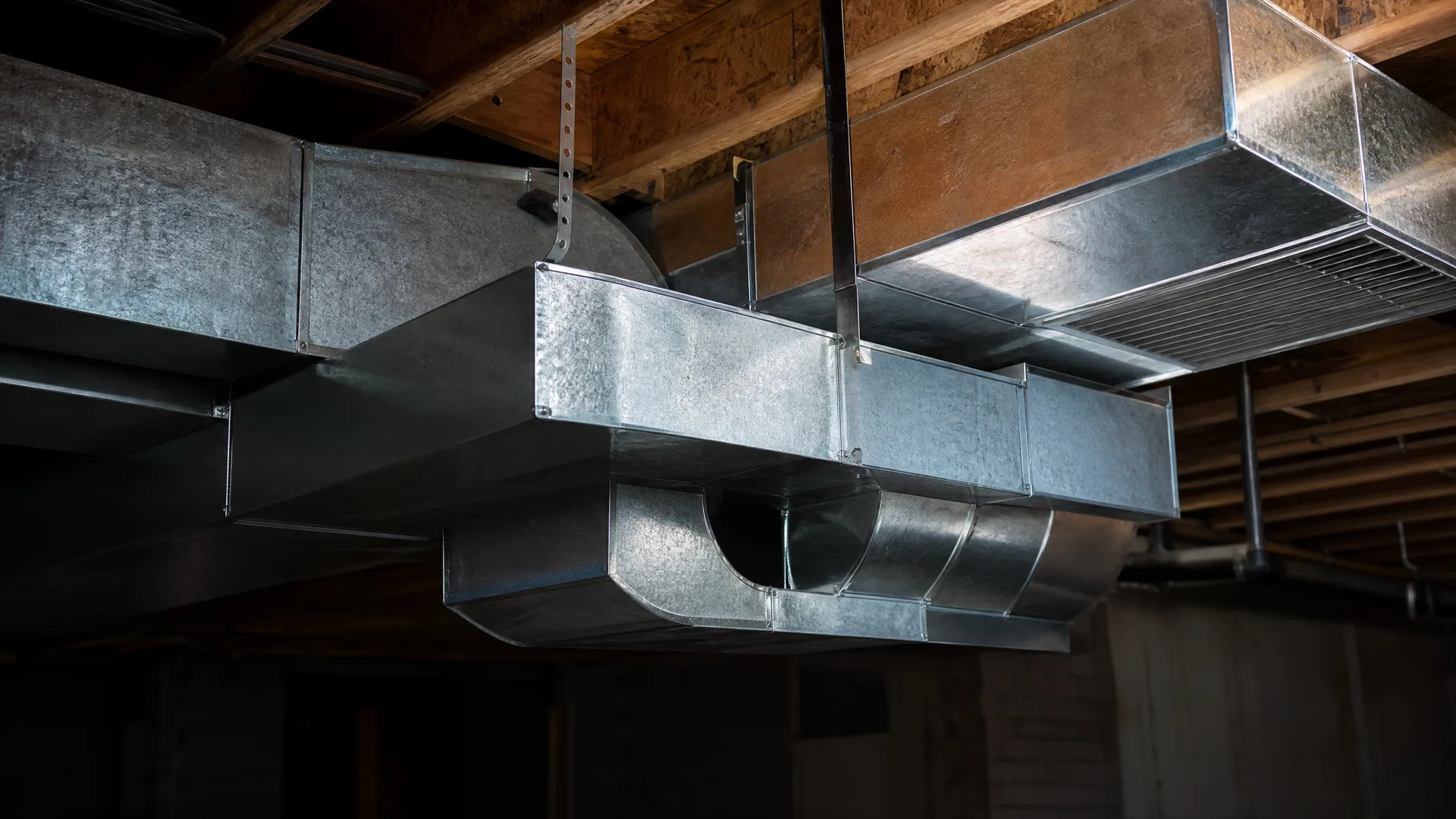
Finding the leak is the hard part. Ductwork runs behind drywall, under insulation, through spaces nobody wants to crawl into, and a homeowner checking a few visible seams with their hand isn't going to find a split seam thirty feet back in a crawl space. That takes someone who does this for a living, with the tools to pressure test a system and trace air loss to the actual spot.
That's the part that gets easier from here. Once you send in what's going on with your ducts, the search for the right person stops being something you have to figure out on your own. You get matched with a contractor who works on duct systems like yours, in homes like yours, and that contractor reaches out to you directly. No more calling around, no more guessing who actually knows ductwork versus who just says they do. You've already done the hard part by noticing something's off. Let the next step happen on its own.
How do I know if my ductwork is leaking?
You've noticed a room or two that never quite feels right, or a utility bill that keeps climbing, and you're wondering if the ducts themselves are the problem rather than the furnace or the AC unit. It's a fair question, because duct leaks don't announce themselves the way a broken system does. They show up as small, easy to dismiss signs that add up over a season.
Rooms that run hotter or colder than the rest of the house, higher bills, and dust around the vents are the signs
Leaking ducts lose heated or cooled air into the attic, crawl space, or basement before it reaches the room, so the room farthest from the furnace or the air handler is usually the one that struggles most. You might also notice the system running longer than it used to, or a utility bill that climbs even though nothing else changed. Dust around the vent covers is another sign, since a leak on the return side pulls in air from those unconditioned spaces and carries dust with it. In Wood County, where summers get sticky and winters turn cold, a leak shows up fastest in the room or two that always seems to be fighting the weather outside.
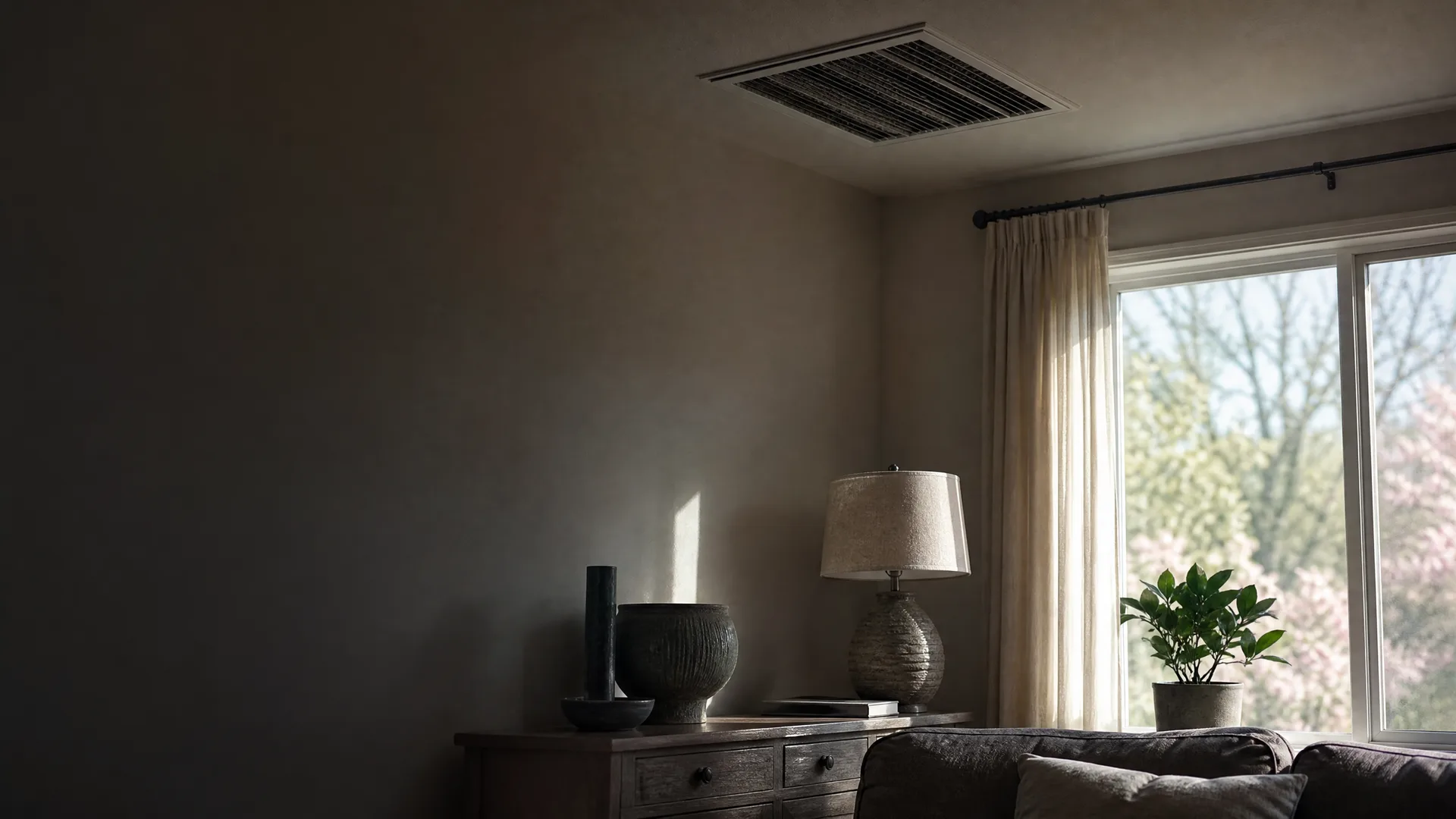
You're dusting the living room on one of the first warm days of spring, windows cracked for the first time since fall. When you run the cloth along the end table, it's gray again, same as last week. You look up at the ceiling vent and see the grille lined with dust, more than seems right for seven days. The furniture under it tells the same story, a fine layer settled back almost as soon as you wipe it off. You didn't used to notice the vents at all. Now you catch yourself glancing at that one every time you walk through the room, wondering where all of it keeps coming from.
Send the form and the duct cleaning stops sitting on your list.
It costs nothing to send, and you don't have to hire anyone.
Where Ducts Actually Leak
Ducts leak at the seams and joints where sections connect, not through the metal or flex material itself.
A duct run losing air before it reaches the register forces the furnace or AC to run longer to hit the thermostat setting.
Supply ducts pressurize a room, so a leak there means less air coming out of that vent than the system is actually pushing.
Return ducts pull air back to the furnace, so a leak there draws in attic or crawl space air instead of room air.
Rooms farthest from the furnace or air handler usually show the weakest airflow first because they depend on the whole run staying sealed.
A duct leak in an unconditioned attic or crawl space wastes the air completely, since it never reaches a living space at all.
Ductwork doesn't usually fail in the middle of a run. It fails where one piece of metal or flex duct meets the next, at the joints and seams, and at the boots where ducts connect to a register or return grille. Those connections are sealed with mastic or tape when the system is installed, and that seal is what gives out over time.
What a leak does depends on which side of the system it's on. Supply ducts carry air from the furnace or air handler out to each room, under pressure. A leak there means air escaping before it reaches the vent, so the room gets less than the system is actually pushing out. Return ducts work the other way, pulling air from the house back to the equipment. A leak on the return side doesn't just waste air, it pulls in whatever is around the duct instead, which in a crawl space or attic means dust, insulation fibers, and outside air mixing into what gets heated or cooled.
Either way, the equipment doesn't know air is being lost. It keeps running until the thermostat reads satisfied, so a leaky system runs longer to do the same job. And because each room depends on the full run staying sealed between it and the furnace, rooms at the far end of the ductwork usually feel the weakest airflow first, while rooms close to the equipment seem fine.
Why does duct age matter so much in Wood County houses?
Half the homes here were built by 1970
Half the homes in Wood County were built in 1970 or earlier, and ductwork this old has had decades for joints to work loose.
Heat runs October through April
Your furnace runs about seven months a year here, October through April, so leaking ducts in the attic or crawl space cost you most of the year.
Cooling runs June through September
Cooling runs June through September, and the same leaks that waste furnace heat all winter waste conditioned air all summer too.
ACS 2020-2024 · NOAA nClimDiv 1991-2020
A room or two feels off
One bedroom runs warm all summer while the rest of the house is fine. One upstairs room never gets past 65 in January no matter where you set the thermostat. That's a duct problem, not an equipment problem. A supply run losing air on the way to that one register means the rest of the house gets conditioned air and that room gets whatever's left. If the furnace and AC keep up everywhere else, the equipment is working. The air isn't getting where it's supposed to go.
The whole house runs behind
The thermostat says 72 and the house doesn't feel like it. The furnace runs longer than it used to, the AC cycles more in August, and the bill reflects both. This points to leaks spread across the whole duct run rather than one bad joint feeding one room. Every supply run is losing some air before it reaches a vent, so the system as a whole is working harder to hit the same setting. A contractor can pressure test the ducts to find how much air is actually getting lost and where.
A duct joint doesn't fail all at once. It opens a little more every year as the metal expands and contracts with each heating and cooling cycle, until the gap is wide enough to lose real air.
That's why a leak you could ignore five years ago is costing you a cold bedroom or a high bill now. The duct didn't change. The opening did.
Power here costs 14.31 cents per kilowatt-hour
At 14.31 cents per kilowatt-hour, every bit of air your ducts lose costs you twice: the furnace blower or AC runs longer to make up for it, and each extra hour draws power at that rate. A leak in the basement or attic turns into a line item on your bill, month after month.
EIA-861 2025
A room that runs hot in summer or cold in winter, dust around the vents, a bill that keeps climbing. Those are the signs, and in a house where half the ductwork in Wood County dates back to 1970 or earlier, they add up to leaks at the joints, not a failing furnace or AC. None of that gets better on its own. A duct joint that has loosened over decades of heating and cooling cycles needs to be sealed by someone who can find where the air is actually escaping, whether that's in the attic, the crawl space, or the basement. Once you send the form, you're not the one tracking down who can do that work. A contractor who handles ductwork gets matched to your situation and reaches out to you. The guesswork of figuring out if it's the ducts, finding someone qualified, and explaining the problem all over again, that part is off your plate the moment you submit it.